



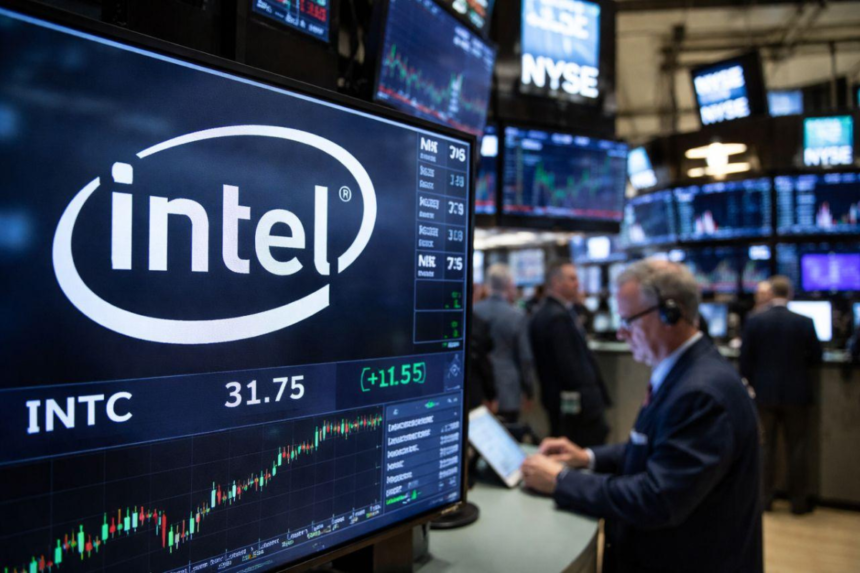
Investors welcomed the news, hoping the partnership could boost Intel’s business and growth prospects.
Intel shares surged nearly 9% in premarket trading on Thursday after U.S. President Donald Trump announced that the semiconductor giant had reached an agreement with Apple to design and manufacture chips in the United States.
The development sparked fresh optimism among investors, who see the reported partnership as a potential milestone in Intel’s ongoing turnaround strategy and broader efforts to strengthen domestic semiconductor production.
In a post on Truth Social, Trump said Apple had agreed to work with Intel on designing and building chips domestically, framing the move as part of a wider push to revive American semiconductor manufacturing.
“Apple has agreed to work with Intel to design and build its chips in America,” Trump wrote, while criticizing previous administrations for allowing semiconductor production to move overseas.
Investor Confidence Continues to Grow
The announcement added to a remarkable rally in Intel’s stock over the past year.
After years of struggling with manufacturing delays, increased competition, and a loss of technological leadership, Intel has staged a dramatic comeback under CEO Lip-Bu Tan. The company’s stock has climbed approximately 464% over the past 12 months, pushing its market capitalization to around $608.7 billion.
By comparison, Apple shares rose a more modest 0.6% in premarket trading following the announcement.
Neither Intel nor Apple had officially confirmed the reported agreement at the time of publication. Requests for comment were also sent to the White House and Taiwan’s diplomatic representatives.
Intel’s Manufacturing Revival
For much of the past decade, Intel faced mounting challenges as rivals gained ground in advanced chip manufacturing and artificial intelligence.
The company largely missed the initial AI boom while dealing with production setbacks and struggling to attract major external customers for its foundry business.
Since taking over as chief executive, Lip-Bu Tan has focused on repositioning Intel as a leading manufacturing partner for the next generation of AI infrastructure.
Investor sentiment has improved significantly following reports of growing support from major technology companies and government-backed initiatives aimed at expanding domestic chip production.
According to Trump, Nvidia has already agreed to manufacture advanced chips through Intel’s foundry operations, while additional large-scale projects are expected to strengthen the company’s manufacturing ecosystem.
Apple’s Potential Strategic Shift
If finalized, a partnership with Apple would represent a significant victory for Intel’s foundry business.
Apple has historically relied on external manufacturing partners for its custom-designed chips. A collaboration with Intel could help diversify its supply chain while supporting broader efforts to expand semiconductor production within the United States.
The move would also align with growing government efforts to reduce dependence on overseas chip manufacturing and strengthen domestic technology infrastructure.
Industry analysts have long viewed Apple as one of the most sought-after customers for any contract chip manufacturer due to its scale, technological requirements, and global influence.
AI Boom Continues to Drive Semiconductor Demand
The news arrives at a time when semiconductor companies continue to benefit from surging demand linked to artificial intelligence.
Despite ongoing geopolitical tensions and supply-chain concerns, AI-related infrastructure spending has remained a major driver of growth across the technology sector.
The Nasdaq PHLX Semiconductor Sector Index, which tracks the largest U.S.-listed chip companies, has gained approximately 90% this year, reflecting strong investor confidence in the industry’s long-term prospects.
Companies involved in AI chips, data centers, cloud computing infrastructure, and advanced manufacturing have been among the biggest beneficiaries of the ongoing technology investment cycle.
Challenges Still Remain
While investors welcomed the reported Apple collaboration, questions remain about the timeline, scope, and financial impact of any potential agreement.
Intel’s foundry business remains capital-intensive, requiring substantial investments in manufacturing facilities, research, and production capacity. The company must also demonstrate that it can consistently deliver cutting-edge chip manufacturing at scale.
For now, the market appears focused on the strategic significance of attracting high-profile customers and expanding Intel’s role in the global semiconductor supply chain.
If confirmed, an Apple partnership would represent another major step in Intel’s effort to reestablish itself as a leading force in both chip design and manufacturing.
What It Means for Intel
The reported agreement has strengthened investor belief that Intel’s turnaround strategy is gaining momentum.
With growing support from government initiatives, increasing interest from major technology companies, and rising demand for AI infrastructure, Intel is positioning itself as a central player in the next phase of semiconductor manufacturing.
Whether the company can sustain that momentum will depend on its ability to execute on ambitious manufacturing goals and convert strategic partnerships into long-term business growth.
Source: CNBC