

The company aims to convert passive viewers into active community members through premium digital experiences.
Theorist’s new membership platform reflects a larger creator-economy shift away from pure ad revenue and platform dependence.
For years, YouTube creators chased one thing above everything else: views.
More views meant more ad revenue, more sponsorships, more algorithm reach, and ultimately more stability. But the economics of digital content are changing rapidly, and many large creators no longer want their businesses tied entirely to unpredictable algorithms and advertising markets.
That shift explains why Theorist, the company behind some of YouTube’s biggest pop-culture analysis channels, is now building something much bigger than free videos.
The company has launched TheoryVerse, a premium membership platform designed to transform viewers into long-term paying communities.
From YouTube Audience to Owned Ecosystem
Theorist operates channels including Game Theory, Film Theory, and Style Theory, which collectively reach more than 45 million subscribers.
Despite that scale, company leadership believes that depending only on YouTube is no longer enough.
Gwen Miller, senior director of strategy and operations at Theorist, explained that while YouTube remains central to the business, creators increasingly need revenue streams they directly control.
“YouTube every year gets more and more competition,” Miller said.
As platforms multiply and audience attention fragments, creators face growing pressure to diversify rather than rely entirely on advertising revenue tied to algorithm performance.
That reality sits at the center of TheoryVerse.
The platform offers free access alongside two premium membership tiers priced at $6 and $12 monthly. Paying users receive ad-free episodes, exclusive programming, community features, and expanded interaction with creators and other fans.
Instead of functioning like another content feed, TheoryVerse is being positioned as a controlled ecosystem built specifically for superfans.
Why Creators Want More Control
The broader creator economy is shifting toward ownership.
Many independent creators increasingly view YouTube, TikTok, and Instagram less as permanent homes and more as audience acquisition tools that eventually feed users into subscription ecosystems, communities, apps, and businesses they fully own.
Platforms such as Patreon and Substack accelerated this shift, while newer companies like Uscreen and TopFan now help creators build fully branded apps and communities outside traditional social media platforms.
Theorist partnered with Uscreen to launch TheoryVerse across mobile apps, television apps, and web platforms.
The appeal is obvious.
Instead of fighting constantly for algorithm reach, creators gain direct access to subscribers, recurring revenue, audience data, and deeper community engagement.
That changes the business entirely.
The End of Passive Audiences
The bigger shift happening underneath all this is psychological.
Traditional YouTube audiences are mostly passive. They watch, scroll, click away, and move on.
Membership ecosystems aim to turn those viewers into emotionally invested participants.
Theorist’s leadership says fans have long requested more interaction, crossover content between hosts, and community-focused experiences that would not necessarily work well inside YouTube’s recommendation system.
Amy Roberts, host of Style Theory, said the company previously avoided certain niche crossover ideas because they feared YouTube’s algorithm could interpret them as weaker-performing content.
That fear reveals one of the biggest frustrations creators now have with platform dependence.
Algorithms reward scale and consistency. Communities reward depth and loyalty.
Those goals often conflict.
TheoryVerse allows Theorists to prioritize community engagement without worrying about damaging public-channel performance metrics.
Exclusive Content Becomes the Product
The platform’s original programming reflects this new strategy.
Exclusive series like Just a Theory and Dead Wrong bring multiple Theorist hosts together in formats designed more for fan engagement than mass algorithm optimization.
That distinction matters.
Instead of producing content purely engineered for clicks, retention graphs, and recommendation boosts, creators inside membership ecosystems can focus more heavily on personality, interaction, fandom culture, and niche interests.
This increasingly resembles the streaming industry’s evolution.
Audiences are no longer paying only for content. They are paying for belonging, identity, and access.
Why This Trend Is Growing Fast
The creator economy itself is becoming more financially sophisticated.
According to creator-economy surveys, revenue streams between 2023 and 2025 shifted steadily away from pure advertising toward subscriptions, owned products, affiliate businesses, consulting, and memberships.
Advertising remains important, but creators increasingly recognize its instability.
Algorithms change. CPMs fluctuate. Sponsors disappear during downturns.
Recurring memberships offer something creators value far more: predictability.
That explains why even creators outside entertainment are building apps and subscription communities.
Financial creators, consultants, educators, fitness personalities, and niche experts increasingly monetize expertise directly instead of relying only on free-content reach.
A Bigger Shift Than Just One Platform
Theorist’s expansion reflects a much larger internet transition.
For over a decade, creators built audiences inside platforms owned by tech companies. Now, many of them are trying to build independent digital infrastructure around those audiences.
The real goal is no longer just virality.
It is durability.
Platforms like YouTube still dominate discovery, but long-term creator businesses increasingly depend on owned ecosystems in which creators directly control monetization, community access, audience relationships, and product experiences.
TheoryVerse is not abandoning YouTube.
It is preparing for a future where YouTube alone may no longer be enough.
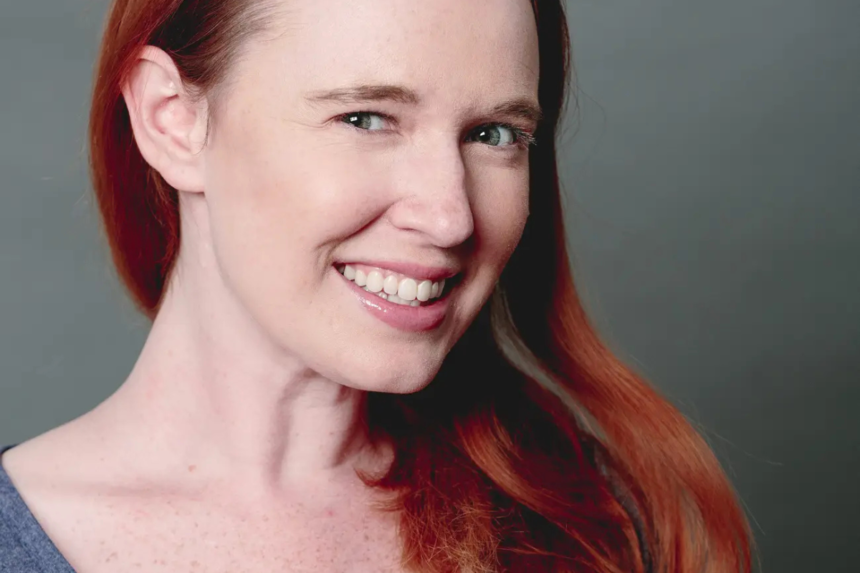
Gwen Miller, senior director of strategy and operations at Theorist, sees memberships becoming a No. 2 business line. Theorist
Source: BI