



UK regulators want Google to be more open about how its search engine ranks websites and displays results.
UK Regulator Targets Search Market Dominance
Google is facing new regulatory requirements in the United Kingdom after the country’s competition watchdog introduced measures aimed at making search results more transparent and easier to understand.
The move comes as the Competition and Markets Authority (CMA) steps up efforts to promote fair competition, increase transparency for businesses, and address concerns about Google’s dominance in the search market.
Currently, Google handles more than 90% of search queries in the UK, according to the regulator. As a result, the company has significant influence over how consumers find information, products, and services online.
What the New Rules Require
Under the new framework, Google will be required to provide greater clarity around the operation of its search engine and ranking systems.
The CMA said Google must:
- Rank organic search results using objective criteria.
- Increase transparency around how rankings are determined.
- Introduce clearer complaint and dispute-resolution processes for businesses.
- Allow users to transfer their search data to authorized third-party providers.
The measures are intended to reduce uncertainty for businesses that depend on Google Search for visibility and customer acquisition.
Why the UK Is Taking Action
The regulator said businesses have repeatedly raised concerns about Google’s ranking practices, arguing that changes to search algorithms can significantly affect traffic and revenue without sufficient explanation or advance notice.
As a result, many companies believe the lack of transparency creates uncertainty, which can discourage investment and slow business growth, according to the CMA.
In response to these concerns, the regulator has designated Google with “Strategic Market Status,” a classification that gives authorities the power to impose targeted obligations on companies with significant market influence.
Meanwhile, Will Hayter, Executive Director at the CMA, said the measures form part of a broader effort to make digital markets work more effectively for both businesses and consumers.
“Step by step, we’re ensuring that Google’s search services work better for businesses and consumers across the UK,” Hayter said.
Implementation Timeline
Google will have different deadlines depending on the requirement.
The CMA said:
- The fair-ranking and transparency measures must be implemented within six months.
- The data portability requirements must be introduced within three months.
The regulator indicated that it may impose additional measures in the future if the current framework does not adequately address competition concerns.
Publishers Raise Additional Concerns
The announcement follows earlier UK regulatory measures aimed at protecting publishers in the era of artificial intelligence.
Earlier this month, the CMA introduced rules allowing publishers to prevent their content from being used to power Google’s AI-generated search features.
Industry groups argue that AI-powered search tools are changing how users discover information online, potentially reducing traffic to publishers’ websites.
The Professional Publishers Association criticized the six-month implementation timeline, warning that Google could make significant adjustments before the new ranking rules fully take effect.
The organization said rapid developments in AI-driven search make transparency increasingly important for content creators and publishers.
Google’s Response
Google said it remains committed to working with regulators while maintaining the integrity of its search systems.
A company spokesperson stated that Google’s ranking systems are designed to be fair and focused on delivering the most relevant and high-quality results to users.
The company added that it has already been developing new search controls to address concerns raised by UK competition authorities.
Part of a Broader Global Trend
The UK’s latest action reflects growing international scrutiny of large technology companies and their influence over digital markets.
Google is currently facing regulatory challenges in multiple jurisdictions, including the United States and the European Union, where authorities have examined issues related to search dominance, advertising practices, artificial intelligence, and competition.
For businesses that rely heavily on search visibility, the UK’s new rules could provide greater clarity about how rankings are determined and how disputes can be addressed.
Whether the measures significantly alter Google’s search ecosystem remains to be seen, but they represent another step in the global push to increase accountability and transparency among major technology platforms.
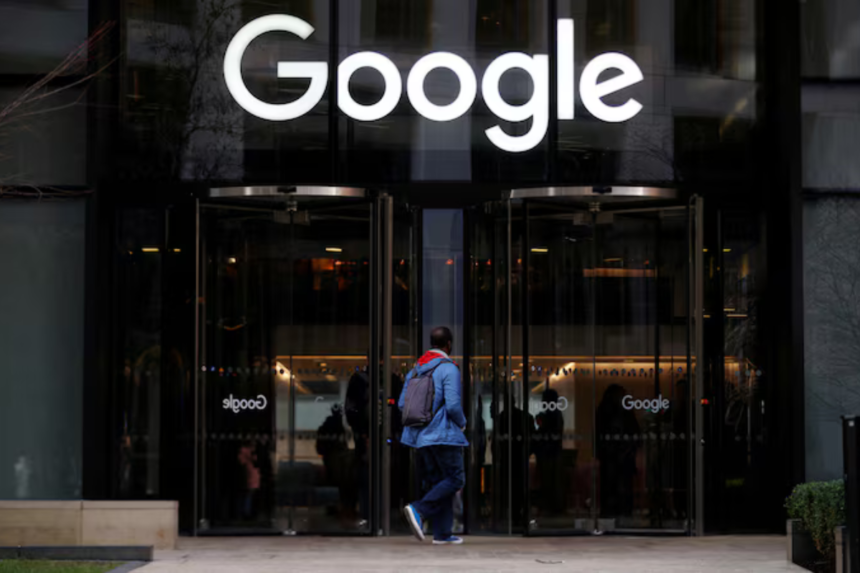
The Google logo is pictured at the entrance to the Google offices in London, Britain, January 18, 2019. REUTERS/Hannah McKay/File Photo Purchase Licensing Rights
Read more news, and follow us on Instagram
Source: REUTERS