


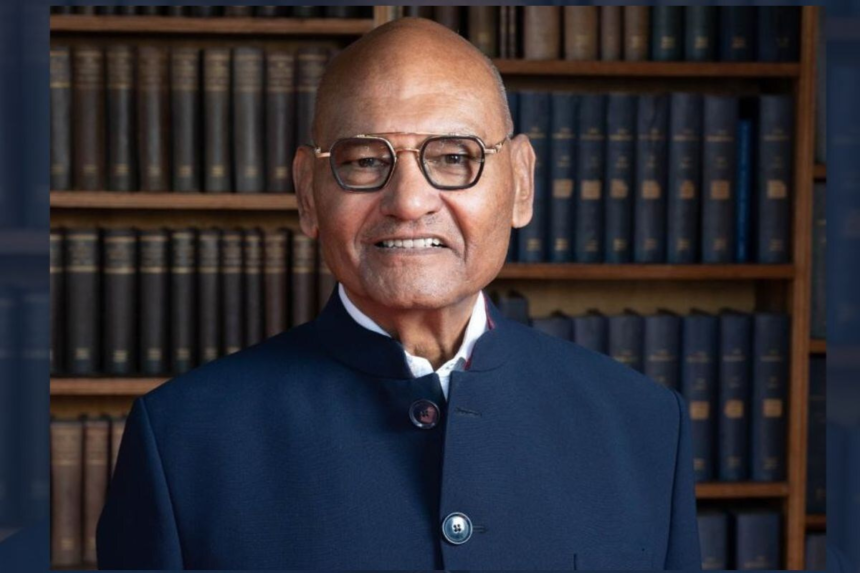
Vedanta is restructuring its operations into five businesses as Anil Agarwal looks to simplify the group and unlock value across metals, mining and energy.
Anil Agarwal’s business story began with scrap metal trading.
Decades later, the businessman who built Vedanta has created a natural-resources group spanning aluminium, zinc, oil and gas, iron ore, steel and power.
In the M3M Hurun India Rich List 2026, Anil Agarwal and his family rank ninth with an estimated wealth of ₹2.08 lakh crore.
But the more important chapter of the Vedanta story in 2026 is not the size of the group. It is its restructuring.
From scrap trading to natural resources
Agarwal started his business career trading scrap in Mumbai before moving into metals and establishing the foundations of what became the Vedanta Group.
Over time, the group expanded beyond metals into mining, oil and gas, power and other resource businesses. Its footprint eventually stretched across India and international markets, with operations and assets across several countries.
The strategy was built around controlling natural-resource assets and expanding production capacity rather than remaining a pure trading business.
That approach eventually turned Vedanta into one of India’s largest diversified natural-resources groups.
Vedanta’s record FY26
The group’s latest financial performance gives an indication of its scale.
Vedanta Limited reported record revenue of ₹1.74 lakh crore for FY2025-26, an increase of 15% from the previous year. EBITDA rose 29% to ₹55,976 crore, while profit after tax increased 22% to ₹25,096 crore.
Aluminium, zinc, oil and gas, iron and steel, and power remain important parts of the wider portfolio.
The company also reported a reduction in its net debt-to-EBITDA ratio to 0.95x at the end of FY26, compared with 1.22x a year earlier.
The biggest change is happening inside the group
Vedanta’s defining corporate move in 2026 has been its demerger.
The restructuring became effective on May 1, 2026, creating separate businesses focused on different sectors. The structure is designed to give individual businesses greater operating focus while allowing them to pursue their own growth strategies.
The businesses span areas including aluminium, power, steel and iron, and oil and gas, while Vedanta Limited retains the base-metals business and related assets.
The idea is straightforward. Instead of managing several large businesses under one corporate structure, each operation can have a more focused balance sheet, management structure and investment strategy.
Why aluminium and zinc matter
Two of Vedanta’s most important businesses are aluminium and zinc.
In FY26, aluminium generated EBITDA of ₹25,502 crore, up 43% year on year. Zinc India’s EBITDA rose 27% to ₹22,056 crore.
The company is also investing heavily in additional capacity.
Vedanta’s FY26 presentation highlighted ₹14,918 crore of growth capital expenditure during the year, alongside new capacity and projects across aluminium, copper, power and other businesses.
The strategy reflects Agarwal’s broader view that India’s infrastructure, energy transition and manufacturing growth will require substantially more domestic supplies of metals and other natural resources.
The group is moving beyond traditional mining.
Vedanta has also been positioning itself around areas that extend beyond its established metals portfolio.
The company has identified oil and gas, semiconductors, display manufacturing and other emerging businesses as potential areas of future growth.
Its stated strategy is to become a broader natural-resources, energy and technology group, rather than remaining concentrated in conventional mining and metals.
That ambition brings Vedanta into industries that require significantly different capabilities from its traditional mining operations.
A new structure for the next phase
The demerger is ultimately an attempt to change how Vedanta grows.
Instead of one large conglomerate carrying multiple businesses, the new structure creates more focused companies around individual sectors.
For Agarwal, who spent decades assembling businesses across the natural-resources industry, the next challenge is therefore different from the one he faced when building Vedanta.
The task now is to make each business stronger and more independent while preserving the scale that made the group significant in the first place.
His ₹2.08 lakh crore family fortune places him ninth on the 2026 Hurun India Rich List. But the more consequential measure of the next phase will be how the businesses created under the Vedanta umbrella perform after the restructuring.
The company Agarwal built is no longer simply being expanded.
It is being redesigned.