

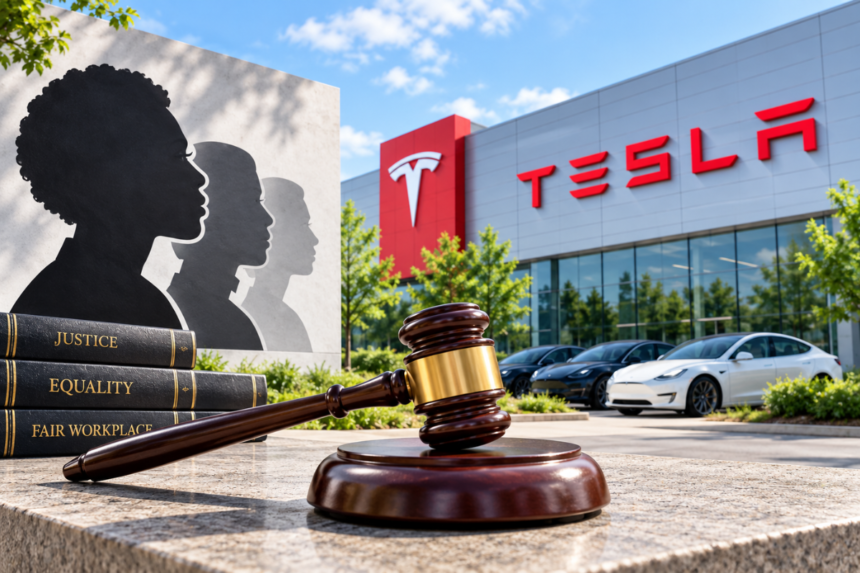
Black workers at Tesla’s Fremont factory have accused the company of racial slurs, graffiti, unequal pay, and fewer chances for promotion.
Tesla is facing trial in California over allegations that Black employees at its Fremont factory were subjected to racial harassment and discrimination, including racial slurs, offensive graffiti, unequal pay and limited opportunities for promotion.
The case, brought by the California Civil Rights Department (CRD), accuses Tesla of allowing widespread racial discrimination at its flagship assembly plant. The trial began in September 2026 before Judge Peter Borkon in California state court and is expected to continue through October 30.
The allegations date back several years and form part of broader legal scrutiny of working conditions for Black employees at Tesla.
What Is Tesla Accused Of?
The California Civil Rights Department filed its lawsuit against Tesla in 2022, alleging that Black workers at the Fremont facility faced a hostile work environment.
The allegations include racial slurs and racist graffiti in workplace areas, as well as claims that Black employees were assigned to lower-paying and less desirable jobs.
The agency has also alleged disparities in pay and promotion opportunities for Black workers.
The allegations are contested by Tesla, which has denied wrongdoing and said it does not tolerate discrimination. The company has also said it has terminated employees found to have engaged in misconduct.
Tesla Faces a Bench Trial
The current proceedings are being heard as a bench trial rather than before a jury.
That means Judge Peter Borkon will determine whether Tesla violated California’s civil rights laws and, if so, what remedies should apply.
The case could have significant financial implications for Tesla because California’s workplace discrimination laws do not impose the same damages limitations found under federal law.
Separate Federal Lawsuit Also Targets Tesla
The California case is not the only major racial discrimination case facing Tesla.
In September 2023, the U.S. Equal Employment Opportunity Commission (EEOC) sued Tesla, alleging that Black employees at the Fremont manufacturing facilities had experienced widespread racial harassment and retaliation.
The EEOC alleged that racist slurs, threats,s and graffiti, including swastikas and noose imagery, appeared in workplace areas and on equipment. It also alleged that employees who objected to the harassment faced adverse employment actions, including changes to job duties and termination.
The federal lawsuit seeks damages and other measures intended to address alleged discriminatory employment practices.
Claims Extend Beyond Workplace Harassment
The California Civil Rights Department’s case goes beyond allegations of offensive conduct.
The agency has also alleged racial segregation within the Fremont factory, claiming Black employees were disproportionately assigned to some of the facility’s lowest-paying and least desirable jobs.
Under federal employment law, race discrimination can involve employment decisions related to pay, promotions, job assignments, hiring, firing, and other working conditions.
The legal question in Tesla’s case will be whether the evidence establishes violations of applicable California civil rights laws.
Tesla Has Faced Other Discrimination Cases
Tesla has faced numerous individual claims involving alleged racial discrimination and harassment over the years.
In one earlier case involving a former Fremont factory worker, a jury initially awarded $137 million in damages. A judge later substantially reduced the award.
There has also been litigation involving attempts by thousands of Black Tesla workers to pursue claims collectively. A previous ruling prevented more than 6,000 workers from proceeding as a class action, although individual claims have continued.
The current California case therefore forms part of a much broader legal history surrounding allegations of racial discrimination at Tesla’s workplaces.
What Happens Next?
The California trial will determine whether the allegations brought by the Civil Rights Department are established under state law.
Tesla continues to deny the allegations and has said it does not accept racial discrimination in its workplaces.
The case is expected to continue through October 30, 2026, with Judge Borkon set to decide the claims in the bench trial.
The outcome could determine whether Tesla is liable under California’s civil rights laws and whether affected workers are entitled to damages or other remedies.
Read more news and follow us on Instagram.
Source: Startup Talky