

Tata Trusts had unanimously backed N. Chandrasekaran for another five-year term in July 2025, but the reappointment later faced disagreement at the Tata Sons board, triggering a wider governance dispute.
The Tata Group is facing a major governance dispute over the future of N Chandrasekaran and the control structure of Tata Sons, the holding company of the $185 billion Tata conglomerate.
On September 17, 2026, the Tata Sons board voted 4-1 to reappoint Chandrasekaran as executive chairman for another five years. Tata Trusts Chairman Noel Tata was the only director to vote against the resolution and later called the decision “illegal.”
The dispute now extends beyond Chandrasekaran’s tenure. It also involves the proposed listing of Tata Sons, the role of Tata Trusts and a separate proposal involving the Shapoorji Pallonji Group.
Why Tata Trusts has so much influence
Tata Trusts collectively owns about 66% of Tata Sons, giving the charitable trusts a controlling stake in the holding company.
The relationship between Tata Trusts and Tata Sons is governed not only by ordinary shareholding but also by Tata Sons’ Articles of Association, which give the trusts specific rights in matters including board composition and the appointment of the chairman.
That structure has created two important centres of authority. Tata Sons’ board manages the company, while Tata Trusts holds the controlling shareholding and certain special governance rights.
The current dispute is testing how those rights interact.
How the Chandrasekaran dispute began
The disagreement over Chandrasekaran’s next term has been developing for more than a year.
According to Tata Sons, Tata Trusts passed a unanimous resolution on July 28, 2025, supporting Chandrasekaran for another five-year term. The Tata Sons board agreed in principle in September 2025, with formal approval initially expected in February 2026.
The process subsequently stalled.
The resolution was deferred in February 2026 and came up again in May and June without a final decision.
On August 12, 2026, Chandrasekaran indicated that he would not seek another term when his existing tenure expires on February 20, 2027.
That appeared to move the group towards a succession process.
But the issue returned to the board in September.
Why Chandrasekaran was reappointed
On September 3, the Nomination and Remuneration Committee of Tata Sons unanimously asked Chandrasekaran to reconsider his decision.
He agreed to continue, and the board voted on September 17 to grant him another five-year term.
Four directors supported the resolution. Noel Tata voted against it.
Noel Tata subsequently said his veto had been overridden based on a legal opinion and described the decision as illegal.
Tata Trusts separately characterised the resolution as a “legal nullity”, arguing that the relevant provisions of Tata Sons’ Articles of Association required support from the trust-nominated directors for a chairman appointment or reappointment.
Tata Trusts cites former CJI DY Chandrachud’s opinion
Noel Tata also submitted a legal opinion from former Chief Justice of India D.Y. Chandrachud supporting the Trusts’ position, according to reports.
The Trusts argue that Chandrasekaran’s August decision not to seek another term had already been accepted and that the board could not simply reverse the process without addressing the consequences of that decision.
The board, however, proceeded with the reappointment.
The disagreement therefore involves competing interpretations of Tata Sons’ governance documents and the sequence of decisions taken over Chandrasekaran’s tenure.
The Tata Sons listing dispute adds another layer
The leadership dispute is unfolding alongside a separate regulatory issue.
The Reserve Bank of India rejected Tata Sons’ request to surrender its Core Investment Company registration, meaning the holding company faces the regulatory requirement to comply with the rules applicable to upper-layer NBFCs, including listing requirements.
On September 17, the Tata Sons board approved steps towards a public listing and said it would comply with applicable RBI requirements.
Noel Tata opposed the listing proposal.
This creates another significant difference between the Tata Sons board and Tata Trusts over the future structure of the holding company.
Where the Shapoorji Pallonji Group fits in
A third issue involves the Shapoorji Pallonji Group, which owns roughly 18.37% of Tata Sons.
The SP Group has been seeking liquidity from its Tata Sons holding, and a proposal involving a partial buyback of its stake was placed before the Tata Sons board on September 17.
According to Moneycontrol, the proposal seeks at least ₹25,000 crore through the purchase of part of the SP Group’s Tata Sons holding, structured through a selective capital reduction in two tranches over 18 months.
The proposal offers another possible route for addressing the SP Group’s liquidity requirements without relying entirely on a public listing.
What happens to Chandrasekaran now?
The September 17 board vote does not by itself settle the entire matter.
Chandrasekaran’s reappointment still requires the necessary shareholder and corporate approvals. His position as a director is also relevant because Tata Sons’ chairman must hold a directorship in the company.
Tata Trusts’ 66% shareholding gives it significant voting power, but the practical ability of the trusts to act is also affected by an ongoing dispute involving Sir Ratan Tata Trust and proceedings before the Maharashtra Charity Commissioner.
That has complicated the trusts’ ability to convene and take certain decisions.
A wider governance dispute
What began as a question over whether Chandrasekaran would continue as chairman has now expanded into a broader dispute over governance, succession, ownership rights and the future structure of Tata Sons.
The Tata Sons board has backed Chandrasekaran for another five years and moved towards complying with the RBI’s listing requirements.
Tata Trusts has challenged the validity of the reappointment and opposed the listing direction.
The next stages will depend on shareholder approvals, the interpretation of Tata Sons’ Articles of Association, the resolution of the Tata Trusts’ internal procedural constraints and the regulatory process around the proposed listing.
For the Tata Group, the immediate question is no longer simply who will occupy the chairman’s office after February 2027.
It is how the group’s two principal power centres will resolve their competing positions over who has the authority to decide.
Read more news and follow us on Instagram
Source: Outlook Business
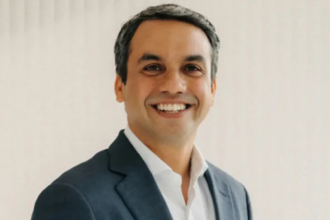
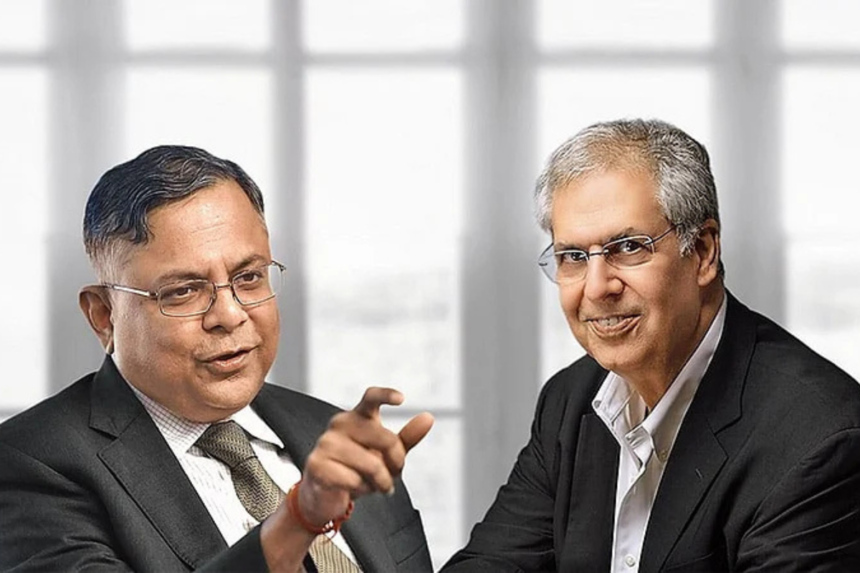
Image: N Chandrasekaran, Chairman, Tata Sons (left) and Noel Tata, Chairman, Tata Trusts