



Telangana’s innovation hub joins forces with Hauts-de-France to boost cross-border collaboration.
India’s startup ecosystem has spent the last two decades proving that it can create globally relevant companies. From e-commerce and fintech to software-as-a-service and consumer technology, Indian entrepreneurs have built businesses that attract global investors and serve millions of customers.
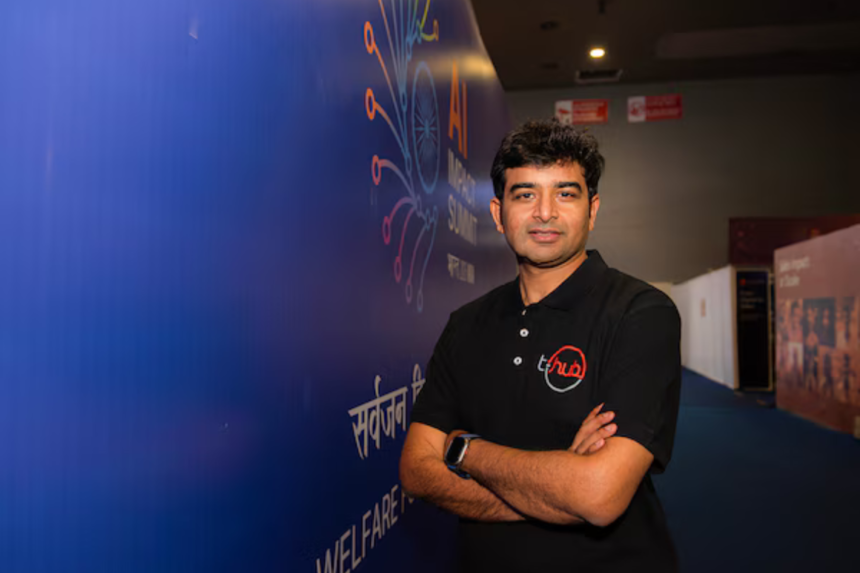
According to T-Hub CEO Kavikrut, the ecosystem is now entering another important phase of evolution.
Speaking during the India AI Impact Summit 2026, Kavikrut described the current moment as a “refresh point” for Indian startups, driven by artificial intelligence, stronger policy support, and a more mature investment environment. His comments reflect a broader shift taking place across the country’s innovation landscape, where entrepreneurship is increasingly viewed as a mainstream career path, and startups are becoming central contributors to economic growth.
A New Wave Powered by Artificial Intelligence
Every major startup cycle tends to be shaped by a defining technology.
Previous waves were driven by internet adoption, smartphones, digital payments, and cloud computing. Today, artificial intelligence is emerging as the next transformational force.
According to Kavikrut, AI is creating opportunities across sectors rather than within a single industry. Startups are using the technology to solve problems in healthcare, manufacturing, education, logistics, financial services, and enterprise software.
Unlike earlier technology cycles that were often limited to specific business models, AI has the potential to impact nearly every sector of the economy. This creates opportunities for founders who can combine industry expertise with technological innovation.
For startup ecosystems, such shifts often act as catalysts, encouraging new company formation, attracting investment capital, and accelerating product development.
Government Support Is Creating Stronger Foundations
Technology alone does not create thriving startup ecosystems.
Kavikrut highlighted the growing role of government support in strengthening India’s entrepreneurial environment. Over the past several years, policymakers have introduced initiatives designed to encourage innovation, improve access to capital, simplify regulations, and support emerging industries.
The impact of these efforts can be seen across sectors such as aerospace, defense, advanced manufacturing, and life sciences, where startups are increasingly participating in areas that were once dominated by large corporations.
The result is a broader innovation economy where entrepreneurs are finding opportunities beyond traditional technology sectors.
As India continues investing in digital infrastructure, manufacturing capabilities, and research ecosystems, startups are gaining access to resources that were previously difficult to obtain.
Why Investor Exits Matter More Than Ever
One of the most significant changes in India’s startup ecosystem is the growing number of successful investor exits.
For years, critics questioned whether venture capital investments in India would consistently generate meaningful returns. Today, that conversation has changed.
Successful public listings, acquisitions, and secondary transactions have demonstrated that startup investing can produce real outcomes for founders, investors, and employees.
Kavikrut pointed to this development as a major sign of maturity.
When investors see successful exits, capital becomes more willing to flow into new ventures. Founders gain confidence that building long-term businesses can create substantial value. Employees become more willing to join startups, knowing that stock ownership can generate meaningful wealth.
This cycle strengthens the entire ecosystem.
A healthy startup market depends not only on company creation but also on successful outcomes that encourage future investment.
Building International Startup Corridors
The announcement of a partnership between T-Hub and France’s Hauts-de-France region reflects another important trend in modern entrepreneurship: global collaboration.
Rather than focusing solely on funding, the initiative aims to connect startups, corporations, investors, universities, and innovation networks across both regions.
Such partnerships help founders access new markets, build international relationships, and explore opportunities that may not exist within their home countries.
Kavikrut described these collaborations as practical pathways for global expansion.
For startups seeking international growth, access to networks often matters as much as access to capital. Strategic partnerships can help companies understand foreign markets, establish local connections, and accelerate market entry.
The France partnership joins T-Hub’s existing collaborations with countries including the United Kingdom and Japan, reflecting the growing importance of cross-border innovation ecosystems.
Entrepreneurship Has Become an Aspirational Career
Perhaps one of the most important observations made by Kavikrut relates to how entrepreneurship is perceived today.
A decade ago, many graduates viewed traditional corporate careers as the safest and most desirable path. Startup founders were often considered risk-takers pursuing uncertain opportunities.
That perception has changed dramatically.
Today’s graduates increasingly view entrepreneurship as one of the most aspirational career choices available. Successful founders are seen as innovators capable of creating jobs, solving meaningful problems, and shaping industries.
This cultural shift is significant because startup ecosystems ultimately depend on talent.
When ambitious individuals choose to build companies rather than only join established organizations, innovation accelerates, and new economic opportunities emerge.
The growing respect for entrepreneurship reflects the success stories that have emerged from India’s startup landscape over the past twenty years.
T-Hub’s Founder-First Approach
As one of India’s largest startup innovation hubs, T-Hub plays a critical role in supporting entrepreneurs throughout their growth journeys.
According to Kavikrut, founders remain the organization’s primary focus.
T-Hub provides support across several critical areas, including:
- Access to investors and capital networks.
- Connections to corporate partners and customers.
- Technical expertise and mentorship.
- Infrastructure and technology resources.
- International market access opportunities.
The objective is not simply to help startups survive but to create conditions where founders can scale sustainable businesses.
By connecting entrepreneurs with the resources they need at different stages of growth, innovation platforms such as T-Hub contribute to the long-term development of the broader ecosystem.
India’s Next Startup Chapter
India’s startup story is no longer defined solely by the number of new companies being created.
The conversation is increasingly about scale, sustainability, global relevance, and long-term economic impact.
Artificial intelligence is opening new possibilities. Government support is strengthening the innovation environment. Capital markets are becoming more mature. International partnerships are creating global opportunities. Most importantly, entrepreneurship has become a respected and aspirational path for a new generation of founders.
Kavikrut’s assessment suggests that India’s startup ecosystem is entering a new chapter, one shaped not only by technological innovation but also by the growing maturity of the institutions, investors, and entrepreneurs that support it.
If the previous two decades were about proving India’s startup potential, the next decade may be about demonstrating its global leadership.
Kavikrut, CEO at T-HUB. Photo by Amit Verma
Source: Forbes