


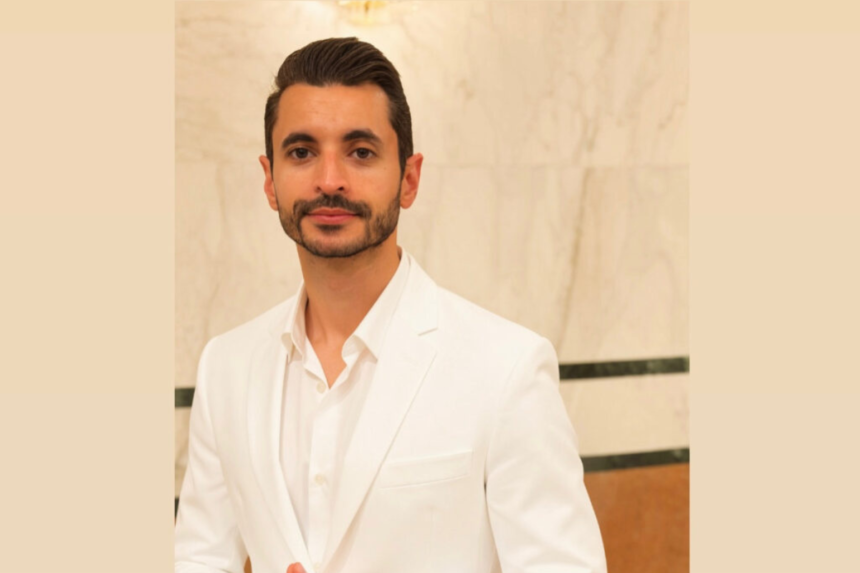
His rise reflects a sharp understanding of regional dynamics and an ability to navigate complex cross-border opportunities.
Some turning points arrive quietly but change everything that follows.
For Hamza Zarrouk, a Tunisian national who studied in Los Angeles, one such moment came unexpectedly in Saudi Arabia. A meeting with a close member of the royal family redirected the course of his professional life and placed him on a path that would eventually position him inside some of the region’s most sensitive and complex negotiations.
At the time, Hamza was already active in the petroleum distribution business. The industry demanded speed, instinct, and a deep understanding of global supply dynamics. Deals depended on timing, trust, and the ability to navigate shifting market realities.
Yet that single encounter opened doors beyond traditional energy trade.
What began as business gradually evolved into a far more strategic role, one that required discretion, regional awareness, and the ability to operate across political and commercial boundaries.
Building His Foundation in Petroleum Distribution
Before entering high-stakes regional dealmaking, Hamza’s career was rooted in the petroleum sector.
His work in energy distribution exposed him early to the interconnected nature of global markets. A disruption in one country could quickly affect supply chains, pricing, and operational stability elsewhere. The industry demanded constant awareness because even small delays could trigger broader consequences across regions.
Those years shaped the way he approached decision-making.
The petroleum business taught him discipline, adaptability, and the importance of long-term relationships in environments where trust often matters more than contracts.
Then the pandemic arrived.
Like much of the global economy, the energy sector was hit by uncertainty, disruption, and instability. Markets slowed, assumptions collapsed, and predictable systems suddenly became fragile.
For Hamza, the period became more than a business challenge. It became a shift in perspective. He realized how quickly stability could disappear and how important preparedness had become in an increasingly volatile world.
Moving Into a More Complex Arena
After COVID, Hamza began reassessing the role security plays in global stability.
The Middle East had always operated within a fragile balance shaped by political tension, shifting alliances, and regional conflict. For many people, that environment creates fear and uncertainty. For Hamza, it created purpose.
He transitioned into a role connected to air defense and armament negotiations, operating as a middleman in highly sensitive cross-border environments. The work required far more than commercial negotiation skills.
It required neutrality, discretion, and the ability to maintain trust between multiple parties simultaneously.
Governments, organizations, and regional stakeholders needed someone capable of facilitating communication and coordinating solutions during moments of pressure. Hamza gradually became known as someone who could operate effectively inside that complexity.
The Weight of High-Stakes Negotiations
Working inside defense-related negotiations carries a level of responsibility few industries experience.
For Hamza, the role was never simply about transactions. Every decision carried strategic consequences. Timing mattered. Delays could increase vulnerability, while poor coordination could escalate tensions further.
He learned quickly that remaining balanced was essential.
The Middle East operates through overlapping interests, alliances, and sensitivities. Maintaining credibility across different sides required careful judgment and emotional discipline.
According to Hamza, the objective was never to fuel instability. Instead, he viewed strong defense systems as deterrents capable of reducing escalation and preserving regional security.
That belief became central to the way he approached his work.
Operating During Regional Tensions
One of the defining periods of Hamza’s career came during heightened tensions between Iran and Gulf countries.
The region faced rising uncertainty, increasing security pressure, and fears of broader escalation. During this period, Hamza reportedly played an important role behind the scenes by helping facilitate support connected to air defense systems.
His involvement remained intentionally private, reflecting the nature of the work itself.
Yet the broader objective was clear: strengthening defensive capabilities to support stability during a volatile period. For Hamza, the experience reinforced his belief that preparedness and security can help create space for diplomacy and de-escalation rather than conflict alone.
A Philosophy Shaped by Instability
At the center of Hamza’s worldview is a simple realization: nothing remains permanent.
The pandemic, regional instability, and years of operating inside unpredictable environments reinforced that belief repeatedly. Situations can change rapidly. Stability can disappear without warning. Opportunities can emerge and vanish within days.
That understanding shaped the way he approaches risk, negotiation, and business strategy.
Awareness, according to Hamza, is not simply useful. It is necessary for survival in high-pressure environments.
Expanding Beyond Conflict Toward Security and Tourism
Despite working in sectors tied to defense, Hamza describes his long-term vision as rooted in peace and stability.
He believes security creates the conditions necessary for economic growth, tourism, and cultural connection. Without trust and safety, long-term peace becomes difficult to sustain.
That thinking also influenced his move into tourism-related ventures in Dubai, including a luggage-wrapping business designed to improve travel security and convenience for passengers.
For Hamza, tourism represents another form of connection between people and cultures. Safer travel environments encourage movement, interaction, and broader understanding between societies.
In his view, those exchanges matter.
Leadership Through Trust and Consistency
One of the recurring themes throughout Hamza’s journey is trust.
In industries tied to negotiation, logistics, defense, and international relationships, trust becomes the foundation for every meaningful outcome. Without credibility, communication breaks down quickly.
Hamza places strong emphasis on consistency, discretion, and clarity in both business and personal interactions. These qualities helped him build long-term relationships across highly sensitive sectors where reliability often determines access and influence.
Moving Forward
Hamza Zarrouk’s rise reflects more than professional ambition. It reflects adaptability in environments defined by uncertainty and rapid change.
From petroleum distribution to regional negotiations and cross-border strategic coordination, his journey demonstrates how global disruptions can reshape careers in unexpected ways.
While much of his work happens away from public attention, the broader themes behind it remain visible: preparation, awareness, trust, and the pursuit of stability in a region where balance is never guaranteed.
His story continues to evolve, but one idea remains consistent throughout it all.
In unpredictable environments, the people who understand timing, relationships, and responsibility often shape outcomes long before the world notices.
Source: UAE Stories