


Governments worldwide are investing in artificial intelligence to strengthen competitiveness, create jobs, and accelerate economic development.
Governments strengthen partnerships with major technology companies to boost innovation, infrastructure, and long-term competitiveness.
Governments around the world are increasing investment in artificial intelligence as they seek to strengthen economic growth, improve global competitiveness, and create high-value jobs.
From France to India, political leaders are working closely with some of the world’s largest technology companies to attract investment in AI infrastructure, cloud computing, data centres, and advanced research. These initiatives reflect a growing recognition that artificial intelligence will play a central role in shaping future economic development.
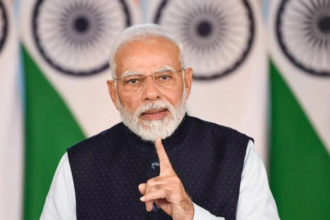
French President Emmanuel Macron and Indian Prime Minister Narendra Modi are among the leaders placing AI at the centre of their long-term economic strategies through partnerships with global technology firms and major infrastructure projects.
France expands its AI infrastructure ambition.s
France has positioned itself as one of Europe’s most ambitious destinations for artificial intelligence investment.
During the G7 Summit, President Emmanuel Macron met several leading AI executives, including SoftBank Chief Executive Officer Masayoshi Son, as part of efforts to accelerate the country’s AI infrastructure programme.
Following those discussions, SoftBank announced plans to invest €75 billion, approximately US$81 billion, to develop 5 gigawatts of AI data centre capacity in France by 2031. The programme includes building 3.1 gigawatts of AI data centre infrastructure while expanding the country’s digital capabilities.
Macron also committed to increasing the electricity allocated for AI infrastructure from the previously proposed 2 gigawatts to 3 gigawatts, highlighting France’s strong nuclear-powered energy network as a competitive advantage for large-scale AI projects.
Masayoshi Son praised the French government’s support, describing the collaboration between SoftBank and French authorities as highly effective.
Alongside investment discussions, Macron hosted a working lunch during the G7 Summit attended by U.S. President Donald Trump and several of the world’s leading AI executives, including OpenAI Chief Executive Officer Sam Altman, Anthropic Chief Executive Officer Dario Amodei, Google DeepMind Chief Executive Officer Demis Hassabis, Mistral Chief Executive Officer Arthur Mensch, Cohere Chief Executive Officer Aidan Gomez, Synthesia Chief Executive Officer Victor Riparbelli, and Black Forest Labs Chief Executive Officer Robin Rombach.
India strengthens its AI investment strategy
India is pursuing a similar strategy by attracting global technology companies to expand its artificial intelligence ecosystem.
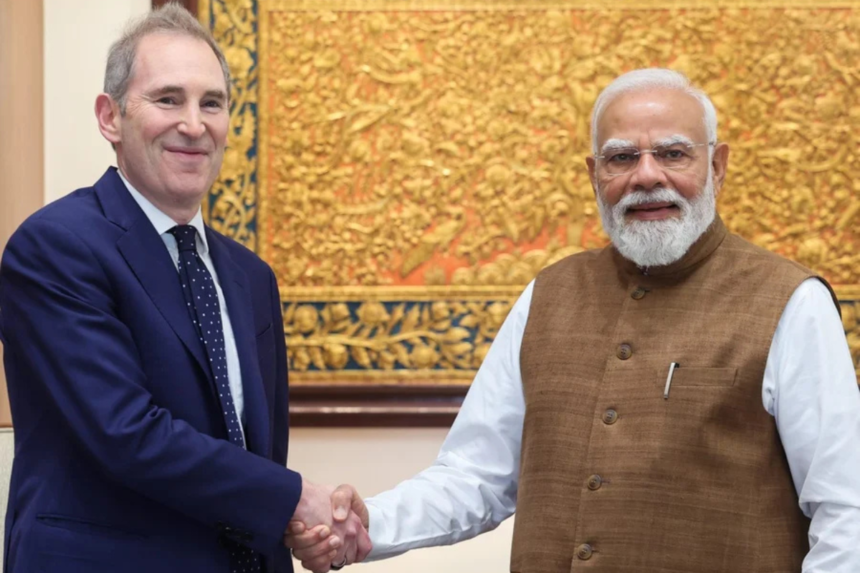
Prime Minister Narendra Modi has held a series of meetings with technology leaders to encourage investment in AI infrastructure and digital innovation. Last week, he met Amazon Chief Executive Officer Andy Jassy and welcomed the company’s record US$48 billion investment in India, including US$21 billion dedicated to AI and cloud infrastructure.
Over the past year, Modi has also held discussions with Microsoft Chief Executive Officer Satya Nadella, Google Chief Executive Officer Sundar Pichai, and Intel Chief Executive Officer Lip-Bu Tan to strengthen cooperation on AI development and advanced technology investment.
These engagements reflect India’s broader effort to build the infrastructure needed to support long-term economic growth through artificial intelligence.
Building a stronger AI ecosystem
Earlier this year, the India AI Impact Summit attracted several major investment commitments designed to strengthen the country’s digital economy.
India has secured Microsoft’s largest investment in Asia to help develop sovereign AI infrastructure. Google has also announced a US$15 billion investment aimed at supporting what it describes as the world’s largest AI hub.
Despite these commitments, India continues to face structural challenges. The country does not yet manufacture advanced AI chips or develop frontier AI models at the same scale as the United States or China. As a result, it remains dependent on overseas computing hardware and foundation models for many advanced AI applications.
To address these gaps, the government is encouraging domestic semiconductor manufacturing while offering long-term tax incentives to attract AI hyperscale infrastructure providers and global technology investors.
AI becomes a cornerstone of economic policy
Artificial intelligence has rapidly evolved from a technology priority into a central pillar of national economic strategy.
Governments increasingly view AI as an engine for productivity, innovation, employment, and industrial competitiveness. As investment in data centres, cloud computing, semiconductors, and advanced research accelerates, countries are competing to secure the infrastructure and talent needed to support the next generation of digital industries.
Speaking at the India AI Impact Summit, Prime Minister Modi summarised India’s approach by saying, “India does not see fear in AI. India sees fortune in AI. India sees the future in AI.”
As global competition intensifies, countries that successfully combine supportive policies, infrastructure investment, skilled talent, and international partnerships are likely to be better positioned to capture the long-term economic benefits of artificial intelligence.
Source: Business Chief
Read more news and follow us on Instagram
Prime Minister Modi has met with several tech leaders, including Amazon CEO Andy Jassy (Credit: Amazon)