He believes in-person collaboration helps companies grow faster and build stronger cultures.
As artificial intelligence reshapes the technology industry, one of Silicon Valley’s best-known software investors believes another workplace trend is reversing just as quickly.
Jason Lemkin, founder of SaaStr and one of the most influential voices in the Software-as-a-Service (SaaS) ecosystem, argues that the next generation of successful startups will not be built around flexible schedules or fully remote teams. Instead, he believes the companies that outperform their competitors will be those that bring employees back together under one roof.
Speaking on the 20VC podcast, Lemkin said the AI era is demanding a level of speed, collaboration, and execution that remote work often struggles to support.
Jason Lemkin Says Success Requires More Than Flexibility
Lemkin framed the debate as a trade-off between comfort and long-term financial upside.
“You don’t get to make $10 million for working 18 hours a week,” he said during the interview. “You get a watch. You get an Omega. You want an Omega, or you want to be rich?”
His broader point was that employees hoping to build category-defining companies should expect intense commitment rather than lighter workloads.
According to Lemkin, the most ambitious startups are increasingly looking for people willing to move quickly, collaborate closely, and prioritize company growth over lifestyle flexibility.
Why He Prefers Companies That Work From the Office
Although Lemkin acknowledged that remote work can succeed in certain situations, he said his own experience revealed recurring challenges.
He observed that distributed teams often face distractions, communication delays, and reduced collaboration, making it harder to maintain the pace required in today’s highly competitive technology market.
For that reason, he prefers investing in companies that build strong in-person cultures.
“I’m interested in small, high-paid teams that work in the office over six days a week,” Lemkin said. “I’m not interested in investing in anything else.”
His comments reflect a growing sentiment among several Silicon Valley founders who believe physical proximity accelerates decision-making, product development, and problem-solving.
Remote Work Debate Gains Momentum
Lemkin echoed views previously expressed by Ryan Petersen, founder and CEO of logistics company Flexport.
Petersen has argued that working from home presents unavoidable distractions for many employees, particularly parents balancing childcare responsibilities.
He suggested that even having a dedicated home office does not eliminate interruptions that reduce productivity.
Lemkin agreed that while remote work may function for some individuals, startups pursuing rapid growth often require constant collaboration that is difficult to replicate virtually.
He also argued that many investors have already shifted their expectations, increasingly favoring companies with highly engaged in-office teams.
AI Is Changing How Startups Are Built
According to Lemkin, artificial intelligence is accelerating competition across the software industry, forcing startups to move faster than ever before.
Rather than maintaining large organizations with multiple management layers, he expects successful companies to operate with lean teams, faster execution, and fewer internal bottlenecks.
This philosophy aligns with a broader trend emerging across Silicon Valley, where many technology firms are simplifying organizational structures while using AI tools to increase productivity.
In this environment, Lemkin believes execution speed becomes one of a company’s greatest competitive advantages.
Smaller Teams, Bigger Expectations
Lemkin compared modern startups to elite sports teams, arguing that every employee must contribute at a high level.
Instead of hiring large workforces, he expects founders to build smaller teams made up of highly capable individuals who can move quickly and solve complex problems together.
For investors, this approach can create businesses that scale efficiently while remaining agile enough to adapt to rapidly changing markets.
It also places greater emphasis on hiring, leadership, and company culture than traditional headcount growth.
A Different Vision of the Modern Workplace
The debate around remote work remains far from settled, with many companies continuing to embrace hybrid or fully distributed models.
However, voices like Jason Lemkin’s illustrate how the conversation is evolving inside the startup ecosystem.
For founders building AI-first companies, the discussion is becoming less about where employees work and more about how quickly teams can innovate, collaborate, and execute.
Whether or not the wider technology industry follows this path, one thing is becoming increasingly clear: as competition intensifies in the AI era, workplace strategy is once again becoming a key business decision rather than simply an employee benefit.
Source: BI
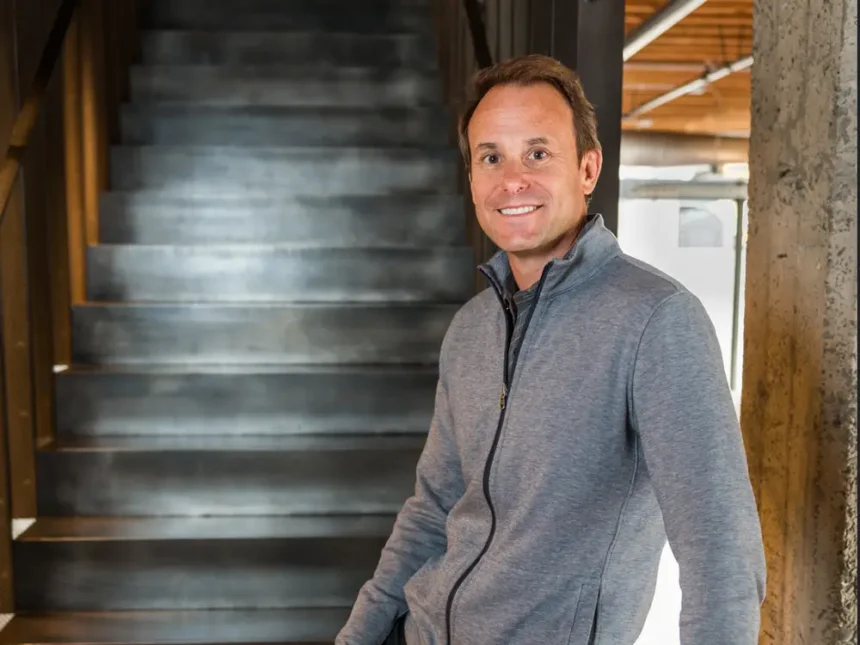
SaaStr founder Jason Lemkin said he won’t invest in companies that don’t require full-time in-office work. Jason Lemkin