



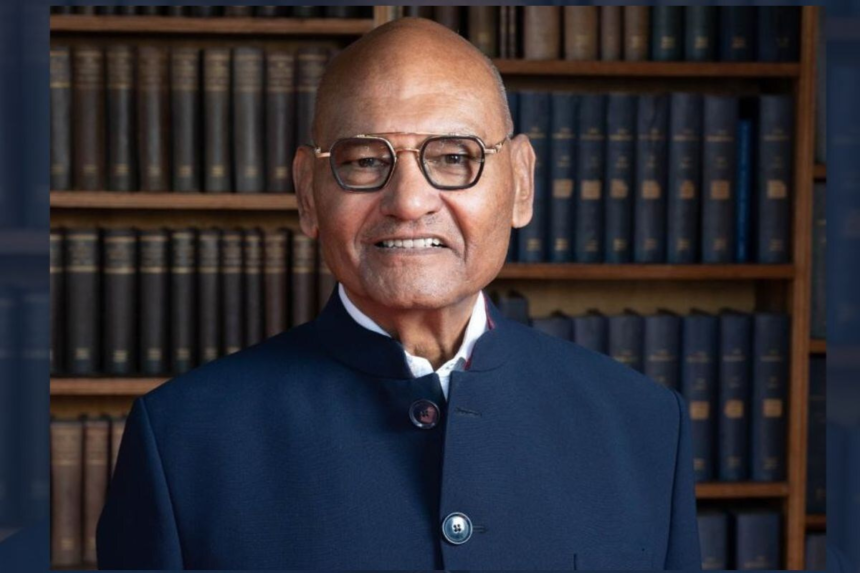
How rising consumption is increasing the urgency for sustainable and scalable energy strategies.
India’s energy conversation is no longer only about consumption. It is increasingly about control, production, and national capability.
As the country’s industrial growth accelerates, demand for minerals, metals, oil, gas, and critical resources is rising at a pace that is forcing policymakers and business leaders to rethink long-term energy strategy. For Anil Agarwal, the solution lies beneath the ground.
Speaking at a recent event, the Vedanta chairman called for what he described as a new “Green Revolution for below-the-ground resources,” urging India to unlock its natural reserves through entrepreneurship, privatization, exploration, and faster policy execution.
His message was direct: India already has the geology, talent, technology, and entrepreneurial capacity needed to become a self-reliant energy and manufacturing power. What it needs now is execution at scale.
Why India’s Resource Dependence Is Becoming a Strategic Issue
India remains one of the world’s fastest-growing major economies, but that growth comes with a structural challenge.
A significant share of the country’s imports is tied to natural resources such as oil, gas, metals, and minerals. As industrial production expands and infrastructure demand rises, dependence on imported resources creates pressure on trade balances, manufacturing costs, and long-term economic security.
According to Agarwal, nearly half of India’s imports are connected to below-the-ground resources despite the country possessing substantial geological reserves.
That imbalance, he argues, represents not just an economic challenge but also a missed opportunity for employment, industrial growth, and domestic value creation.
Instead of sending capital abroad to secure essential resources, he believes India should focus on developing stronger internal production ecosystems.
Entrepreneurship at the Center of Energy Growth
One of the strongest themes in Agarwal’s remarks was the role of entrepreneurship in transforming India’s natural resources sector.
Rather than framing mining, energy, and metals purely as government-driven industries, he argued that entrepreneurial participation combined with operational freedom can unlock far greater efficiency and scale.
He pointed to Vedanta’s experience with companies such as:
- Hindustan Zinc
- Bharat Aluminium Company Limited
As examples of how investment, technology, and private-sector management have helped dramatically increase production capacity.
India’s zinc production, he noted, expanded from approximately 1.4 lakh tonnes to nearly 30 lakh tonnes over time. Aluminum production at BALCO also scaled significantly, with future expansion targets continuing to rise.
For Agarwal, these examples reinforce a larger argument: when entrepreneurs are trusted with resources, technology, and long-term operational flexibility, industries can grow far beyond traditional expectations.
Exploration Is Becoming the Core Challenge
Agarwal repeatedly emphasized one word throughout his remarks: exploration.
India’s energy ambitions cannot grow without aggressive resource discovery and development. According to him, the country must dramatically increase investment in geological exploration if it wants to reduce dependence on imported resources.
That requires:
- Faster project approvals
- Stable long-term policy frameworks
- Improved investor confidence
- Greater private-sector participation
- Scalable exploration-led growth models
The challenge is especially important as global competition for critical minerals intensifies.
Resources linked to batteries, renewable energy systems, electronics manufacturing, and industrial production are becoming increasingly strategic worldwide. Countries that control production capacity are likely to hold stronger positions in future supply chains.
For India, exploration is no longer only an industrial issue. It is becoming part of a larger economic and geopolitical strategy.
Rising Consumption Is Increasing Pressure on Energy Systems
India’s rapidly expanding middle class, manufacturing ambitions, and infrastructure growth are all contributing to rising resource consumption.
As urbanization accelerates, demand continues growing across sectors such as:
- Construction
- Transportation
- Renewable energy
- Electric mobility
- Industrial manufacturing
- Infrastructure development
This creates urgency around building scalable domestic supply chains capable of supporting long-term growth sustainably.
Without stronger internal production capacity, India risks remaining vulnerable to global commodity volatility, geopolitical disruptions, and rising import costs.
That is why discussions around energy security are increasingly shifting from short-term pricing concerns toward long-term resource strategy.
The Link Between Manufacturing and Resource Independence
Agarwal’s broader vision extends beyond mining alone.
He sees natural resource self-reliance as directly connected to India’s manufacturing ambitions. The country’s push toward becoming a global industrial hub depends heavily on stable access to metals, minerals, and energy inputs.
In that sense, resource production becomes foundational infrastructure for economic expansion.
The argument is straightforward: countries that control raw material ecosystems are better positioned to scale manufacturing, create jobs, and strengthen industrial competitiveness.
For India, this is especially important as global companies continue diversifying supply chains and seeking alternatives to traditional manufacturing hubs.
The Growing Role of Women in Industrial Leadership
Alongside discussions around energy and manufacturing, Agarwal also highlighted the increasing participation of women across Vedanta’s workforce.
According to him, women now represent nearly 30 percent of the company’s employee base across businesses.
He emphasized that women professionals have consistently demonstrated strong leadership capabilities and argued that increasing female participation across the manufacturing, energy, and natural resources sectors will play an important role in India’s long-term economic growth.
That shift reflects broader changes taking place across traditionally male-dominated industries, where companies are increasingly recognizing the importance of leadership diversity and inclusive workforce development.
A Larger Vision for India’s Industrial Future
At its core, Agarwal’s message reflects a larger national conversation about economic independence.
India’s future growth will not depend only on digital services, startups, or technology exports. It will also depend on whether the country can build stronger foundations in energy, manufacturing, industrial production, and resource security.
That requires long-term thinking, policy consistency, exploration investment, and entrepreneurial participation at scale.
For Agarwal, the path forward is clear: India already possesses the raw ingredients needed for transformation. The next step is building the systems, confidence, and execution models capable of turning geological strength into economic power.
Because in the coming decades, countries that control resources may also control the pace of industrial growth itself.
Source: AL News
This image has been obtained via official Press Release