


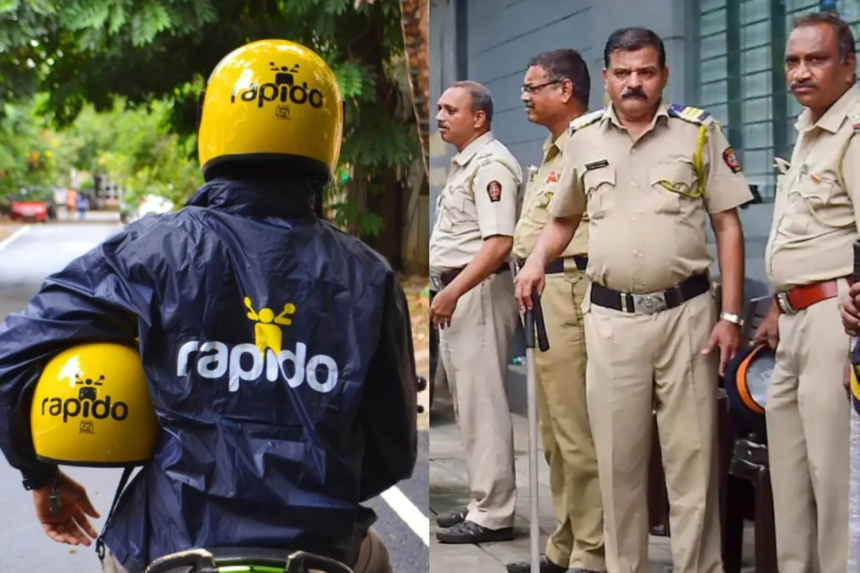
Pune Police have asked Google and Apple to remove Rapido from their app stores over allegations that it operates bike taxi services without the required authorisation.
Pune Police have asked Google and Apple to remove Rapido from their app stores, alleging that the Bengaluru-based ride-hailing platform is operating bike taxi services in the city without the required authorization under Maharashtra’s transport rules.
Police Commissioner Amitesh Kumar confirmed the request on Monday. The move follows a letter from Pune Collector Jitendra Dudi, who chairs the Regional Transport Authority, seeking action against the service, and a First Information Report (FIR) registered against Rapido’s parent company, Roppen Transportation Services Pvt Ltd, on October 16 at Vishrantwadi police station.
“We have already sent communications to Google Play Store and Apple’s App Store to take down Rapido’s application,” Kumar said.
Rapido offers bike taxis, autorickshaws, and cabs through a single app and operates in more than 400 Indian cities.
Removing the app from the stores would prevent new users from downloading it, but would not automatically delete it from existing users’ phones or stop bookings through installed versions. As of Monday, the bike taxi option was still visible on Rapido in Pune, and rides were continuing.
Because the app also provides autorickshaw and cab bookings, a complete takedown could affect those services for users trying to install the app as well.
What the FIR Alleges Against Rapido
The FIR alleges that Rapido used its platform to arrange paid passenger rides on two-wheelers registered as non-transport vehicles. Such private registrations do not, by themselves, authorize commercial passenger transport or establish compliance with the relevant commercial fitness and insurance requirements.
The case reportedly followed a booking made by Pune RTO motor vehicle inspector Prasad Govardhan Surwase during an enforcement drive. A bike arrived after the inspector booked a ride through the app.
According to the FIR, Rapido submitted an application for an aggregator license to the Transport Commissioner’s Office in Mumbai on August 11, 2026. The application had not been approved when the ride took place.
The complaint also refers to an RTO notice dated October 15, a notice from the Transport Commissioner’s Office dated April 29, 2025, and the rejection of Rapido’s Pune license application in December 2022. It cites a Bombay High Court order from January 2023 directing the company to stop operating its app, and alleges shortcomings in driver background checks.
Rapido had not publicly responded to the FIR or the police communications at the time of the report.
Maharashtra’s Bike Taxi Rules Restrict Services to Electric Two-Wheelers
Maharashtra’s cabinet approved a bike taxi policy on April 1, 2025, and the rules were notified on July 4, 2025, under Section 93 of the Motor Vehicles Act, 1988. The provision governs the conditions under which aggregator licenses are granted.
Under the state’s policy, bike taxi services are restricted to fully electric two-wheelers. Aggregators must maintain a minimum fleet of 50 electric two-wheelers registered in Maharashtra. The rules also specify a five-year license, a fee of Rs 1 lakh, and a security deposit of Rs 5 lakh.
Riders must be between 20 and 50 years old, hold a public service vehicle badge, and pass police verification. Trips are limited to 15 km, while riders’ duty is capped at eight hours a day. Local RTOs are responsible for determining fares and fleet limits.
The central issue in Pune is whether the vehicles used for the alleged rides complied with these requirements. The FIR describes bikes registered as private, non-transport vehicles, while Maharashtra’s policy permits only electric two-wheelers to operate as bike taxis.
Maharashtra’s Previous Attempt to Remove Ride-Hailing Apps
The latest action follows an earlier attempt by Maharashtra authorities to restrict access to ride-hailing apps.
On May 15, the office of the Additional Director General of Police, Maharashtra Cyber, directed Google and Apple to remove or disable access to applications operated by Ola, Uber, and Rapido. The notices cited Section 79(3)(b) of the Information Technology Act, 2000, concerning the conditions under which online platforms may lose legal protection for third-party activity after failing to act on a government notice.
The action followed a request from Transport Minister Pratap Sarnaik, who had written to the cyber department three days earlier seeking a shutdown of the services.
“There is no guarantee of passenger safety in these unauthorized bike taxi services,” Sarnaik said.
Both app stores reportedly complied on Friday night, but the apps were available again the following day after intervention by the central government. Officials noted that removing the applications had also disrupted cab and autorickshaw bookings.
The state subsequently said it would require operators to develop Maharashtra-specific apps with geo-fencing, which can restrict services to designated geographical areas.
Enforcement Figures Put Rapido Under Greater Survey
Transport department figures reported by The Indian Express show that Rapido accounted for the largest share of recorded illegal bike taxi operations in Maharashtra between April 2025 and March 2026.
During that period, authorities recorded 715 cases involving Rapido bike taxis, compared with 43 for Uber and 18 for Ola. The report also cited 110 Rapido vehicles seized, at least nine FIRs registered across aggregators, and more than Rs 11.85 lakh collected in fines. Fourteen additional FIRs were reportedly filed by May 2026.
The enforcement action comes as Rapido continues to grow its business. Its revenue from operations increased by approximately 44% to Rs 934 crore in FY25, up from Rs 648 crore in FY24. Its net loss narrowed by 30.5% to Rs 258 crore.
In May, the company announced a $240 million fundraise led by Prosus, as part of a $730 million primary and secondary transaction that valued the business at $3 billion.
Karnataka Bike Taxi Dispute Moves to the Supreme Court
The regulatory dispute extends beyond Maharashtra, with Karnataka facing a similar legal battle over the operation of bike taxis.
The Karnataka High Court halted bike taxi services in April 2025 pending the introduction of state rules. On January 23, 2026, a division bench overturned that order and allowed services to operate subject to registration and permits. The bench held that a blanket ban amounted to an unreasonable restriction on the right to carry on a trade under Article 19(1)(g) of the Constitution, while leaving the state free to impose safety requirements.
Karnataka subsequently appealed to the Supreme Court. Its special leave petition, filed in April under diary number 24566/2026, names Ola, Uber, Rapido, and the Bike Taxi Welfare Association. The state argues that motorcycles were not classified as contract carriages under the Motor Vehicles Act.
The Supreme Court heard the matter on Monday and directed that it be listed during the week beginning November 16.
The outcome could influence the wider debate over how states regulate bike taxi services, including the balance between passenger safety, licensing requirements, and the ability of ride-hailing platforms to operate.
Pune Autorickshaw Unions Raise Safety Concerns
Autorickshaw unions in Pune have criticized authorities for issuing notices while the service continues to operate.
Keshav Kshirsagar, president of the Maharashtra Kamgar Sabha and the Indian Gig Workers Front, has called for the service to be stopped and raised concerns about rider verification and passenger safety, referring to a case reported the previous week.
For now, the request to Google and Apple marks another step in the dispute over Rapido’s operations in Pune. Whether the app stores act on the communications, and how transport authorities enforce Maharashtra’s electric-only bike taxi policy, will determine what happens next for the service and its users.