


Artificial intelligence is often discussed through the lens of automation, software, and business efficiency. Yet some of its most significant potential lies elsewhere, inside hospitals, clinics, and healthcare systems where earlier detection and better decision-making can directly affect lives.
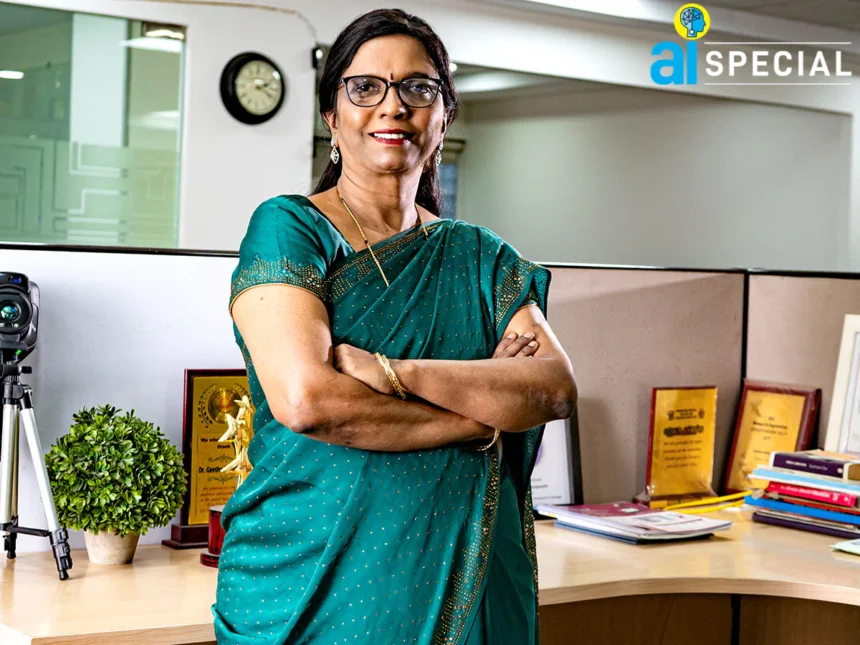
Few Indian technology leaders have focused on this intersection as consistently as Geetha Manjunath.
As a deep-tech entrepreneur and healthcare innovator, she has spent years working on how artificial intelligence can support medical professionals, improve diagnostics, and expand healthcare accessibility.
Her work reflects a growing shift within technology itself. The conversation is no longer only about building intelligent systems. It is increasingly about applying intelligence where it can create meaningful human impact.
Bringing AI Into Healthcare
Healthcare generates enormous amounts of data every day.
Medical imaging, patient records, clinical observations, diagnostic reports, and research findings create information that can help doctors make better decisions. The challenge lies in analyzing that information efficiently and accurately.
This is where artificial intelligence becomes valuable.
Geetha Manjunath has focused on building AI-driven healthcare solutions that assist with disease detection and diagnostic support. Rather than replacing medical professionals, these systems are designed to strengthen clinical decision-making by identifying patterns that may otherwise be difficult to detect.
The goal is not technology for its own sake. The goal is to improve outcomes.
Addressing Healthcare Accessibility
One of the biggest healthcare challenges facing many countries is access.
Specialists are often concentrated in large cities, while millions of people live in regions where advanced medical expertise remains difficult to access consistently.
Artificial intelligence creates opportunities to bridge some of those gaps.
By enabling faster screening and supporting healthcare professionals with diagnostic insights, AI systems can help extend medical capabilities beyond traditional limitations.
This makes technology particularly important in countries where healthcare demand continues to grow faster than available specialist resources.
Building Responsible Healthcare Technology
Healthcare remains one of the most sensitive applications of artificial intelligence.
Unlike consumer applications, medical technology requires accuracy, transparency, reliability, and trust.
Geetha Manjunath has consistently emphasized the importance of responsible AI development within healthcare environments.
This includes ensuring that technology supports doctors rather than replacing clinical judgment, maintaining data integrity, and prioritizing patient welfare throughout the innovation process.
The future of healthcare AI will depend not only on technological advancement but also on maintaining confidence among both healthcare professionals and patients.
The Rise of Deep-Tech Entrepreneurship
Geetha Manjunath’s journey also reflects the emergence of India’s deep-tech ecosystem.
For many years, startup conversations were largely dominated by e-commerce, consumer technology, and digital platforms. Deep-tech founders are helping expand that narrative into areas such as artificial intelligence, healthcare, scientific computing, and advanced research.
These sectors often require longer development cycles and stronger technical expertise, but they also create opportunities for meaningful innovation with long-term impact.
Healthcare AI sits directly within that category.
A Future Where Technology Supports Better Care
Artificial intelligence will continue reshaping healthcare over the coming decades.
The most valuable innovations may not always be the most visible. Often, they will be the systems quietly helping doctors make faster diagnoses, supporting earlier intervention, and improving healthcare access for larger populations.
Geetha Manjunath’s work represents that vision.
Her contribution lies not simply in building technology but in exploring how technology can become a practical tool for improving healthcare delivery.
As artificial intelligence becomes increasingly integrated into medical systems around the world, leaders focused on responsible, outcome-driven innovation will play an important role in shaping its future.
And Geetha Manjunath remains among the voices helping define what that future could look like.
Read more news, and follow us on Instagram
Photo: Forbes India