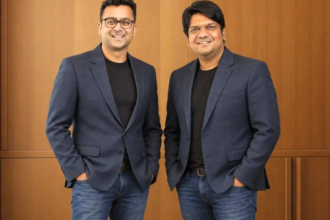




Most startup founders spend years searching for product-market fit. Aadit Palicha entered one of India’s most crowded sectors and attempted something even harder. He tried to change consumer behavior.
When Palicha and his co-founder, Kaivalya Vohra, launched Zepto in 2021, online grocery delivery was already populated by established players with deeper pockets, larger teams, and stronger brand recognition. Conventional wisdom suggested that grocery delivery was a low-margin business where scale mattered more than innovation.
Palicha saw the problem differently.
He believed that consumers were not simply buying groceries. They were buying convenience. If a company could reduce delivery times from hours to minutes, the entire category could be redefined.
That belief became the foundation of Zepto.
Building During Uncertainty
Before launching Zepto, Palicha had experimented with another grocery venture called KiranaKart. The experience exposed operational challenges but also revealed an opportunity hidden in plain sight.
The pandemic accelerated digital adoption across India. Consumers who had previously relied on local stores were increasingly comfortable ordering essentials online.
What remained unresolved was speed.
Most platforms still operated on delivery timelines measured in hours. Palicha believed customers would reward a company that could consistently deliver in under ten minutes.
The idea sounded ambitious, even unrealistic.
Investors initially questioned whether such a model could work economically at scale.
The Dark Store Advantage
Zepto’s growth was built on an operational model known as dark stores. Rather than treating grocery delivery as an extension of traditional retail, the company established small fulfillment centers strategically located near residential neighborhoods.
This reduced travel distance and dramatically improved delivery efficiency.
The approach required disciplined execution. Inventory management, logistics optimization, route planning, and technology all need to work together seamlessly.
The business became as much a technology company as a retail company.
While competitors focused on expansion, Zepto concentrated on building operational density.
That decision helped create one of the fastest-growing businesses in India’s consumer technology sector.
A New Generation of Founders
One reason Aadit Palicha attracts attention is his age.
He belongs to a generation of founders who grew up during India’s digital transformation. Rather than adapting to technological change, they started their careers inside it.
This perspective influenced how Zepto was built.
The company embraced data-driven decision-making, rapid experimentation, and a culture of speed. Internal processes were designed to move quickly while maintaining execution quality.
For Palicha, speed was not merely a customer promise. It became an organizational philosophy.
The Real Lesson
The most important lesson from Aadit Palicha’s journey is not about grocery delivery.
It is about conviction. Many successful businesses emerge because founders recognize shifts before the broader market fully understands them.
Palicha identified changing consumer expectations and built an entire company around serving those expectations faster than competitors.
His success demonstrates that market leadership often belongs not to those with the largest resources, but to those who recognize emerging behavior patterns early and execute relentlessly.