



The leadership transition marks a shift from high-profile personalities to hands-on business operators.
Some of America’s most iconic companies are entering a new chapter.
Within a short period, Berkshire Hathaway, Apple, Walmart, and Disney have all handed leadership to a new generation of chief executives. Warren Buffett has stepped aside after six decades at Berkshire Hathaway. Bob Iger has passed Disney’s leadership to Josh D’Amaro. Doug McMillon has handed Walmart to John Furner, while Tim Cook is preparing to leave Apple later this year, with longtime executive John Ternus set to take over.
These transitions are significant not simply because of the companies involved, but because they reveal an emerging leadership trend.
Instead of appointing celebrity executives known for charisma and public profiles, these companies are choosing operators. Leaders who understand every layer of the business, have spent decades inside their organizations, and built their reputations by solving operational problems rather than dominating headlines.
The Rise of the Operator CEO
For years, many technology companies celebrated visionary founders who reshaped industries through bold ideas and ambitious strategies.
Today’s environment looks different.
Artificial intelligence, supply chain disruptions, geopolitical uncertainty, and rising competitive pressure have made flawless execution just as important as innovation itself.
That is why companies increasingly value leaders who understand how organizations actually function.
These executives know products, customers, employees, operations, and decision-making processes because they have spent years building them from within.
Rather than arriving with an entirely new playbook, they understand which systems work, which ones require improvement, and how to execute change without disrupting the organization’s strengths.
Greg Abel Faces Berkshire Hathaway’s Biggest Challenge
Succeeding Warren Buffett may be one of the most difficult leadership transitions in modern corporate history.
Buffett spent six decades transforming Berkshire Hathaway into one of the world’s largest conglomerates through disciplined capital allocation and decentralized management.
His successor, Greg Abel, brings a different style.
Before becoming CEO, Abel oversaw Berkshire’s non-insurance businesses and previously led Berkshire Hathaway Energy. Unlike Buffett, who largely allowed subsidiary companies to operate independently, Abel is expected to play a more active operational role across the organization.
That approach brings both opportunity and complexity.
In addition to overseeing dozens of businesses, Abel now inherits Berkshire’s insurance operations and one of the world’s largest investment portfolios.
Industry experts believe his success will depend not only on operational discipline but also on preserving Buffett’s philosophy of long-term capital allocation while adapting Berkshire for future industries such as AI-driven energy infrastructure.
Apple Is Returning to an Engineering Mindset
Apple’s leadership transition carries its own significance.
Tim Cook transformed Apple into one of the world’s most valuable companies through operational excellence, manufacturing scale, and supply chain mastery.
His successor, John Ternus, represents a different background.
A mechanical engineer who has spent more than 25 years at Apple, Ternus has played a central role in developing Apple Silicon, AirPods, and multiple generations of the iPhone.
He is widely known inside Apple for his extraordinary attention to detail.
One widely discussed example describes him inspecting product screws under a magnifying glass after discovering they contained more grooves than Apple’s engineering specifications required.
That obsession echoes the philosophy of Steve Jobs, who famously believed customers should experience perfection even in details they would never consciously notice.
As CEO, however, engineering expertise alone will not be enough.
Apple faces growing pressure in artificial intelligence, software ecosystems, and emerging hardware categories that will require both operational precision and strategic vision.
Walmart Continues Building From the Store Floor
John Furner’s career reflects a leadership path that has become increasingly rare among Fortune 500 companies.
He began as an hourly Walmart associate in 1993.
Over three decades, he worked across nearly every major function inside the company, from store operations and merchandising to sourcing, marketing, and executive leadership.
That experience shaped his management philosophy.
Rather than relying solely on reports and dashboards, Furner regularly visits stores, speaks directly with associates, and gathers customer feedback firsthand.
This close connection to daily operations has helped Walmart continuously refine its retail model while expanding digital capabilities.
As online competition intensifies, Furner’s challenge will be balancing Walmart’s physical retail advantage with continued investment in e-commerce, personalization, and digital transformation.
His operational experience provides a strong foundation for that evolution.
Disney Bets on Operational Excellence
Disney’s transition may be the most emotionally significant.
Bob Iger fundamentally reshaped the company through acquisitions, including Pixar, Marvel, Lucasfilm, and 21st Century Fox.
His successor, Josh D’Amaro, built his reputation very differently.
After nearly three decades with Disney, D’Amaro most recently led the company’s Experiences division, overseeing theme parks, hotels, restaurants, retail operations, transportation, and thousands of employees.
Managing Disney’s parks requires constant attention to countless operational details.
Guest satisfaction depends on ride availability, staffing, food service, entertainment, logistics, safety, maintenance, and customer experience, all functioning seamlessly together.
D’Amaro became known for regularly walking the parks, speaking with employees and guests, and making continuous improvements based on direct observation.
That operational mindset now moves to the highest level of Disney’s leadership.
Why Detail-Oriented Leaders Are Becoming More Valuable
The emergence of these CEOs reflects broader changes across corporate America.
Companies increasingly operate in environments where execution determines competitive advantage.
Artificial intelligence can accelerate product development.
Digital tools can improve productivity.
Automation can streamline operations.
But none of those technologies replaces disciplined leadership.
Organizations still need executives capable of making thousands of operational decisions while maintaining consistency across increasingly complex businesses.
Investors also appear to be rewarding leaders who can translate strategy into measurable execution rather than relying solely on ambitious narratives.
Operational Excellence Alone Is Not Enough
Despite this trend, leadership experts caution against assuming operational expertise guarantees success.
Running an individual business unit differs dramatically from leading an entire global corporation.
A chief executive must balance execution with long-term strategy, capital allocation, talent development, innovation, investor communication, and organizational transformation.
Each of these new CEOs also inherits extraordinary expectations.
Greg Abel follows Warren Buffett.
John Ternus follows both Tim Cook and Steve Jobs.
Josh D’Amaro succeeds one of Disney’s most influential leaders.
John Furner inherits Walmart during one of retail’s most competitive periods.
Strong operational skills helped each executive reach the top.
Remaining there will require vision equal to execution.
The Future CEO Looks Different
For years, leadership discussions often centered around bold personalities capable of inspiring employees and captivating investors.
That model has not disappeared, but today’s business environment increasingly rewards executives who combine strategic thinking with deep operational understanding.
The new generation of leaders at Berkshire Hathaway, Apple, Walmart, and Disney reflects that shift.
They know their companies because they helped build them.
They understand frontline operations because they worked within them.
They focus on systems, execution, and continuous improvement rather than personal visibility.
Whether this leadership model ultimately outperforms previous generations will only become clear over time.
What is already evident, however, is that America’s largest companies are placing a greater premium on disciplined operators capable of turning ambitious strategies into consistent business results.
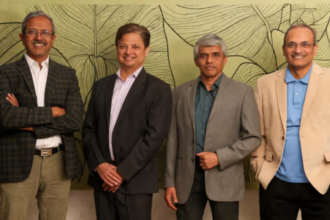
From left: Greg Abel, John Ternus, John Furner, and Josh D’Amaro. Getty Images
Source: BI