



Burger King’s turnaround strategy and strong international growth helped Restaurant Brands deliver stronger-than-expected quarterly results.
Restaurant Brands International reported better-than-expected first-quarter earnings on Wednesday, driven largely by Burger King’s improving U.S. performance and continued momentum across international markets.
The parent company of Burger King, Tim Hortons, Popeyes, and Firehouse Subs posted adjusted earnings per share of 86 cents, ahead of Wall Street expectations of 82 cents. Revenue reached $2.26 billion, also slightly above analyst estimates of $2.24 billion.
Net income attributable to shareholders rose sharply to $338 million, compared with $159 million during the same period last year. Revenue increased 7% year over year as same-store sales growth remained positive across key markets.
Burger King’s Turnaround Continues to Gain Momentum
Burger King emerged as the strongest performer in the company’s portfolio during the quarter.
The chain reported same-store sales growth of 5.8%, comfortably beating analyst expectations of 3.5%. The performance reflects Restaurant Brands’ broader effort to revive Burger King’s U.S. operations through restaurant renovations, ingredient upgrades, and stronger value-focused offerings.
The company has spent the last several quarters modernizing stores, improving the quality of its signature Whopper burger, and introducing more competitive pricing strategies aimed at attracting budget-conscious consumers.
Restaurant Brands Chairman Patrick Doyle said Burger King’s progress is becoming increasingly visible in the broader fast-food industry.
“There are notable successes in the industry right now, and that includes Burger King,” Doyle said during the earnings call, adding that some competitors are continuing to lose market share.
International Business Remains a Major Growth Driver
Restaurant Brands also benefited from strong international performance, particularly outside the U.S. and Canada.
The company’s international segment recorded same-store sales growth of 5.7%, outperforming Wall Street estimates of 5.1%. International Burger King locations, which account for the majority of the segment, posted growth of 5.4%.
The results reinforce the importance of Restaurant Brands’ global expansion strategy, especially as international markets continue to provide stronger traffic and sales momentum than some North American operations.
Tim Hortons Faces Slower Growth
While Burger King delivered strong numbers, Tim Hortons posted softer-than-expected results.
The Canadian coffee chain reported same-store sales growth of 1.6%, below analyst expectations of 2.5%.
Restaurant Brands CEO Josh Kobza said severe snowstorms in January, combined with growing economic concerns among Canadian consumers, affected sales during the quarter. However, he noted that Tim Hortons still outperformed the broader coffee category in Canada.
Popeyes Struggles Continue
Popeyes remained the weakest brand in the company’s portfolio.
The fried chicken chain reported a 6.5% decline in same-store sales, significantly worse than Wall Street forecasts of a 1.5% drop. It marked one of the brand’s steepest quarterly declines in recent years.
The company said Popeyes is facing pressure from intensified competition and increasingly price-sensitive consumers. In response, the chain is focusing more heavily on operations, menu consistency, and core products to stabilize performance.
Kobza told analysts that management expects Popeyes’ same-store sales growth to return during the second half of the year.
Rising Costs and Geopolitical Risks Remain Concerns
Despite the earnings beat, Restaurant Brands warned of challenges that could affect future performance.
Executives highlighted persistently high beef costs, which are now expected to remain elevated longer than initially anticipated. The company also pointed to weakening consumer sentiment tied to geopolitical tensions, including the ongoing conflict involving Iran.
Those concerns appeared to weigh on investors, with Restaurant Brands shares falling roughly 5% in morning trading following the earnings release.
Still, the quarter showed that Burger King’s turnaround strategy is beginning to deliver measurable results, giving Restaurant Brands a stronger foundation as it navigates a tougher consumer environment.
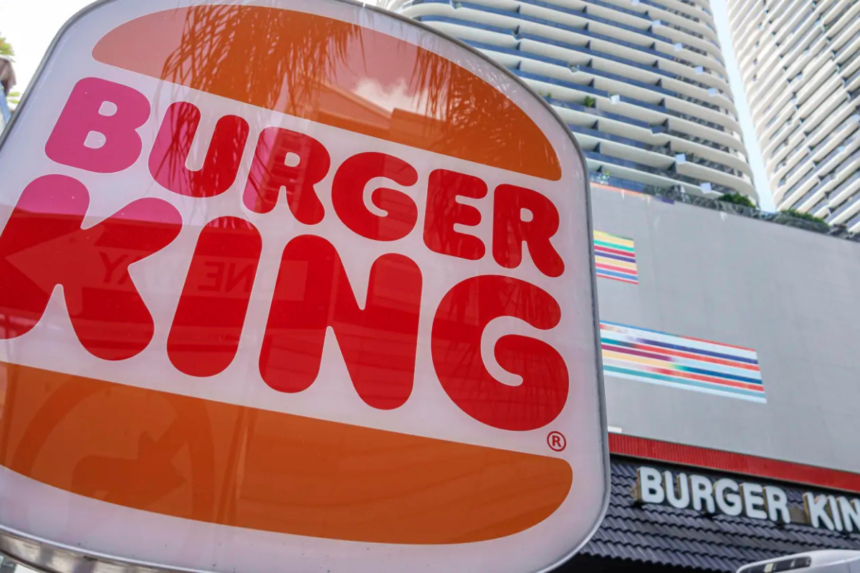
Burger King fast food hamburger restaurant in Miami, Fla.
Jeff Greenberg | Universal Images Group | Getty Images
Source: CNBC