



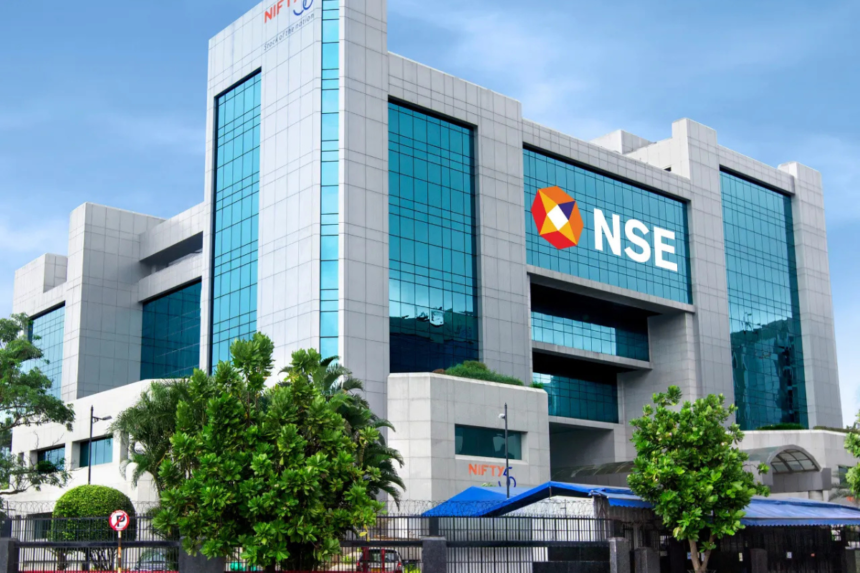
The National Stock Exchange IPO will remain open until September 21, with shares priced between ₹1,700 and ₹1,785 each.
The National Stock Exchange of India (NSE) is set to launch its much-awaited initial public offering on September 17, 2026, with the exchange fixing a price band of ₹1,700 to ₹1,785 per share.
The issue will remain open until September 21, with NSE seeking a valuation of approximately ₹4.42 lakh crore at the upper end of the price band. The IPO will consist entirely of an offer for sale by existing shareholders, meaning NSE itself will not receive any fresh capital from the issue.
At the upper end, the offering is expected to raise around ₹22,562 crore, making it one of India’s largest IPOs. The issue comprises approximately 12.64 crore existing shares, down from the 14.89 crore shares originally proposed in the June 2026 draft prospectus.
NSE IPO Is an Entirely Offer-for-Sale Issue
Unlike a conventional IPO that combines a fresh issue with an offer for sale, the NSE offering contains no new shares.
The roughly 12.64 crore shares being sold are existing shares held by NSE’s investors. After expenses related to the offering, the proceeds will therefore go to the selling shareholders rather than to NSE.
The primary purpose of the IPO is to provide an exit opportunity to existing investors and establish a public market for NSE shares through a listing on the BSE.
The reduction in the number of shares offered means the final issue is more than 15% smaller than the 14.89 crore shares proposed in the DRHP.
Reuters reported that several major investors reduced their planned stake sales amid expectations that NSE could perform strongly after listing.
NSE IPO Dates and Minimum Investment
The IPO will open on September 17 and close on September 21.
The current timetable provides for the basis of allotment to be finalised on September 22, credit of shares and refund-related processes on September 23, and listing on September 24.
The IPO’s lot size has been fixed at eight shares.
At the upper price of ₹1,785, a minimum retail application for eight shares would cost ₹14,280. A retail investor can apply for up to 14 lots, or 112 shares, representing a maximum application of ₹1,99,920 at the top end of the price band.
Who Is Selling NSE Shares?
State Bank of India (SBI) is the largest individual selling shareholder, offering approximately 1.59 crore shares.
Other major sellers include:
| Selling shareholder | Approx. shares offered |
|---|---|
| State Bank of India | 1.59 crore |
| Canada Pension Plan Investment Board | 1.19 crore |
| Aranda Investments (Mauritius) | 1.12 crore |
| MS Strategic (Mauritius) | 1.10 crore |
| New India Assurance Company | 1.05 crore |
Several investors have reduced the number of shares they intend to sell compared with their plans in the DRHP.
Reuters reported that National Insurance Company, General Insurance Corporation of India, Stock Holding Corporation of India, Bank of Baroda, Indian Bank and MS Strategic are among the shareholders that reduced their proposed sales.
The SBI group is also represented through SBI Capital Markets, which is selling an additional block of shares alongside SBI.
LIC Is Not Selling Its NSE Stake
The Life Insurance Corporation of India, which owns approximately 10.72% of NSE, is not participating in the offer for sale.
Its decision to retain the stake means LIC will continue to be one of NSE’s largest shareholders after the listing.
The decision by several other investors to reduce their sales has also lowered the proportion of NSE’s total equity being offered in the IPO to roughly 5.2%, from around 6% in the original plan.
Employee Reservation and Investor Quotas
NSE has reserved shares worth up to ₹70 crore for eligible employees.
Employees participating in the reserved portion will receive a discount of ₹170 per share from the final issue price.
Under the IPO structure, not more than 50% of the net offer will be allocated to qualified institutional buyers. Not less than 15% will be available to non-institutional investors, while not less than 35% will be reserved for retail individual investors.
The anchor investor book is scheduled to open on September 16, one day before the public issue opens.
NSE Dominates India’s Equity Derivatives Market
NSE’s public-market debut comes with an unusually strong competitive position.
According to the Redseer report included in NSE’s offer documents, the exchange accounted for more than 93% of India’s cash-market turnover during the three months ended June 2026.
It also accounted for almost the entire domestic equity-futures market and around 68.5% of equity-options premium turnover during the same period.
NSE’s share of exchange-traded currency futures and currency options was also reported at 100% for the period, with market share measured by turnover for futures and premium turnover for options.
Globally, NSE has become one of the largest derivatives marketplaces. Its offer documents, citing World Federation of Exchanges data, said the exchange accounted for 11.38% of global cash-equity trades and 51.18% of equity-derivatives contracts traded during FY2026.
It was also the world’s largest derivatives exchange by contracts traded for the seventh consecutive year as of March 31, 2026.
NSE’s Profit Fell in FY26 Before Recovering in Q1
NSE reported a weaker full-year performance in FY2026.
Consolidated profit after tax fell to around ₹10,302 crore, from ₹12,188 crore a year earlier, while revenue from operations declined to approximately ₹16,601 crore, compared with ₹17,141 crore in FY2025.
The exchange returned to year-on-year growth in the June 2026 quarter.
For the quarter ended June, consolidated profit after tax rose 6.7% to around ₹3,120 crore, while revenue from operations increased about 13% to ₹4,560 crore. Reuters also cited the same quarterly figures in its report on the IPO.
The earnings profile is important for investors because NSE generates a significant share of its revenue from derivatives, particularly options.
Recent regulatory changes have affected derivatives trading volumes, making future growth and the sustainability of NSE’s exceptionally high market share key considerations for investors.
IPO Comes Nearly a Decade After NSE’s First Attempt
NSE’s public listing has been almost a decade in the making.
The exchange first filed draft IPO documents in 2016, but the listing process was subsequently delayed amid regulatory investigations and proceedings linked to its co-location controversy.
The listing process regained momentum in 2026 after NSE received the necessary regulatory clearances and filed a fresh DRHP on June 17.
SEBI’s public filings show that NSE’s Red Herring Prospectus was filed on September 11, 2026, marking another major step towards the listing.
One of India’s Biggest IPOs
At ₹1,785 a share, the IPO gives NSE an implied valuation of around ₹4.42 lakh crore, or roughly $46 billion.
That would put the exchange among India’s largest listed companies by market capitalisation immediately upon listing.
The issue size also places it among India’s biggest public offerings, although it remains below Hyundai Motor India’s roughly ₹27,870 crore IPO in 2024.
The revised NSE issue is larger than LIC’s roughly ₹21,000 crore public offering in 2022 at the top end of the price range, although the comparison is complicated by differences in the offer structures.
NSE IPO Listing on September 24
The NSE IPO will be closely watched because it combines a rare opportunity to invest directly in India’s dominant stock exchange with the liquidity and regulatory risks associated with its highly derivatives-driven business.
The public issue opens on September 17, closes on September 21, and is expected to list on September 24.
For investors, the central question will be whether NSE’s dominant market position, scale, and profitability justify the valuation investors are being asked to pay.
For India’s capital markets, meanwhile, the listing marks the end of a nearly decade-long wait to see the country’s largest stock exchange become a publicly traded company.
Read more news and follow us on Instagarm
Source: ISN