



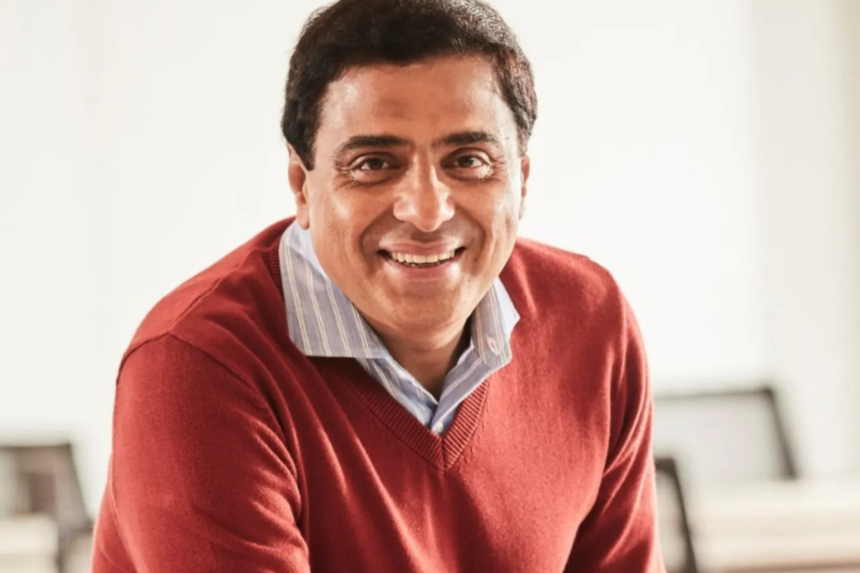
The startup will use the fresh funding to expand its voice AI business across banking, financial services, and insurance, while developing speech models for Indian languages and dialects.
Voice AI startup Navana.ai has raised ₹40 crore in a Series A funding round led by upGrad co-founder Ronnie Screwvala, as the company looks to expand its enterprise business across banking, financial services, and insurance while developing speech technology for India’s diverse languages and dialects.
The round also saw participation from Antler India, Sharad Sanghi, Sandeep Singhal and Paula Mariwala.
Navana.ai plans to use the fresh capital to expand deployments among BFSI companies, develop speech models for Indian languages and dialects, and further build its AI Contact Centre and automated evaluation platform.
Navana.ai Focuses on Enterprise Voice AI
Founded by brothers Raoul Nanavati and Jai Nanavati, Navana.ai develops voice AI systems for enterprises, with a particular focus on sectors where data privacy, regulatory compliance, and secure handling of customer information are important.
One of the company’s key offerings is an on-premises deployment model, allowing enterprises to keep their voice data within their own infrastructure rather than relying entirely on public cloud systems.
That approach is particularly relevant for banks and financial institutions, where customer conversations can contain sensitive financial and personal information.
Speech Models Cover 12 Indian Languages
Navana.ai says its proprietary speech technology currently supports 12 Indian languages and 45 dialects.
The models are designed for real-world conversations rather than only clean studio recordings. The company says they are built to handle challenges such as background noise, overlapping speech, code-switching, and regional accents.
Those capabilities are important in India, where customers frequently switch between English and local languages during the same conversation and where accents can vary significantly between regions.
Navana.ai’s objective is to make enterprise voice interfaces work across those variations rather than limiting organisations to standardised English-language interactions.
More Than 100 Million Minutes of Voice AI
The startup says it has processed more than 100 million minutes of voice AI interactions for companies in the BFSI sector.
Its customers include Bajaj Finserv, Protean, Ujjivan Small Finance Bank, Jana Small Finance Bank and Grihum Housing Finance.
These deployments cover use cases where voice AI can support customer-service and operational workflows, including contact-centre interactions and automated quality evaluation.
For financial institutions, the ability to deploy these systems within controlled environments can also reduce concerns around moving sensitive customer conversations to external infrastructure.
Navana.ai Has Worked With Major Research Institutions
The startup has also worked with academic and technology organisations on Indian-language speech research.
Its collaborations include the Indian Institute of Science (IISc) Bengaluru, IIT Madras, Microsoft Research and the Gates Foundation.
Navana.ai worked with IISc Bengaluru to open-source RESPIN, a speech corpus containing around 10,000 hours of recordings across more than 38 dialects.
The dataset is intended to support research and development in speech recognition for Indian languages, where high-quality training data remains an important challenge.
Bodhi Speech Model Targets Accuracy
Navana.ai has also developed Bodhi, its proprietary speech model.
The company says Bodhi was tested in a benchmarking exercise using real-world speech samples from multiple Indian voice AI platforms and recorded the highest accuracy in that assessment.
Because the benchmark was conducted by Navana.ai itself, the result should be viewed as a company-reported assessment rather than an independent industry ranking.
The broader objective, however, is clear: build voice models that can understand Indian speech reliably across languages, accents and noisy environments.
Ronnie Screwvala Backs India’s Voice AI Opportunity
Ronnie Screwvala said India’s linguistic diversity creates a specific challenge for global AI systems that are often designed around languages and speech patterns with larger amounts of training data.
“Voice AI will be a critical part of India’s digital infrastructure,” Screwvala said.
He also highlighted data residency and regulatory compliance as important considerations for enterprises adopting voice AI.
For BFSI companies, those considerations are becoming increasingly important as AI moves from experimental projects into customer-facing applications.
Why BFSI Is a Key Market
Banks, insurers, and financial-services companies handle millions of customer interactions every day, creating a large potential market for automated voice systems.
Voice AI can be used for customer support, verification, collections, quality assessment, agent assistance, and other workflows.
But financial institutions also face strict requirements around data security, privacy, and regulatory compliance.
That creates an opportunity for companies such as Navana.ai that can combine voice automation with controlled deployment environments.
Its on-premises model is therefore a key part of its pitch to enterprises that may be cautious about putting sensitive voice data entirely into third-party cloud infrastructure.
Funding Will Support Expansion
The ₹40 crore Series A round gives Navana.ai additional capital to expand its enterprise deployments and strengthen the technology behind them.
The company plans to focus on growing its BFSI customer base while continuing to expand its speech models across Indian languages and dialects.
It is also investing in its AI Contact Centre and automated evaluation platform, areas that could allow enterprises to automate more customer-service workflows while measuring the quality of human and AI interactions.
Making Voice AI More Accessible Across India
For Navana.ai, the larger opportunity goes beyond automating customer-service calls.
India’s digital economy has already expanded through technologies such as digital payments and identity infrastructure, but language and literacy remain barriers for many users.
The company is betting that voice interfaces can make digital services more accessible to people who may be more comfortable speaking than typing, particularly in regional languages.
That makes Indian-language speech technology a potentially important layer of the country’s next phase of digital adoption.
With fresh funding from Screwvala and other investors, Navana.ai is now looking to turn that opportunity into a much larger enterprise business, starting with financial services and expanding across India’s increasingly voice-driven digital economy.
Ronnie Screwvala