



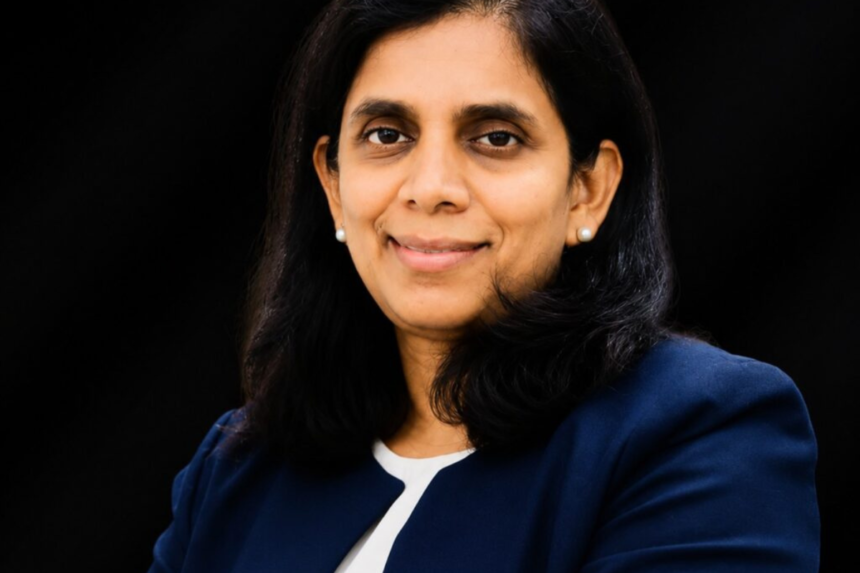
The investor is backing deep-tech and science-led ventures that could shape India’s next wave of innovation.
India’s startup ecosystem has moved through several waves of investment. Food delivery and fintech once dominated funding conversations. Today, artificial intelligence has taken centre stage.
But Dr. Ritu Verma is looking elsewhere.
As Managing Partner of Ankur Capital, Verma is investing in companies working on batteries, alternative proteins, advanced materials, semiconductors, climate technology and new forms of manufacturing. These businesses often require years of research, experimentation and regulatory work before they can become commercially viable.
That makes them difficult to fund through a venture capital model built around rapid growth and quick exits. Verma believes that is precisely why they need patient capital.
From Physics to Deep-Tech Investing
Verma’s approach to investing was shaped long before she entered venture capital.
After completing her PhD in Physics at the University of Pennsylvania, she worked with companies including Unilever and Philips, where she gained experience in taking scientific research towards commercial applications.
The experience showed her a recurring problem. Strong scientific ideas can fail to reach the market not because the technology does not work, but because commercialising it requires capital, time, industry expertise and persistence.
That realisation eventually led her to co-found Ankur Capital in 2013.
The firm’s focus was clear. Backing founders attempting to turn difficult scientific and technological problems into businesses.
Investing Where Others See Too Much Risk
At a time when much of India’s startup funding was flowing into consumer internet businesses, Ankur Capital looked toward agriculture, synthetic biology, industrial technology and climate solutions.
These sectors come with longer development cycles and greater technical uncertainty. A laboratory breakthrough does not automatically become a viable product. It needs testing, manufacturing capabilities, regulatory approvals and customers willing to adopt it.
Verma’s investment philosophy is built around understanding that journey rather than forcing science-led companies into conventional startup timelines.
Some of the firm’s investments, including companies such as CropIn, Captain Fresh and String Bio, have gone on to gain recognition in their respective sectors.
India’s Next Big Companies May Not Be Apps
The larger thesis behind Verma’s approach is straightforward.
India’s next generation of globally significant companies may emerge from laboratories, research institutions and manufacturing facilities rather than another consumer app.
The country has a growing scientific talent pool, expanding manufacturing capabilities and increasing interest in strategic technologies. But converting those advantages into global companies requires investors willing to tolerate longer timelines.
For Verma, venture capital therefore has another role beyond providing money. It can help scientific ideas survive the difficult transition from research to commercial scale.
That patience could matter as India moves into areas where technological depth, rather than speed of execution alone, determines who wins.
The Bigger Bet on India’s Future
The investment case for deep tech is not based on the idea that every scientific startup will succeed. Many will not.
The argument is that the few that do could create technologies and businesses with much deeper competitive advantages than the average software startup.
That is why Verma is willing to invest before the market has become crowded.
India’s next breakthrough may not arrive as a new app on a smartphone. It could begin with a scientist in a laboratory, a prototype on a manufacturing floor, or a technology that takes a decade to become commercially important.
And investors willing to stay for that entire journey may have a very different view of where India’s biggest opportunities lie.