

New data shows digital workers are increasingly correcting inaccurate AI outputs, raising concerns about efficiency and workplace trust.
New research shows employees are spending hours correcting AI mistakes, raising concerns that the productivity gains promised by artificial intelligence may be smaller than they appear.
Artificial intelligence is saving workers time, but a growing number of employees are using much of that time fixing the technology’s mistakes instead of focusing on more valuable work.
The emerging workplace habit has earned a new name: botsitting.
According to new research from AI platform Glean, employees are increasingly monitoring, correcting, and rewriting AI-generated content, creating hidden costs for businesses that have rapidly adopted artificial intelligence.
AI Adoption Continues to Rise
Glean surveyed 6,000 digital workers across the United States, the United Kingdom, and Australia to understand how AI is changing the workplace.
The study found that 87 percent of respondents now use AI in their daily work, while 75 percent said the technology has improved their productivity.
On average, workers estimated AI saves them 11 hours every week by automating repetitive tasks.
However, the research suggests those productivity gains may not tell the full story.
What Is Botsitting?
Glean defines botsitting as the time employees spend supervising AI systems rather than completing their own work.
That includes:
- Checking AI-generated responses for accuracy.
- Providing missing context.
- Correcting factual errors.
- Rewriting poor-quality content.
- Running multiple prompts to improve results.
- Fixing responses that sound confident but contain incorrect information.
According to the report, employees spend an average of 6.4 hours every week performing these tasks.
In other words, more than half of the time AI saves is spent reviewing and repairing its output.
When Botsitting Turns Into a Bigger Problem
The report warns that constant AI monitoring can eventually lead to a more serious workplace issue.
As reviewing AI-generated work becomes repetitive and frustrating, some employees stop checking the content altogether before sharing it internally or sending it to customers.
Glean refers to this behavior as “botshitting,” describing it as the practice of distributing AI-generated work that employees have neither properly reviewed nor fully understood.
The findings suggest this behavior is becoming increasingly common.
According to the survey:
- 69 percent of AI users admitted they have shared AI-generated work without fully reviewing it.
- Nearly 30 percent blamed AI when mistakes were discovered.
- Among heavy AI users, that figure rose to 41 percent.
The report suggests this growing tendency could undermine workplace trust, increase errors, and create accountability challenges for organizations relying heavily on AI-generated content.
Why Businesses Should Pay Attention
While AI continues to improve efficiency, Glean argues that many organizations are measuring the wrong outcomes.
Rather than tracking how frequently employees use AI, businesses should evaluate whether the technology is actually improving the quality of work being produced.
The report recommends establishing clear guidelines around:
- When AI should be used.
- How employees should verify AI outputs.
- Which tasks require human review.
- How organizations measure both productivity and quality.
AI Works Best Alongside Human Judgment
Glean concludes that successful AI adoption depends less on the technology itself and more on how organizations redesign workflows around it.
Companies seeing the strongest results treat AI as one component of a broader workplace strategy rather than a standalone productivity tool.
That includes continuously refining processes, improving governance, investing in employee training, and ensuring human oversight remains central to decision-making.
As AI becomes a standard part of modern work, the report suggests the biggest competitive advantage may not come from using more AI, but from using it more responsibly.
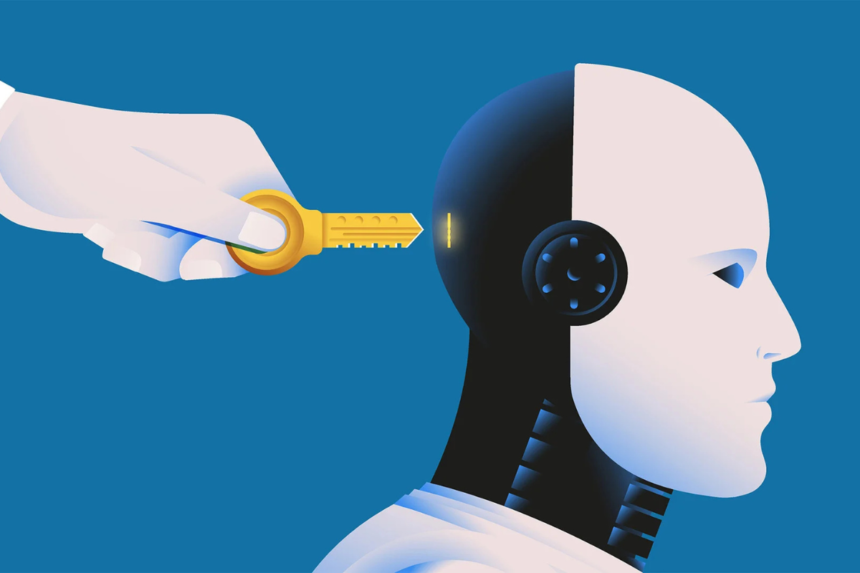
Illustration: Getty Images