



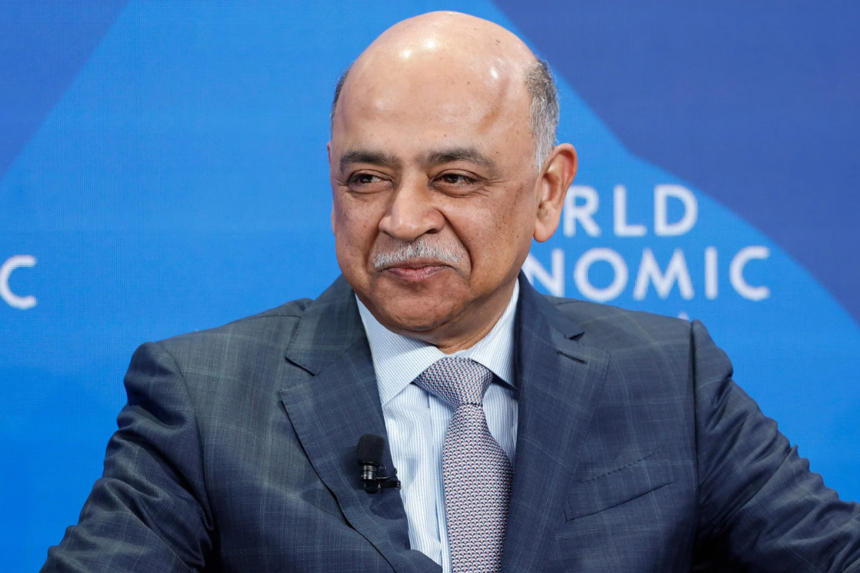
Arvind Krishna says many companies overcomplicate AI adoption, arguing that founders should embed AI into their businesses from the very beginning.
Arvind Krishna urges companies to move beyond experimentation and embed AI into core business operations.
IBM Chief Executive Officer Arvind Krishna believes businesses have reached a turning point in artificial intelligence adoption. After several years of experimentation, he argues that companies should stop treating AI as a side project and begin integrating it into their operations at scale.
Speaking on the Masters of Scale podcast, Krishna said organisations should approach AI as a “Day Zero” moment, treating it as the beginning of a new competitive era rather than another technology upgrade.
According to Krishna, the companies that move decisively today will be better positioned to compete as artificial intelligence reshapes industries over the coming years.
Experimentation alone is no longer enough
Since the launch of ChatGPT, businesses across industries have explored artificial intelligence through pilot programmes and limited deployments. While these early experiments have helped organisations understand the technology, Krishna believes many companies have remained stuck in the testing phase.
He said business leaders should now focus on implementing AI across selected business functions rather than continuing isolated experiments.
Instead of attempting to automate every process at once, Krishna recommends choosing three to five high-impact use cases and deploying AI at scale. This approach allows organisations to improve data management, strengthen internal processes, and develop the organisational experience needed for broader adoption.
Once those projects succeed, companies can expand AI across additional business functions with greater confidence.
Many businesses still struggle to realise AI’s value
Despite growing investment in artificial intelligence, Krishna estimates that only about 20 percent of companies are using the technology effectively.
He believes many organisations either fail to generate meaningful returns or remain uncertain about how AI can create long-term business value.
For Krishna, successful adoption depends less on implementing the latest technology and more on building the organisational capabilities required to use it effectively.
Curiosity matters more than technical expertise.
Krishna also challenged the common assumption that companies should prioritise hiring AI specialists.
Instead, he argued that businesses should identify employees who demonstrate curiosity, adaptability, and a willingness to learn new ways of working.
According to him, individuals who embrace change often deliver greater long-term value than those who possess technical expertise but resist organisational transformation.
Building a culture that encourages continuous learning, he said, is essential for successful AI adoption.
AI investment requires patience.e
Krishna cautioned business leaders against expecting immediate financial returns from artificial intelligence.
During the first six to twelve months of implementation, organisations are likely to spend more than they save as they invest in engineering resources, computing infrastructure, and AI usage costs.
However, he believes those early investments create valuable experience that reduces the cost and complexity of future AI deployments. As organisations develop repeatable implementation processes, additional projects become easier and more cost-effective to launch.
IBM’s strategy reflects lessons from the past
Krishna also reflected on IBM’s own experience with artificial intelligence.
The company attracted global attention with Watson after the AI system defeated human champions on the television quiz show Jeopardy!. While that achievement demonstrated IBM’s technical leadership, Krishna acknowledged that the company later focused too heavily on building industry-specific solutions instead of creating foundational AI technologies.
He described that decision as a strategic mistake.
Today, IBM has shifted its focus towards enterprise AI and AI orchestration, helping businesses coordinate multiple AI models within a single workflow while providing tools to build, scale, and govern AI applications.
Businesses face growing challenges as AI adoption evolves
Krishna’s comments come as companies continue to evaluate both the opportunities and limitations of artificial intelligence.
Recent surveys suggest many consumers still prefer human interaction in customer service, with some expressing frustration when automated systems replace people. Other research indicates that prominent AI messaging can negatively influence customer perceptions of brands.
At the same time, some businesses have discovered that large-scale AI deployment can be more expensive than expected. Companies including Uber have reportedly exceeded planned AI budgets, while others that reduced headcount in favour of automation have later rehired employees.
These developments highlight that successful AI adoption requires careful planning rather than rapid implementation alone.
Standing still may be the biggest risk.
Despite the challenges, Krishna believes avoiding artificial intelligence altogether poses a greater long-term threat than adopting it.
He argues that companies unwilling to invest in innovation risk allowing competitors to replicate their business models, improve on existing products, and capture their most profitable markets.
For business leaders, his message is straightforward. Artificial intelligence should no longer be viewed as an experimental technology. Instead, it should become a strategic capability that organisations implement deliberately, refine continuously, and expand over time to remain competitive in an increasingly AI-driven economy.
Source: BI
Read more news and follow us on Instagram
IBM CEO Arvind Krishna. Photo: Getty Images