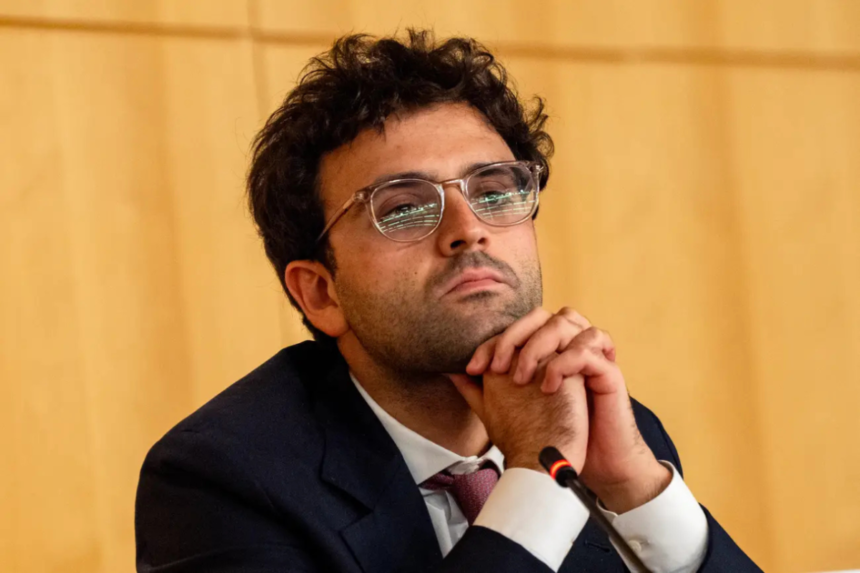
According to Kalshi’s CEO, the structure of prediction markets can help expose unusual trades more quickly than stocks.
Prediction markets have become one of the fastest-growing segments of financial technology, allowing users to trade contracts based on the outcome of future events ranging from elections and economic indicators to sports, entertainment, and business announcements. As the industry expands, it has also attracted increasing regulatory scrutiny, particularly over concerns that insider information could influence trading activity.
Kalshi CEO Tarek Mansour believes those concerns are understandable but argues that prediction markets are actually better equipped to identify suspicious trading than traditional financial markets.
Speaking in an interview with legal scholar Max Raskin, published by The Washington Post, Mansour explained why the structure of prediction markets makes potentially illegal trading activity far easier to detect.
Why Prediction Markets Work Differently
Unlike traditional stock markets, prediction markets allow users to buy and sell contracts tied to specific future events.
Instead of purchasing shares in a company, traders place positions on clearly defined outcomes. These may include whether legislation will pass, whether interest rates will change, or whether a product launch will occur within a specified timeframe.
Because every contract is linked to a single event, trading activity is generally more focused and easier to analyze.
Why Insider Trading Is More Visible
According to Mansour, insider trading is often more difficult to identify in conventional stock markets because stock prices respond to countless factors simultaneously.
A company’s share price may rise because of earnings, market sentiment, product launches, acquisitions, macroeconomic developments, or investor expectations. Determining whether a particular trade resulted from privileged information can therefore become highly complex.
Prediction markets, however, present a much narrower framework.
“If someone possesses confidential information about a specific event and immediately places a large wager on that exact outcome, the relationship between the information and the trade becomes much more direct,” Mansour explained during the interview.
He argued that this makes suspicious activity significantly easier to identify than in traditional equity markets.
Kalshi’s Compliance Measures
Kalshi says it has introduced several safeguards designed to maintain market integrity.
Among them is an employment verification process that requires certain participants to disclose professional affiliations before trading. The company also maintains reporting mechanisms that allow whistleblowers to flag potentially suspicious activity.
According to Mansour, these systems are intended to identify unusual trading patterns quickly and enable investigations before market manipulation can spread.
The company has repeatedly stated that maintaining confidence in prediction markets depends on strict compliance and proactive monitoring.
The George Santos Investigation
Mansour acknowledged that fraud remains possible in any financial system.
He pointed to the investigation involving former U.S. Representative George Santos, where Kalshi itself reportedly alerted regulators after detecting unusual trading activity connected to contracts related to the State of the Union address.
The matter is being investigated by the U.S. Department of Justice and the Commodity Futures Trading Commission (CFTC).
For Kalshi, the incident serves as an example of its monitoring systems identifying trades that appeared inconsistent with normal market behavior.
Regulatory Debate Continues
Despite the company’s safeguards, prediction markets remain controversial.
Some lawmakers argue that markets based on political or public events create opportunities for conflicts of interest, market manipulation, or speculative behavior that could undermine public confidence.
Several U.S. states have proposed or enacted restrictions on prediction markets. In May, Minnesota Governor Tim Walz approved legislation banning certain prediction market activities within the state.
At the federal level, policymakers continue debating how event-based contracts should be regulated as the industry expands.
A Growing Financial Category
Prediction markets have attracted increasing attention from investors, economists, and technology companies because they aggregate expectations from thousands of participants into real-time probability estimates.
Supporters argue these markets often produce valuable forecasting signals by incorporating diverse information from participants.
Critics, however, maintain that stronger oversight is necessary to prevent misuse of confidential information and ensure fair participation.
As prediction markets continue growing, companies like Kalshi will likely remain at the center of discussions about transparency, regulation, and the future of event-based financial trading.
Looking Ahead
Tarek Mansour’s central argument is that prediction markets do not eliminate the possibility of insider trading. Instead, they make suspicious activity more visible because every trade is tied to a clearly defined event.
Whether regulators ultimately agree with that assessment remains uncertain. As governments continue evaluating the role of prediction markets within the broader financial system, balancing innovation with market integrity is likely to remain one of the industry’s biggest challenges.
Read more news, and follow us on Instagram
Source: BI
Tarek Mansour, CEO of Kalshi, said insider trading is easier to detect in prediction markets. Bloomberg/Getty Images