


Former president reflects on deal discussions, suggesting he may have underestimated the value at stake.
U.S. President Donald Trump has revealed that he believes he should have negotiated a larger ownership stake in Intel after the company’s dramatic recovery and renewed importance in the global AI race.
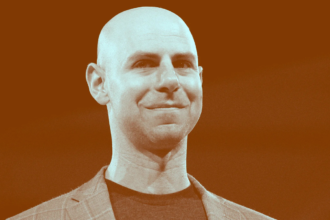
In an interview with Fortune, Trump recalled discussions with Intel CEO Lip-Bu Tan during negotiations tied to U.S. government support for the chipmaker.
According to Trump, he requested a 10% ownership stake in Intel “for free” during the discussions, and said Tan quickly agreed to the proposal.
Trump then joked that he immediately realized he may have underestimated the value of the deal.
“I should have asked for more,” he said.
Intel’s Recovery Has Changed the Conversation
The rapid growth of artificial intelligence infrastructure has reshaped how investors and governments view semiconductor companies.
While much of the AI conversation has focused on graphics processing units dominated by companies like NVIDIA, industry executives increasingly argue that CPUs remain critical for handling large-scale AI workloads and data center operations.
Intel has positioned itself as a major beneficiary of that shift.
Earlier this year, reports emerged that Apple and Intel had reached preliminary agreements involving chip production collaboration, while Elon Musk reportedly signaled plans to rely on future Intel chips for large-scale AI infrastructure projects.
Intel executives have also argued that CPUs are becoming an essential foundation for the AI era as computing demand accelerates worldwide.
The company’s renewed momentum has dramatically improved investor sentiment after several difficult years marked by manufacturing delays, market share losses, and competitive pressure from rivals.
Trump Pushes Manufacturing and Tariff Narrative
Trump also used the interview to revisit one of his long-standing economic arguments, saying stronger tariffs and protectionist policies could have helped preserve America’s leadership in semiconductors.
He argued that Intel could have become “the biggest company in the world” if the US had acted earlier and more aggressively to shield domestic chip manufacturing from overseas competition.
In particular, Trump pointed to Taiwan Semiconductor Manufacturing Company’s rise to dominance, noting how the company has grown into the world’s largest contract chipmaker and one of the most strategically important technology firms globally.
Today, TSMC commands a market valuation far above Intel, reflecting its crucial role in producing advanced chips for many of the world’s leading tech companies.
According to Trump, stronger US industrial policies and tougher tariffs could have directed more of that manufacturing power back toward American companies.
The Semiconductor Race Is Becoming Geopolitical
These remarks underscore how semiconductor manufacturing has evolved from a commercial industry into one of the world’s most strategically critical sectors.
As concerns over supply chains, AI leadership, and national security grow, governments across the US, China, Europe, and Asia are pouring billions into expanding chip production capacity.
For Intel, this means its revival now depends not only on stronger financial performance but also on Washington’s broader push to rebuild domestic semiconductor manufacturing.
At the same time, as AI competition intensifies and global demand for advanced computing power surges, chipmakers once seen as legacy players are once again finding themselves at the heart of the global technology race.
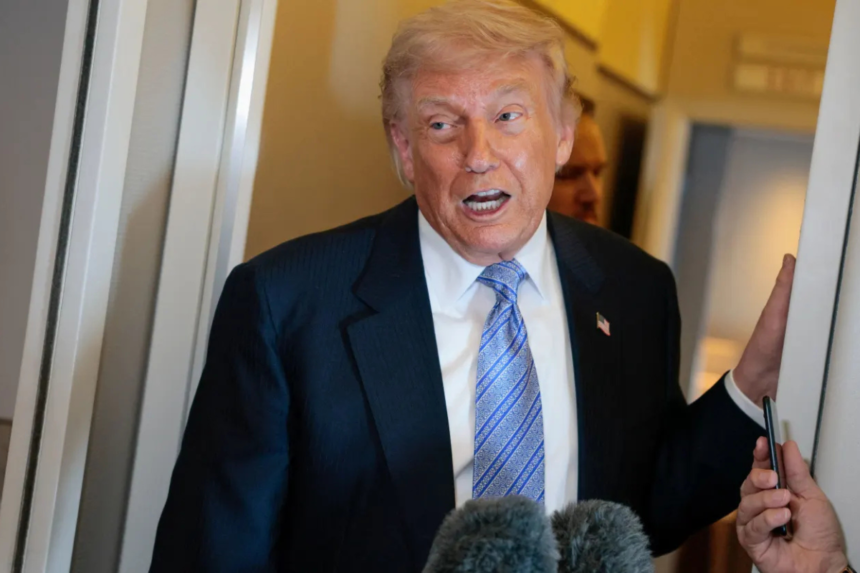
U.S. President Donald Trump speaks to the press aboard Air Force One en route to the U.S. following his official visit with President Xi Jinping in China, May 15, 2026.
Evan Vucci | Reuters