


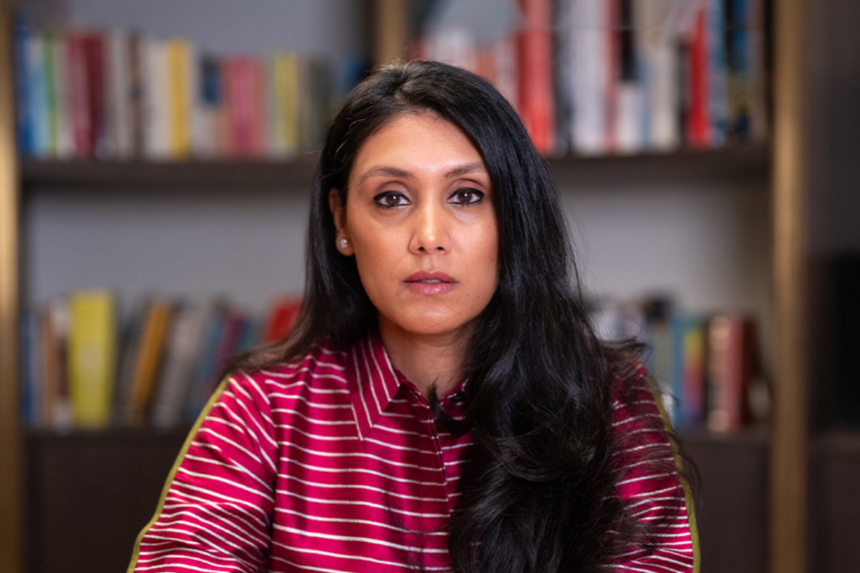
As leadership transitions at HCLTech, Roshni Nadar Malhotra is emerging as a defining voice in India’s next technology era.
India’s business landscape is witnessing a generational transition.
The country’s first wave of industrial giants was built around manufacturing, infrastructure, energy, and family-led conglomerates. The next phase belongs increasingly to leaders who understand technology, digital transformation, global capital, and institutional leadership.
Roshni Nadar Malhotra represents that transition more clearly than almost anyone in Indian business today.
As the chairperson of HCLTech and the daughter of billionaire founder Shiv Nadar, she inherited more than a corporate legacy. She inherited the responsibility of leading one of India’s most influential technology groups during a period when global business itself was being reshaped by AI, cloud computing, cybersecurity, automation, and digital infrastructure.
Her journey is not simply a succession story.
It is a story about power evolving into institutional leadership.
Growing Up Around India’s Technology Revolution
Roshni Nadar grew up during the period when India’s technology industry was still emerging.
HCL was founded in 1976, long before India became globally recognized for IT services. In those years, technology entrepreneurship in India was filled with uncertainty. Infrastructure was weak, access to capital was limited, and the country had not yet become the outsourcing and software powerhouse it is today.
By the time Roshni entered the business world, HCL had already become one of India’s largest technology companies. But global technology itself was changing rapidly.
The challenge was no longer only growth.
It was relevant.
Large technology firms had to constantly adapt to changing enterprise demands, global competition, cloud migration, artificial intelligence, and digital transformation.
Education and Early Professional Experience
Roshni studied communications at Northwestern University in the United States before pursuing her MBA from the Kellogg School of Management.
Before fully stepping into HCL’s leadership structure, she explored media and communications professionally. That experience gave her exposure outside the traditional corporate technology environment she had grown up in.
Unlike many legacy business transitions where successors are immediately placed into executive authority, her evolution inside the HCL ecosystem happened gradually.
Over time, she took on increasing responsibilities connected to strategic oversight, governance, philanthropy, branding, and institutional development.
The Leadership Transition at HCL
One of the defining moments in Roshni Nadar’s journey came when she became chairperson of HCL Technologies after Shiv Nadar stepped down from the role.
The transition mattered far beyond the company itself.
It symbolized several larger shifts happening simultaneously in Indian business:
- Leadership is moving from founder-driven structures toward institutional governance
- Greater representation of women in top corporate leadership positions
- Technology is becoming central to India’s economic future
- Second-generation leadership, adapting legacy businesses to modern digital realities
Under this transition, continuity became as important as change.
HCL could not afford disruption. It operated across global markets, enterprise technology systems, cybersecurity infrastructure, cloud services, engineering, and digital transformation projects for multinational clients.
The leadership shift, therefore, required stability, strategic clarity, and long-term thinking.
Leading During the AI and Cloud Era
The technology industry today looks fundamentally different from the industry HCL entered decades ago.
Artificial intelligence, machine learning, automation, cloud computing, and cybersecurity are now driving global enterprise spending.
Under Roshni Nadar’s leadership period, HCL has continued positioning itself around long-term technology demand rather than short-term market excitement.
The company strengthened its focus across:
- Cloud infrastructure services
- Enterprise software solutions
- Cybersecurity
- AI-enabled business systems
- Digital engineering
- Technology consulting
This matters because modern technology companies are no longer judged only by size. They are judged by adaptability.
Technology changes too quickly for static leadership.
Leadership Beyond Business
Roshni Nadar’s influence extends beyond corporate management.
She is also deeply associated with philanthropy and education through the Shiv Nadar Foundation, which focuses on educational institutions and social development initiatives across India.
This dual role reflects an older Indian business philosophy combined with modern institutional thinking: building wealth while also building systems that outlast individuals.
In India’s corporate landscape, that combination still carries significant influence.
Why Her Story Matters
Roshni Nadar’s rise matters because it reflects where India itself is heading.
The country is moving toward an economy increasingly shaped by:
- Technology infrastructure
- AI adoption
- Digital public systems
- Enterprise software
- Data ecosystems
- Global outsourcing transformation
- Knowledge-driven industries
Leadership inside those sectors requires more than operational management.
It requires understanding long-term structural change.
Her story also highlights how leadership transitions inside family-founded companies are evolving. Modern investors and global markets now expect professional governance, strategic continuity, and institutional maturity rather than personality-driven control.
That shift is redefining Indian corporate leadership itself.
The Bigger Legacy Being Built
Roshni Nadar is often described as one of India’s most powerful businesswomen. But the larger significance of her role is not symbolic visibility alone.
She represents the intersection of three major forces shaping modern India:
- Technology-driven economic growth
- Institutional corporate leadership
- Generational transition inside legacy business groups
In many ways, her journey reflects the transformation of Indian business from founder-led expansion into globally integrated, technology-first enterprise systems.
The next era of Indian corporate leadership will likely belong to people who can balance scale, innovation, governance, and technological adaptation simultaneously.
That is the environment in which Roshni Nadar continues to operate.
Read more news, and follow us on Instagram
Photo: Shiv Nadar Foundation