


A Direct Call to Reverse the Flow
Sridhar Vembu is not offering a theory. He is pointing at a reversal.
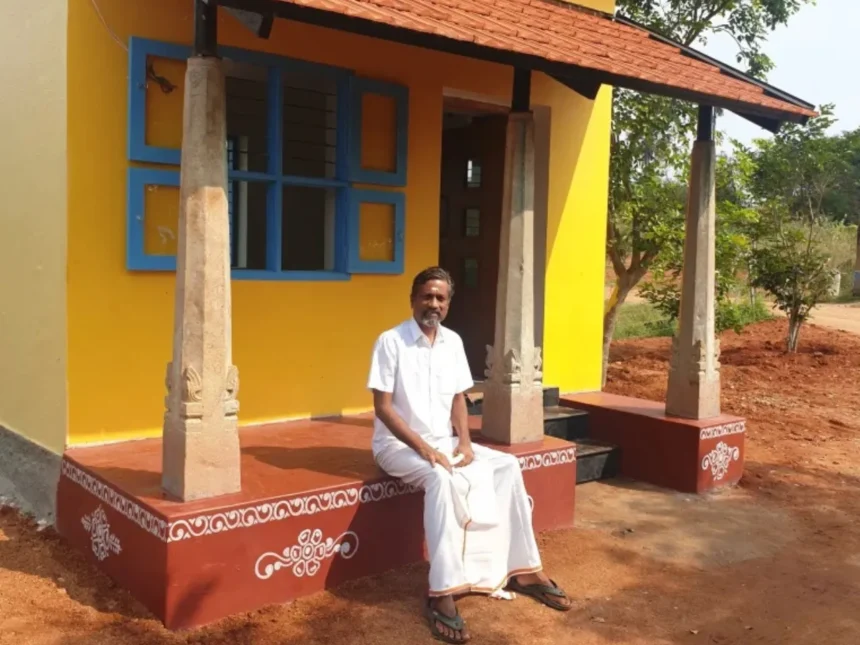
Villages in Tamil Nadu, particularly in Tanjavur, have lost talent over the decades. What remains are empty homes, neglected temples, and a thinning social fabric.
His position is clear. The movement that pulled people into cities must now be questioned, not celebrated.
Urban Migration as a Structural Error
For Sridhar Vembu, the issue is not about emotion or nostalgia. Instead, he sees it as a structural problem.
For decades, skilled workers moved to cities in search of better opportunities. In doing so, they left behind villages and local economies without the people needed to sustain or rebuild them.
As a result, the imbalance has grown. Cities now carry overcrowding, pressure, and rising costs, while villages face the opposite problem: fewer people, fewer opportunities, and less economic activity.
However, Vembu does not describe this as a failure caused by someone else. Instead, he argues that society created this system through the choices people made over many years.
Building From the Ground Up
At the same time, Zoho has tried to put that belief into practice rather than simply talk about it.
Instead of concentrating only in major cities, Zoho has opened offices and training centers in rural parts of Tamil Nadu, particularly near Kumbakonam.
Because of that, the company creates jobs where people already live, rather than forcing them to move elsewhere to find work.
Moreover, Zoho has expanded this approach beyond software. The company has also invested in local businesses, including projects in aerospace and drone technology.
As a result, Vembu’s model aims to build broader economic activity in smaller towns and villages instead of keeping growth concentrated in the center.
Decentralisation as a Model
The idea is not relocation alone. It is redistribution.
Work does not need to cluster in a few urban centers. Talent does not need to move to prove value.
By decentralising work, pressure on cities reduces while smaller regions regain economic relevance.
This is not a lifestyle shift. It is a systems correction.
Culture, Not Just Economy
The loss is not only financial. It is civilizational.
Temples without caretakers. Communities without continuity. Traditions without participation.
When talent leaves, culture weakens alongside the economy.
The call to return is also a call to restore what was abandoned, not just rebuild what was lost.
Final Frame
Sridhar Vembu’s position cuts against the dominant narrative of growth.
Progress is not defined by movement toward cities. It is defined by balance across regions.
The future he points to is not urban expansion. It is distributed strength.
Source: ISN