



Jensen Huang Designs for Speed, Not Secrecy
Jensen Huang does not avoid one-on-one meetings out of preference. He removes them by design.
His reasoning is structural. Information should move across the company at the same speed, without distortion or hierarchy. When leaders distribute insights selectively, they create asymmetry. That slows execution.
At Nvidia, the system rejects that model.
Information Equality Replaces Insider Advantage
Traditional management treats information as leverage. Leaders share selectively, often to build trust or influence.
The result is predictable. Teams compare notes. Messages fragment. Trust erodes.
Huang eliminates this dynamic. He does not share “confidential” insights with individuals that others do not hear. Every relevant message goes to the group.
This removes the illusion of insider access. It replaces it with clarity.
One Message, One Room, One Interpretation
When communication happens in groups, duplication disappears.
Leaders speak once. Everyone hears the same message. Questions surface in real time. Context builds collectively.
This reduces drift. It also removes the risk of reinterpretation as messages move across layers.
The system becomes faster because it becomes simpler.
Action Matters More Than Information
Huang shifts the focus from what people know to what they can execute.
Information without action creates noise. Shared understanding tied to execution creates momentum.
By making information universally accessible, the organisation reduces dependency on proximity to leadership. Capability replaces access as the source of influence.
Efficiency Is a Byproduct, Not the Goal
Avoiding one-on-ones saves time. That is not the core advantage.
The real gain is alignment.
Teams operate from the same inputs. Decisions move faster. Miscommunication drops. Energy shifts from clarification to execution.
The organisation behaves as a single system rather than a collection of informed individuals.
Where One-on-Ones Still Matter
The model does not eliminate one-on-one conversations. It redefines their purpose.
Individual meetings exist for listening, not broadcasting.
Leaders use them to understand constraints, remove friction, and support performance. They do not use them to distribute information that affects the broader system.
That separation maintains clarity.
Leadership as System Design
Jensen Huang’s leadership style reflects a broader principle.
Communication structures determine organisational speed.
When information is shared equally, systems move faster. When it is controlled, systems slow down.
NVIDIA optimises for flow that choice compounds and Clarity replaces hierarchy. Execution replaces access.
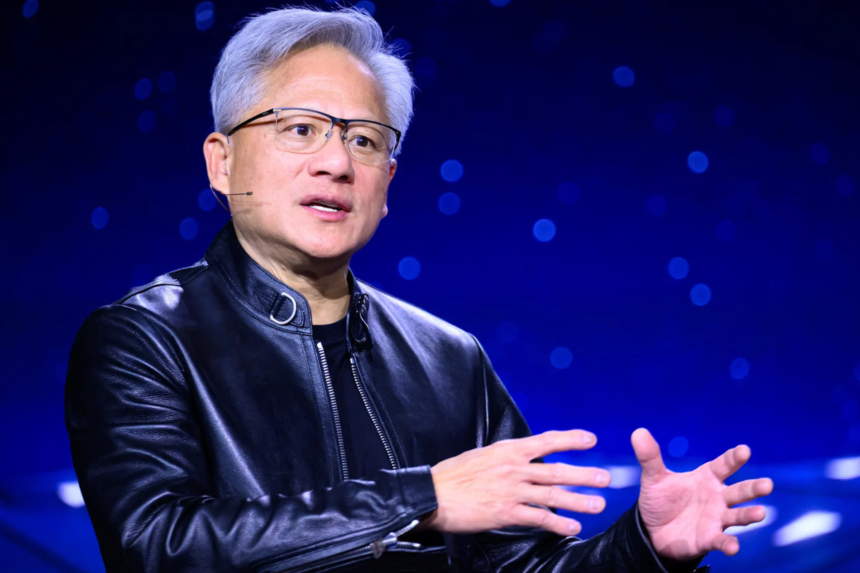
NVIDIA CEO Jensen Huang. Photo: Getty Images
Read more news and follow us on Instagram
Source: INC