

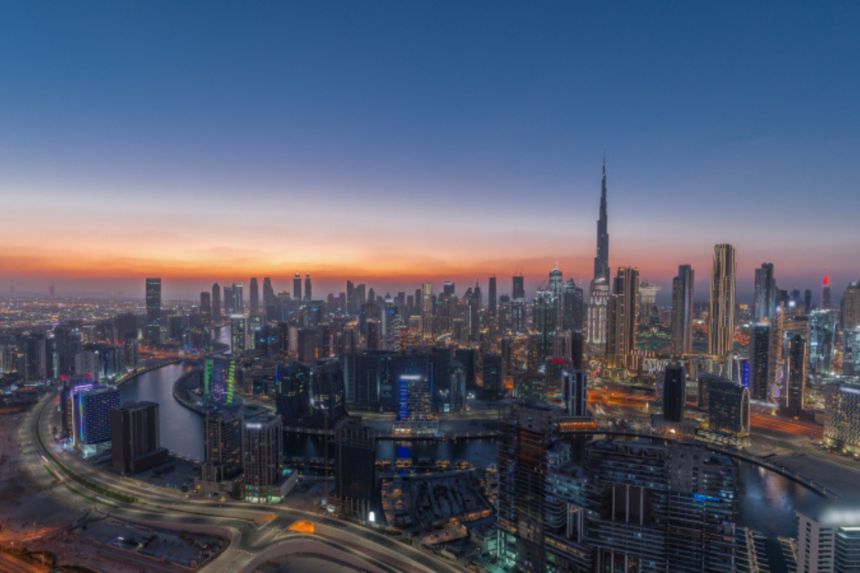
Even as ecosystems remain active, funding flows are becoming more cautious and selective.
The current conflict has not frozen startup ecosystems across the Middle East. It has done something more subtle and more dangerous. It has a distorted perception.
On the ground, ecosystems remain active. Founders continue to build, investors continue to meet, and businesses continue to operate. Yet global narratives tell a different story.
In capital markets, perception moves faster than reality. That gap now defines the funding environment.
Capital Pullback Driven by Narrative, Not Fundamentals
Across the region, founders report a clear shift. International investors, particularly from the U.S. and Europe, are slowing or withdrawing from deals that were previously in motion.
This hesitation does not stem from weak business fundamentals. It stems from a generalized view of regional risk.
Markets like Egypt, geographically distant from the conflict, are still feeling the pressure. The map has blurred in the minds of global capital allocators.
When perception expands risk beyond its actual boundaries, capital retreats accordingly.
A Chain Reaction Across the Funding Stack
The funding slowdown is not isolated. It follows a predictable chain.
Global limited partners are becoming more cautious in allocating capital. Venture capital firms, in turn, face tighter fundraising conditions. This directly reduces their ability to deploy capital into startups.
The result is a cascading contraction.
Less LP confidence leads to reduced VC activity. Reduced VC activity leads to fewer funded startups.
This is not a pause. It is a repricing of risk across the entire funding ecosystem.
Oil Prices Create a Structural Paradox
Rising oil prices introduce a dual effect across the region.
Stronger oil revenues improve fiscal strength in Gulf economies, enabling sovereign wealth funds and state-backed initiatives to continue supporting innovation.
At the same time, higher oil prices contribute to global inflation, reinforcing a risk-off environment among international investors.
This creates a split market. Local capital remains active. Global capital becomes cautious.
Structural Strength Still Holds
Despite shifting sentiment, key advantages in the region remain intact.
The GCC continues to offer currency stability through dollar pegs, reducing foreign exchange risk for investors.
Infrastructure remains strong. Digital adoption remains high. Government-backed innovation agendas continue to push forward in markets like the UAE and Saudi Arabia.
These fundamentals have not weakened. Only the perception around them has shifted.
Founders Face a New Discipline Cycle
The funding environment is no longer forgiving.
Startups are moving away from growth driven purely by capital availability. The focus has shifted toward revenue, unit economics, and clear paths to profitability.
Founders are being forced to rethink capital strategies. Venture funding alone is no longer sufficient.
Alternative approaches are gaining relevance. Strategic partnerships, hybrid financing models, and disciplined cost structures are becoming central to survival.
This is not a temporary adjustment. It is a structural reset.
A Filter, Not a Collapse
The ecosystem is not breaking. It is being filtered.
Capital is becoming more selective. Competition for funding is intensifying. Only startups with strong fundamentals and clear value propositions are breaking through.
This creates a different kind of outcome.
Fewer startups will raise capital. Those who do will be stronger, more efficient, and more resilient.
The Long-Term Shift
Moments like this reshape ecosystems quietly.
The Middle East is not losing momentum. It is transitioning from a capital-driven growth phase to a discipline-driven phase.
Perception may continue to distort reality in the short term.
But over time, capital follows performance.
The startups that endure this cycle will not just survive the shift. They will define the next phase of the region’s growth.
Shutterstock/ Dubai