



A Retail System Built for More Than Profit
The U.S. Navy Exchange system operates hundreds of stores worldwide, generating over $2 billion in annual sales while serving military personnel, veterans, and their families.
This network was never designed as a conventional retail business. Its purpose extends beyond transactions. Profits flow into morale, welfare, and recreation programs that support sailors and their families, funding services such as childcare, fitness facilities, and community initiatives.
The model created a closed loop where spending inside the system directly strengthened the military community.
Pressure From Modern Retail Giants
That structure now faces sustained pressure from competitors like Amazon, Walmart, and Target.
These companies have reshaped customer expectations around convenience, pricing, and speed. Tax-free pricing and discounts, once strong advantages, no longer carry the same weight when consumers prioritize accessibility and seamless experience.
The shift is visible in behavior. Customers who once relied on Navy Exchange stores now split their spending across digital and physical alternatives that operate without time or location constraints.
Declining Sales and Eroding Relevance
Sales have fallen steadily over the past decade. Between 2012 and 2024, revenue declined by 19 percent, reaching its lowest levels in nearly two decades outside the pandemic period.
The impact extends beyond revenue. Dividends that fund support programs dropped by 43 percent over the same period, reducing resources available for military families.
This decline reflects a deeper issue. Retail overall expanded during this time, meaning the Navy Exchange did not shrink with the market. It lost share within it.
Structural Challenges Inside the System
The network operates under constraints that typical retailers do not face. Store formats vary widely, from large department stores near major bases to small convenience outlets in remote international locations.
Standardization becomes difficult. Product assortment must balance essential goods, premium items, and local demand. Logistics must support both high-volume domestic stores and low-traffic overseas units that exist primarily for service rather than profit.
At the same time, the system lagged in key areas such as e-commerce and store modernization. Many locations became outdated, while competitors invested heavily in experience, design, and digital integration.
The Turnaround Strategy
Leadership initiated a structured response. The organization invested $20 million into store improvements and plans to allocate $80 million more over the next three years.
The focus centers on redesigning stores through a “Store of the Future” model. This includes improved lighting, digital signage, clearer layouts, and curated product displays designed to match modern retail standards.
Rather than attempting to match the scale of large retailers, the strategy shifts toward relevance. Product selection is refined based on customer needs, and store environments are redesigned to improve engagement and ease of navigation.
Early Signs of Recovery
Initial results indicate progress. Customer satisfaction increased in 2025, and retail sales recorded a 3.2 percent year-on-year rise, marking the first growth period in several years.
These gains remain early indicators rather than a full recovery. The broader challenge lies in sustaining momentum while adapting to a rapidly evolving retail environment.
A System at a Crossroads
The Navy Exchange operates at the intersection of retail and institutional support. Its success affects more than financial performance. It directly influences programs that sustain military life.
The competitive landscape has changed, and the system now faces a requirement it did not originally anticipate. It must function as a modern retailer while maintaining its broader mission.
The outcome will depend on whether it can align operational efficiency, customer experience, and institutional purpose within a single model.
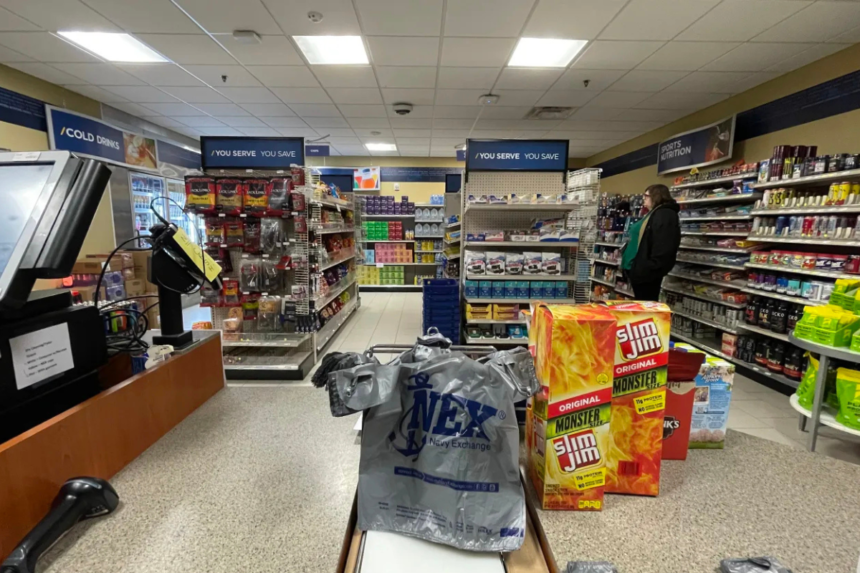
The Navy Exchange Mini Mart in Redzikowo, Poland
Handout
Source: CNBC