



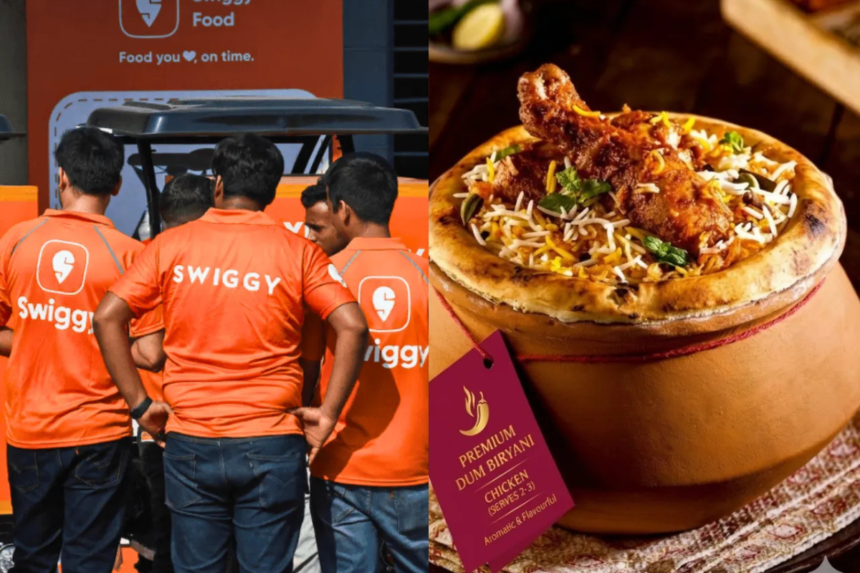
Companies increase charges as they work toward sustainable profits.
Swiggy has increased its platform fee to ₹17.58 per order, including GST, marking a nearly 17% rise from the previous ₹14.99.
The charge, now visible at checkout, is positioned as a fee to support the operation and maintenance of the platform.
Industry-Wide Alignment on Pricing
The move closely follows a similar increase by Zomato, which recently raised its own platform fee. With GST included, both companies now charge the same total amount per order, indicating a convergence in pricing strategies across the sector.
Platform fees, though relatively small on an individual basis, are becoming a more noticeable component of total order costs, especially for frequent users.
Gradual Increase Over Time
Swiggy first introduced platform fees in April 2023 at ₹2 per order and has steadily increased them over time. The most recent revision prior to this came in August 2025, when fees were raised in select markets amid rising order volumes.
The latest hike reflects a continuation of this upward trend as companies refine their revenue models.
Growth Versus Profitability
The pricing adjustment comes as Swiggy continues to report strong revenue growth alongside persistent losses.
The company recorded a 54% year-on-year increase in operating revenue to ₹6,148 crore in the third quarter of FY26. However, losses widened to ₹1,065 crore during the same period, highlighting the ongoing challenge of balancing expansion with sustainable profitability.
Competitive and Cost Pressures
The broader food delivery market remains highly competitive, with new entrants such as Rapido’s Ownly adding pressure in key markets like Bengaluru.
At the same time, rising operational costs, including logistics, discounts, and platform maintenance, are pushing companies to explore additional revenue streams beyond delivery charges and commissions.
A Shift Toward Sustainable Economics
The alignment of platform fees between major players signals a shift in the industry’s approach.
Instead of competing primarily through discounts and subsidies, companies are gradually moving toward more standardized pricing structures aimed at improving unit economics.
For consumers, this means slightly higher costs per order. For companies, it represents a step toward building a more sustainable business model in a sector that has long prioritized growth over profitability.