



For Microsoft’s CEO, successful AI adoption depends less on algorithms and more on leaders earning confidence through their actions and communication.
Microsoft’s CEO believes trust, transparency, and communication will determine whether AI transformation succeeds.
Artificial intelligence is changing more than business operations. It is reshaping leadership itself.
For many executives, AI represents an opportunity to improve productivity, accelerate innovation, and strengthen long-term competitiveness. For employees, however, the experience has often been very different, marked by restructuring, changing job responsibilities, and uncertainty about the future.
Microsoft CEO Satya Nadella believes that closing this gap requires more than deploying new technology. It demands leadership built on trust, honest communication, and a clear sense of purpose.
In a 2025 memo to Microsoft employees, Nadella acknowledged what many organizations have struggled to address openly. He described “the uncertainty and seeming incongruence of the times we’re in” while reaffirming Microsoft’s mission, strategic priorities, and culture as the foundation for navigating rapid technological change.
He also argued that companies developing AI must earn what he called “social permission,” emphasising that leaders should focus on reorganising work rather than simply replacing it.
Five words that can build trust
Although Nadella did not frame his message around a specific leadership slogan, his approach reflects five words that can guide organisations through AI-driven change:
“Here is what is changing.”
Those five words may appear straightforward, but they address one of the biggest challenges employees face during periods of transformation: uncertainty.
When leaders clearly explain what is changing, why it is happening, and how it affects employees, they reduce speculation and create space for informed conversations instead of unnecessary anxiety.
Transparency reduces uncertainty
Periods of organisational change often create information gaps.
When employees do not receive timely updates, they naturally begin to imagine worst-case scenarios. Rumours spread quickly, trust weakens, and resistance to change grows.
Nadella’s message demonstrated a different approach.
Rather than avoiding difficult conversations, he openly acknowledged uncertainty while providing context for Microsoft’s direction. That willingness to address challenges directly helps build credibility, even when every answer is not yet available.
Employees rarely expect leaders to eliminate uncertainty. They do, however, expect honesty about the decisions being made and the reasons behind them.
Communication encourages participation
Successful AI adoption depends not only on technology but also on how employees experience the transition.
When people believe AI is something being imposed on them, they are more likely to resist change.
When organisations explain how AI will support their work, create new opportunities, and help them develop new skills, employees become more willing to participate in the transformation.
Clear communication turns AI from a source of uncertainty into a tool people can understand and gradually embrace.
Leadership extends beyond technology.
According to Nadella, the greatest challenge facing organisations is not implementing AI systems but maintaining trust throughout the process.
That requires leaders to communicate consistently, acknowledge difficult realities, and prepare employees for changing expectations.
Managers also play a critical role because they often become the first point of contact for employees seeking reassurance during periods of transition.
Organisations that equip managers with clear guidance, practical information, and consistent messaging are better positioned to maintain confidence across their workforce.
Moving beyond productivity alone
Many companies continue to describe AI primarily through the language of efficiency, automation, and productivity.
While those benefits remain important, employees often associate those terms with workforce reductions rather than professional growth.
A more effective approach is to explain how AI can eliminate repetitive work, improve decision-making, support innovation, and allow employees to focus on higher-value responsibilities.
This shift in language helps organisations frame AI as an opportunity for adaptation instead of simply a cost-cutting initiative.
AI leadership begins with trust.
As businesses continue integrating artificial intelligence into everyday operations, leadership will become just as important as technology.
Satya Nadella’s message reflects a broader principle that extends beyond Microsoft. Successful AI transformation depends on leaders who communicate openly, acknowledge uncertainty, and earn trust through consistent actions.
Technology may accelerate change, but people ultimately determine whether that change succeeds.
For organisations navigating the next phase of AI adoption, leadership will be measured not only by how quickly they implement new tools but also by how effectively they bring their people through the transition.
Source: Inc
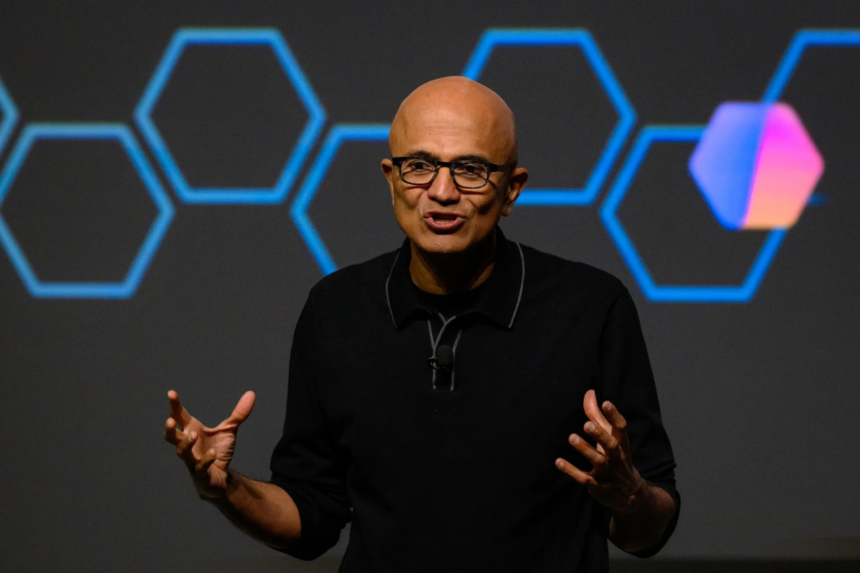
Microsoft CEO Satya Nadella. Photo: George Chan/Getty Images