


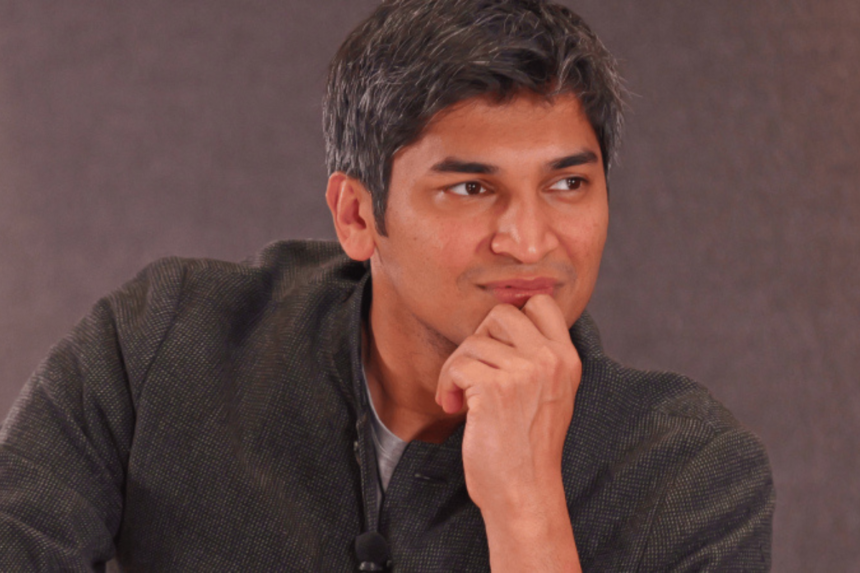
Pratham Mittal. Founder of Tetr College of Business
Pratham Mittal is reshaping business education by rejecting lecture-heavy theory in favor of revenue, risk, and real-world execution.
He is the founder of Tetr College of Business and Masters’ Union. Both institutions are built on a single premise. Business cannot be mastered inside a classroom alone.
Building a Different Kind of Business School
Masters’ Union, launched in 2021 in India, operates on industry immersion. CXOs, founders, and venture capitalists lead programs. Students learn from operators, not just academics. The goal is direct exposure to decision-making under pressure.
In 2024, Mittal expanded that vision globally with Tetr College of Business. Tetr’s model is mobile and borderless. Students travel across seven countries. USA. Italy. Singapore. Argentina. UAE. India. Ghana. In each geography, they build and manage ventures.
The inaugural cohort includes more than 110 students from over 45 nationalities. Among them are climate activists, TEDx speakers, and venture-backed founders. In their first semester in Dubai, students launched 20 dropshipping businesses. Combined revenue crossed $138,000 with an average profit margin of 38 percent.
Assessment is not GPA-based. There are no traditional grades. Performance is measured through revenue, profitability, and operational outcomes. If a venture fails, that becomes the lesson. If it scales, that becomes proof.
Academic and Entrepreneurial Foundation
Mittal studied computer science and economics at the University of Pennsylvania. During his time there, he co-founded Outgrow, an interactive content platform serving more than 20,000 businesses globally, including Nike, Tesla, and The New York Times.
His recognition includes listings on Forbes India 30 Under 30 and Entrepreneur 35 Under 35 in 2025. The acknowledgment reflects his influence within India’s startup ecosystem.
Scale and Demand
Tetr received over 100,000 applications in its inaugural year. The traction signals appetite for experiential, globally mobile education models. Students are not preparing for hypothetical case studies. They are navigating supply chains, customer acquisition, and unit economics in live markets.
Mittal’s stated ambition is to position his institutions among the world’s top 10 business schools within five years. The strategy rests on global exposure, industry collaboration, and measurable outcomes.
Strategic Alignment and Expansion
Aligned with UAE Vision 2031, Mittal aims to catalyze startup creation and sector-focused skilling across AI, sustainability, fintech, and design. Plans include establishing centers of excellence in entrepreneurship, AI, sustainability, and emerging technologies.
Future initiatives include applied research platforms, policy-driven insights, and a proposed Future of Tech Museum. The concept centers on AI, robotics, and climate technology. The objective is public engagement combined with industry-academia integration.
What This Represents
Mittal’s approach rejects the comfort of structured academic insulation. Instead, it pushes students into volatility early. Geography becomes the curriculum. Revenue becomes evaluation. Execution becomes credibility.
Through Masters’ Union and Tetr, he is not simply launching institutions. He is testing whether business education can function like a startup. Lean. Measurable. Globally distributed.