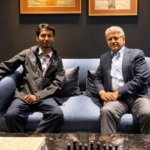




Noubar Afeyan explains how Flagship Pioneering tests new biotech ideas before deciding which ones deserve major investment.
Moderna co-founder Noubar Afeyan has built his business around an unusual approach to investment: explore dozens of ambitious ideas, test their scientific foundations, and commit major funding only when the evidence supports them.
His venture-creation company, Flagship Pioneering, examines between 75 and 100 potential company ideas every year, according to a Bloomberg report published on October 27. Only a fraction progress to prototype companies, and an even smaller number receive an official name and tens of millions of dollars in funding.
“Our ideas almost always seem unreasonable at first,” Afeyan told Inc. “But as I often ask my team, ‘Why do we expect extraordinary outcomes from reasonable people doing reasonable things?'”
That philosophy helped Flagship create Moderna in 2010. The Cambridge, Massachusetts-based biotechnology company is now valued at nearly $80 billion. Rather than simply investing in businesses founded by others, Flagship develops its own scientific concepts and often funds them for years before bringing in outside investors.
“We only capitalize companies that we launch ourselves, with science from within our walls,” Afeyan said. “We are inventors before we are investors.”
How Flagship Pioneering Turns Ideas Into Companies
Flagship’s process begins with a simple question: “What if?”
For Moderna, the question was whether scientists could instruct a patient’s own cells to produce proteins capable of preventing, treating, or curing diseases.
That initial question can lead to hundreds of hypotheses, with Flagship exploring dozens of them before deciding which deserve further work.
The company first narrows an idea into a specific, testable proposition. At this stage, it establishes what it calls a “ProtoCo”, or prototype company. A small team receives the resources and time needed to test whether the underlying science can work.
If the experiments support the idea, the project can progress into a standalone company, known internally as a “NewCo”. If the evidence does not support the original proposition, development stops.
Afeyan said much of the selection process takes place before a project even reaches the ProtoCo stage.
“Of the ProtoCos we do start, about a third to a half become NewCos,” he said.
Ideas that do not become companies are not necessarily wasted. They can provide scientific knowledge, inform other projects, or help Flagship approach future experiments differently.
“We get something out of every single idea we pursue, whether it turns into Moderna, informs or merges with another idea we’re working on, or teaches us a lesson about how we could try things differently next time,” Afeyan said.
Why Flagship Tries to Reject Weak Ideas Early
Flagship’s willingness to explore uncertain scientific territory is supported by a process designed to test ideas before committing substantial resources.
Hong Luo, an associate professor at the University of Toronto’s Rotman School of Management, has studied the company’s approach to creating businesses.
She told Inc. that Flagship deliberately explores areas of biotechnology where the scientific uncertainty is high, and failure can be expensive.
The challenge, she explained, is distinguishing ideas that are fundamentally flawed from radical concepts that may initially appear impossible but could eventually succeed.
Luo said Flagship has developed the ability to design experiments that reveal the weaknesses of an idea as early and reliably as possible.
She added that there is no single solution behind the company’s approach. Its advantage comes from a combination of incentives, processes, and working practices developed over many years.
The Risks Behind Flagship’s High-Risk Investment Strategy
Flagship’s model has produced major successes, but not every company it creates survives.
According to Bloomberg, the firm typically retains a stake of 40% to 50% or more in the businesses it launches.
Moderna remains one of its most prominent successes. Its shares have risen more than 500% this year amid expectations surrounding a personalized skin cancer vaccine developed in partnership with Merck.
However, other Flagship-backed ventures have struggled. Rubius Therapeutics shut down in 2023, Kaleido Biosciences wound down in 2022, and Omega Therapeutics was liquidated in 2025.
The model also requires significant time, money, and management attention. Scientific experiments can take longer than expected, and determining whether a promising concept has commercial value is not always straightforward.
David Shaywitz, a physician-scientist and lecturer in biomedical informatics at Harvard University, told Inc. that Flagship faces the challenge of supporting numerous ideas without spreading its attention and resources too thin.
He also pointed to the time and expense involved in allowing scientific concepts to demonstrate whether they can succeed.
Given the complexity of biomedical research, some ideas may take considerably longer and cost more than initially expected.
Noubar Afeyan’s Approach: Paranoid Optimism
Afeyan describes Flagship’s underlying philosophy as “paranoid optimism”.
The idea combines two seemingly opposing attitudes. Entrepreneurs should remain aware of the obstacles, risks, and weaknesses that could prevent a business idea from working. At the same time, they need enough optimism to pursue opportunities without knowing whether the experiments will succeed.
For Flagship, this means treating early ideas as hypotheses rather than finished businesses. Teams test the science, examine the evidence, and decide whether a concept deserves further investment.
The company’s approach offers a different perspective on how businesses can be created. Instead of starting with a fully formed company and then searching for the right investment, Flagship begins with scientific questions, tests possible answers, and builds companies around the ideas that survive.
Read more news and follow us on Instagram
Noubar Afeyan. Photo: Getty Images
Source: Inc