


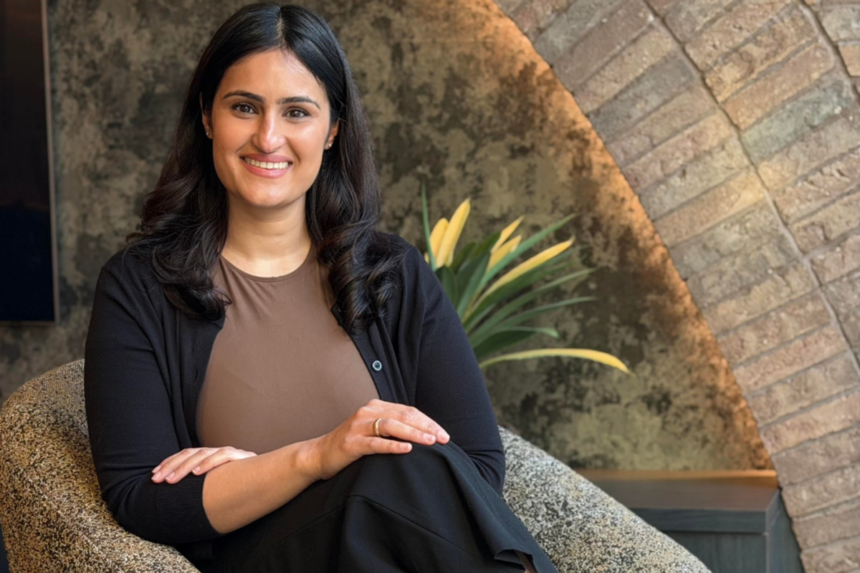
The senior product manager at Microsoft highlights advances in conversational AI and Teams.
Sukhmani Lamba grew up across Nigeria and Bahrain, where early exposure to computers and mobile devices sparked a deeper realization about technology. It was not just functional; it removed barriers and created access, a belief that shaped her long-term direction.
From Engineering to Product Ownership
She began with an engineering degree and entered consulting at Deloitte, working on digital transformation projects for enterprises. However, consulting revealed a limitation: advising from a distance lacked control over the actual product. This pushed her toward product management, leading her to Duke University to specialize in engineering management and product thinking.
Learning to Build From the Inside
Her early product experience at Pendo and later at Wayfair gave her direct exposure to building systems from within. At the same time, her interest in communication platforms grew, as these tools were becoming central to how modern work operated.
The Pandemic Shift and Microsoft Teams
The pandemic marked a turning point as platforms like Microsoft Teams became essential infrastructure rather than optional tools. Lamba joined during this phase, focusing on a clear problem. Work was fragmented across multiple systems, forcing users to switch constantly between tools.
Her approach centered on reducing this friction by enabling users to complete tasks directly within Teams instead of navigating across platforms.
Turning Links Into Action
Her work led to innovations that transformed shared links into actionable elements. Tasks such as signing contracts, reviewing documents, or responding to updates could now happen within the same interface.
This resulted in multiple patents and influenced how billions of links are handled globally, improving workflows across enterprises, healthcare systems, and educational institutions.
From Features to AI Systems
The arrival of ChatGPT accelerated the shift toward AI-driven systems. Within Microsoft, Lamba contributed to building plugin-based integrations that allowed external tools to function inside conversational workflows, a framework that expanded from Teams into a company-wide standard.
She then moved into agentic AI, working on collaborative systems like Facilitator Agent and Channel Agent, designed to assist teams with coordination and execution.
Building the “Agent Brain”
Her current work focuses on what she describes as the foundation of AI systems: agent memory, intelligence, and context. These elements define how an AI understands users, retains information, and acts within an organization.
The shift is structural; AI is moving from responding to commands toward understanding behavior, preferences, and workflows continuously.
Redefining the Nature of Work
Lamba’s view on AI’s impact is clear. Execution is increasingly automated, while human effort shifts toward thinking, decision-making, and alignment.
Tasks that once required manual effort are now handled by AI, allowing professionals to focus on higher-level responsibilities that require judgment and context.
Accessibility and Faster Learning Curves
AI is also compressing learning cycles. Professionals returning after career breaks can quickly regain context, track decisions, and understand evolving systems through AI assistance.
This reduces the gap created by time away from the workforce and increases adaptability in fast-moving industries.
Influence Beyond Her Core Role
Beyond Microsoft, Lamba contributes to the broader product ecosystem through advisory roles, startup mentorship, and participation in communities focused on advancing women in technology.
Her work also intersects with academic research on AI and human collaboration, reinforcing her focus on long-term structural shifts in how people work together.
Representation and Practical Confidence
She acknowledges the reality of gender imbalance in technology while maintaining a practical approach. Confidence, in her view, is built through knowledge and execution rather than perception.
Speaking with clarity and grounding decisions in expertise becomes the differentiator in high-stakes environments.
A Structural Shift in Motion
Her work reflects a larger transition already underway. Software is evolving into intelligent systems, interfaces are becoming conversational, and workflows are becoming autonomous.
The center of work is moving away from execution and toward intent, where humans define direction, and AI handles the process.
Source: Your Story