
The Lunar New Year has become more than a festive retail moment. It is now a stress test for how well Western luxury brands understand modern China.
After several years of contraction, China’s luxury market is stabilising. According to estimates from Bain, the market stood at roughly RMB 350 billion in 2024. While it contracted 3 to 5 percent in 2025, recovery signs emerged in the second half of the year, supported by improved stock market performance and renewed consumer confidence. Analysts expect mid-single-digit growth in 2026.
That rebound gives brands a narrow but powerful opening. The Year of the Horse is not just another zodiac cycle. It is a chance to repair emotional connection with the world’s most sophisticated luxury buyers.
From Dependence to Discipline
Before Covid, Chinese consumers accounted for roughly one-third of global luxury spending. That share has now fallen to about 23 percent. The difference is not only economic. It is psychological.
Pre-pandemic China was driven by pent-up demand. International travel meant shopping in Paris, Milan, and London was aspirational theatre. Today, luxury access is widespread domestically. Exposure is global. Expectations are elevated.
High-net-worth Chinese shoppers have dined everywhere, travelled everywhere, and shopped everywhere. Novelty is no longer enough. Logos are not enough. Zodiac animals are certainly not enough.
The Limits of Literal Zodiac Marketing
Ahead of the Year of the Horse, brands launched capsule collections featuring horse motifs, charms, and red-and-gold palettes. From high jewellery watches to equestrian-themed bags, the surface signals are familiar.
The risk is predictability.
Red and gold signal prosperity. The horse signals strength and vitality. But younger Chinese consumers are not looking for obvious symbolism. They are looking for reinterpretation.
Literal zodiac interpretations can feel lazy. Worse, they can feel performative.
The Chinese luxury buyer of 2026 does not want cultural shorthand. They want narrative depth.
Cultural Fluency Over Decorative Motifs
The Lunar New Year is an opportunity to demonstrate respect for Chinese culture. That respect is shown through understanding, not replication.
Some brands are shifting from product-led campaigns to experience-led engagement.
. Valentino hosted a lantern festival at Tianhou Palace in Shanghai, embedding itself in cultural context rather than printing zodiac graphics on products.
. Burberry created immersive retail activations in Beijing, combining brand ambassadors with physical experiences.
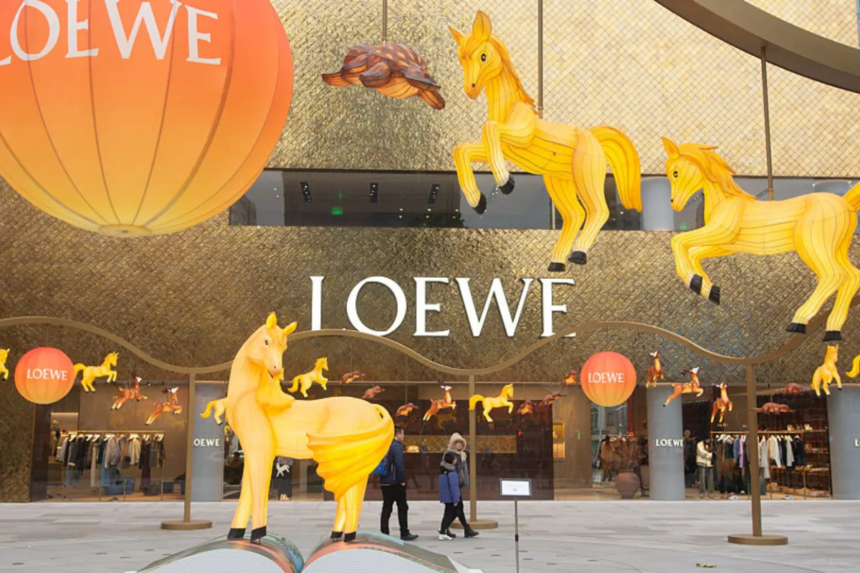
. Loewe leaned into subtle reinterpretation, integrating fringe and craft elements rather than obvious animal caricatures.
This signals a shift. The narrative is no longer about celebrating an animal. It is about celebrating identity, heritage, and modern aspiration.
A Market That Has Grown Up
Chinese consumers have evolved from enthusiastic buyers to critical curators.
Domestic high-end brands have gained traction. Overseas shopping patterns have changed. In 2019, two-thirds of Chinese luxury purchases happened abroad. Last year, that number dropped to roughly one-third.
That structural change forces Western brands to localise seriously, not symbolically.
The question is no longer how to sell to China. The question is how to stay relevant inside China.
The 2026 Inflection Point
Luxury’s cautious optimism is grounded in macro signals. Stabilising property sentiment. Stronger equity markets. Renewed appetite for premium categories.
But competition is far sharper than a decade ago. Growth will not return automatically.
The Lunar New Year window offers visibility into which brands understand this transition.
Those relying on decorative zodiac references will struggle.
Those building layered storytelling, immersive cultural participation, and contemporary reinterpretation of heritage will rebuild equity.
China is not returning to the old luxury cycle. It is entering a new one defined by discernment, sophistication, and cultural confidence.
The brands that adapt to that reality will capture the next wave of high-value spending.
Loewe celebrated the Year of the Horse with a storefront installation in Shanghai, China.
Ying Tang/NurPhoto via Getty Images