



According to Jeff Currie, falling oil reserves in Asia and Europe are reducing the market’s ability to absorb sudden supply pressure.
Falling oil inventories across Asia, Europe, and the US are increasing fears of a deeper global energy supply shock.
Global oil markets are moving dangerously close to what veteran commodities strategist Jeff Currie describes as “minimum operating levels,” as shrinking inventories and disruptions linked to the Iran war continue tightening energy supplies worldwide.
Speaking at the UBS Wealth Conference in Singapore, Currie warned that Asia is already nearing critical inventory thresholds, Europe could face similar pressure within weeks, and the United States may begin experiencing shortages by July if conditions fail to improve.
The warning comes at a time when global markets remain highly sensitive to disruptions in Middle Eastern oil exports and shipping through the Strait of Hormuz.
Why Oil Inventories Matter More Than Headline Numbers
Currie argued that global inventory figures often create a misleading sense of security.
A significant portion of stored oil worldwide cannot actually be released into the market immediately because it is needed to maintain the safe operation of pipelines, storage terminals, and energy infrastructure systems.
That leaves a much smaller usable supply cushion available during emergencies or supply disruptions.
According to Currie:
. Asia is already close to minimum operating inventory levels.
. Europe may begin facing similar pressure within weeks.
. The US could enter a more difficult phase by July.
“We may be entering the red zone,” Fatih Birol warned recently, echoing concerns about tightening summer energy supplies.
Iran War Continues Reshaping Global Energy Markets
The global oil market has remained under heavy strain since the Iran conflict disrupted shipping through the Strait of Hormuz earlier this year.
The Strait remains one of the world’s most important energy chokepoints, carrying a major share of global crude exports and refined fuel shipments.
Currie said the effects are now spreading across fuel markets globally.
“We’ve seen explosive prices on products,” he said, pointing to rising diesel costs in Asia even as jet fuel prices eased slightly.
Singapore, one of Asia’s largest energy trading hubs, continues facing pressure from fuel market dislocations tied to supply instability.
Europe’s Temporary Relief May Not Last
According to Currie, Europe currently appears relatively insulated only because large volumes of oil from the US Strategic Petroleum Reserve are being redirected toward European markets.
However, he warned that this cannot continue indefinitely.
“All of the inventories drawn out of the United States SPR are being exported into Europe,” Currie said.
That temporary flow is helping stabilize European markets for now, but it may leave the US more vulnerable later if inventories continue falling and domestic demand rises during peak summer consumption.
Why Markets Are Pricing in a Bigger Problem
Currie dismissed short-term political solutions such as suspending the US federal gasoline tax, arguing that they do nothing to solve the underlying supply imbalance.
“The only way you solve this problem is to increase the availability of molecules,” he said, referring to physical oil supply.
This is why energy markets remain nervous despite periodic price pullbacks.
The concern is not only about prices today.
The concern is whether the world still has enough accessible supply buffers if another disruption occurs.
Shrinking inventories reduce the market’s ability to absorb shocks.
That increases volatility across:
. Oil prices
. Diesel markets
. Transportation costs
. Industrial production
. Inflation expectations
. Global shipping networks
Strait of Hormuz Remains the Critical Variable
Currie believes reopening and stabilizing the Strait of Hormuz remains the only lasting solution capable of easing current market stress.
However, even if disruptions ended immediately, rebuilding inventories and restoring stable supply flows would still take time.
He also argued that falling global inventories are unintentionally strengthening Iran’s negotiating position.
“Every day that goes by, Iran’s negotiating leverage compounds,” Currie said.
As inventories decline further, energy-importing nations become more vulnerable to prolonged instability, giving Tehran greater strategic leverage during negotiations.
The Bigger Global Risk Emerging
The deeper issue now extends beyond oil prices alone.
The global economy spent years assuming energy markets would remain flexible enough to absorb geopolitical shocks.
Currie’s warning suggests that flexibility is shrinking rapidly.
The combination of:
. Falling inventories
. Shipping disruptions
. Rising fuel demand
. Limited spare supply
. Geopolitical uncertainty
is creating conditions where even temporary disruptions can trigger outsized market reactions.
That is why analysts increasingly view the second half of the year as a critical test for global energy strength.
Source: CNBC
Read more news, and follow us on Instagram
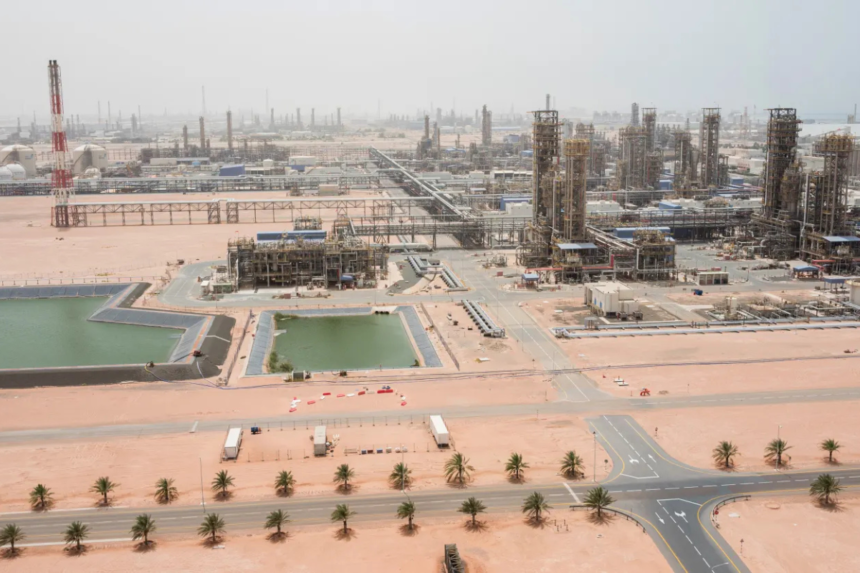
Cracking towers stand beside access roads at the Ruwais refinery and petrochemical complex, operated by Abu Dhabi National Oil Co. (ADNOC), in Al Ruwais, United Arab Emirates.
Bloomberg | Bloomberg | Getty Images