



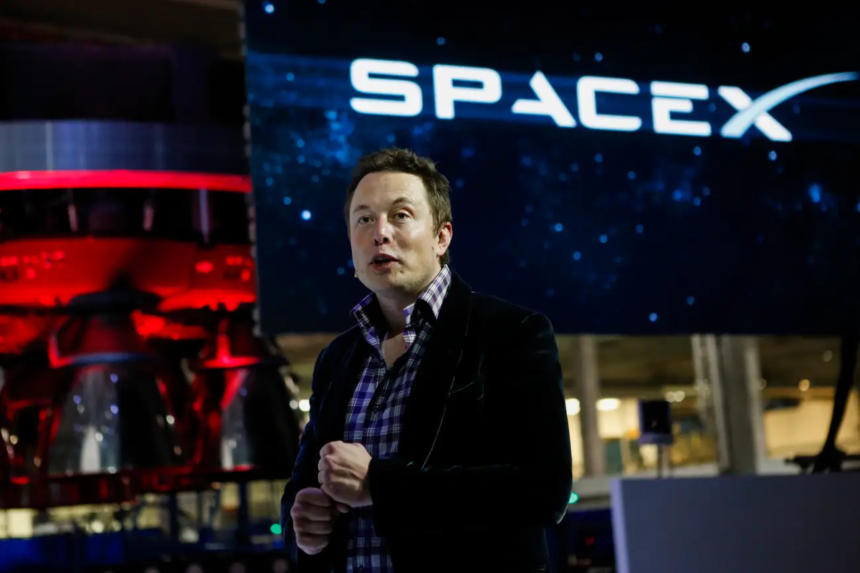
Despite strong fundamentals, concerns over pricing and long-term returns are shaping a cautious outlook on SpaceX’s potential public debut.
A Valuation That Demands Perfection
The concern is not about the company; it is about the price. Jay Ritter, widely known as “Mr. IPO,” has raised doubts about SpaceX potentially going public at a valuation approaching $2 trillion. His view is straightforward: even exceptional companies can become poor investments when expectations are priced too aggressively. At that level, strong execution alone is no longer enough; it would require near-perfect outcomes across multiple fronts to justify the valuation.
The Starlink Assumption
At the center of the debate sits Starlink. The prevailing investment narrative assumes margins will expand as launch costs decline, with lower operating expenses and greater scale driving long-term profitability. But Ritter challenges that assumption, questioning whether those cost reductions can materialize quickly enough to support current projections. If they fall short, the broader margin expansion thesis begins to weaken, and with it, a key pillar of the valuation case. That single variable carries disproportionate weight in SpaceX’s pricing story.
The IPO Pattern Investors Ignore
Ritter’s skepticism is not rooted in speculation but in historical precedent. He points to companies that went public with price-to-sales ratios above 40 and inflation-adjusted sales exceeding $100 million — a cohort that has repeatedly shown a tendency to underperform the broader market over the following three years. The implication is structural: high-growth narratives often reach peak optimism at listing, while actual performance struggles to keep pace with the expectations already embedded in the valuation.
A Familiar Playbook
Ritter’s view on SpaceX is consistent with positions he has taken before. He has raised similar concerns about Palantir Technologies, arguing that the issue lies not in operational execution but in valuation disconnect. This perspective echoes broader skepticism from figures such as Andrew Left, who has also criticized inflated pricing across high-growth technology stocks. The underlying logic is straightforward: a strong business does not automatically translate into a strong stock.
When Great Companies Become Risky Trades
The distinction is critical. While SpaceX is widely regarded as a high-quality company with exceptional technological and operational capabilities, a point Jay Ritter does not dispute, he questions whether future growth can fully justify current expectations. At a valuation estimated between $1.5 trillion and $2 trillion, the margin for error narrows significantly. To support that price, the company would need to deliver simultaneous gains in revenue expansion, cost efficiency, market dominance, and sustained demand. As a result, even a modest shortfall across any of these fronts could introduce meaningful downside risk.
More importantly, this debate signals a broader shift in how investors evaluate high-growth companies. Rather than focusing solely on innovation or long-term potential, markets are placing greater emphasis on valuation discipline and the price paid for future growth. While speculation can push valuations higher in the short term, sustained returns ultimately depend on performance matching expectations. When that alignment weakens, even market-leading companies can struggle to reward investors.
Conclusion
The caution surrounding SpaceX is not a rejection of its long-term potential; it is a challenge to its pricing. As Ritter argues, the equation is straightforward: the higher the valuation, the narrower the margin for error. In that environment, the investment case depends less on whether the company succeeds and more on whether it can significantly exceed already elevated expectations.
SpaceX / Source: BI