


The initiative seeks to strengthen manufacturing and attract investment nationwide.
The Indian government has approved the ₹33,660 crore Bharat Audyogik Vikas Yojna (BHAVYA), a large-scale initiative aimed at developing 100 industrial parks across the country.
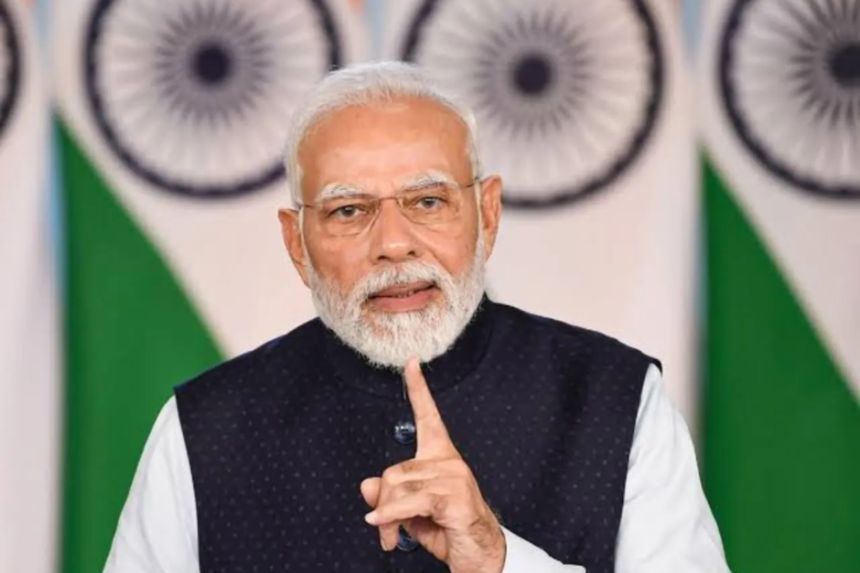
The Union Cabinet, chaired by Prime Minister Narendra Modi, cleared the scheme as part of a broader strategy to strengthen manufacturing capacity and attract both domestic and global investment.
The program focuses on reducing delays between investment decisions and actual production by offering ready-to-use industrial infrastructure.
Plug-and-Play Model to Cut Delays
Under the scheme, BHAVYA introduces a “plug-and-play” model, with industrial parks offering pre-approved land, ready infrastructure, and integrated services.
Additionally, each park will span between 100 and 1,000 acres and will be developed through partnerships between central and state governments, along with private sector participants.
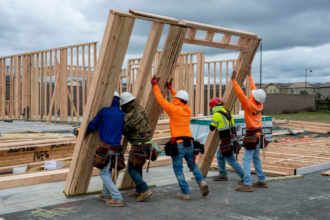
As a result, this structure aims to eliminate common bottlenecks such as land approvals, regulatory clearances, and construction delays that often slow industrial projects.
Financial Support and Infrastructure Development
The government will provide financial assistance of up to ₹1 crore per acre for core infrastructure development.
This includes internal roads, underground utilities, drainage systems, and administrative facilities.
Additional support will cover:
- Ready-built factory units
- Warehousing and logistics facilities
- Testing laboratories
- Worker housing infrastructure
Up to 25% of project costs will also be allocated for external infrastructure, including connectivity to highways, rail, and logistics networks.
Integrated Planning and Connectivity
In line with this, the scheme aligns with the PM GatiShakti framework, which focuses on improving multimodal connectivity across India.
Under the plan, industrial parks will integrate transport, logistics, and utilities into a unified system, reducing operational inefficiencies and improving supply chain performance.
Moreover, BHAVYA builds on earlier industrial smart city projects under the National Industrial Corridor Development Programme, expanding that model at a larger scale.
Focus on Clusters and Supply Chains
The government plans to develop these parks as cluster-based ecosystems where manufacturers, suppliers, and service providers operate in proximity.
This approach is expected to:
- Strengthen supply chains
- Reduce logistics costs
- Improve production efficiency
By concentrating industrial activity within defined zones, the scheme aims to create self-sustaining manufacturing hubs.
Sustainability and Future-Ready Design
At the same time, the industrial parks will incorporate sustainable infrastructure, including green energy integration and efficient resource management systems. This reflects a broader shift toward building long-term industrial capacity that aligns with environmental goals and global competitiveness standards.
Employment and Economic Impact
In addition, BHAVYA is expected to generate significant employment across manufacturing, logistics and related services. The government will implement the initiative across all states and union territories, expanding industrial development beyond traditional manufacturing hubs.
Strategic Direction
Furthermore, the scheme complements existing policies such as production-linked incentive programmes and sector-specific initiatives in semiconductors, electronics, and biopharmaceuticals. Together, these efforts signal a coordinated push to position India as a global manufacturing hub by combining infrastructure, policy support, and investment incentives.