


India and the European Union have concluded negotiations on a sweeping free trade agreement that leaders described as the “mother of all deals.”
Prime Minister Narendra Modi announced the conclusion of talks after summit meetings with Ursula von der Leyen and Antonio Costa. The agreement is expected to be signed later this year and may take effect early next year.
Together, India and the EU account for roughly 25 percent of global GDP and about one-third of global trade. That scale explains the stakes.
Big Win for Indian Exporters
The most immediate gain for India lies in export access. Once implemented, more than 93 percent of Indian goods will enter the 27-nation bloc duty-free.
EU tariffs on Indian goods already average 3.8 percent. Under the agreement, that average will fall close to 0.1 percent. The sharpest reductions will apply to sectors where tariffs were previously high.
Marine products face duties ranging from zero to 26 percent. Chemicals attract tariffs up to 12.8 percent. Leather and footwear face rates up to 17 percent. Textiles and apparel go up to 12 percent. Furniture and light consumer goods reach 10.5 percent. These duties will drop significantly.
Gems and jewellery, toys, sports goods, and transport equipment such as railway coaches, ships, and aircraft parts will also receive duty elimination. Indian exporters gain predictable and near-universal access to a large, high-income market.
What Could Get Cheaper in India
On the import side, India will gradually remove duties on over 90 percent of EU goods over 10 years. Around 30 percent of EU products will see tariffs eliminated on day one. Others will follow in phases.
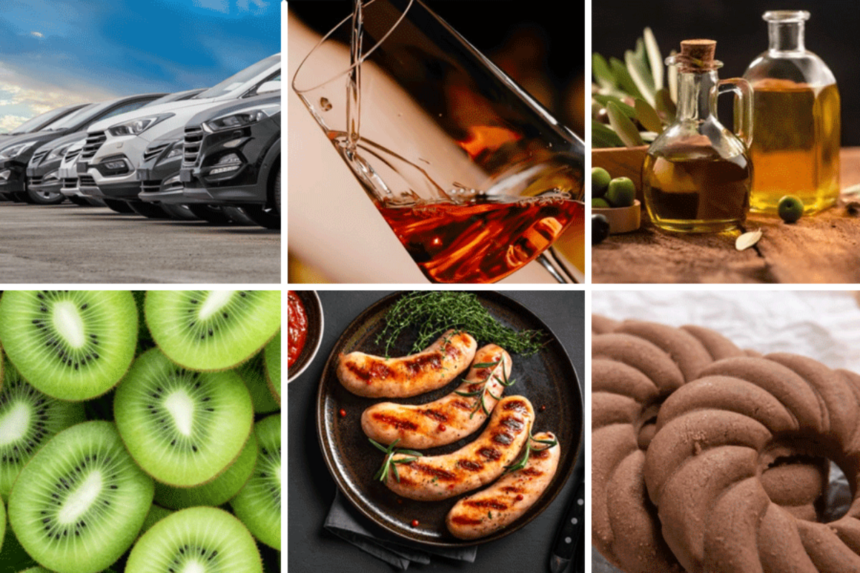
Several European consumer goods currently attract steep duties, ranging from 33 percent to as high as 150 percent. Over time, automobiles, wines, spirits, beer, olive oil, kiwis, pears, fruit juices, chocolates, pasta, pastries, biscuits, pet food, sausages, sheep meat, and processed foods could become more affordable, provided companies pass on the reductions.
Premium car brands such as BMW, Lamborghini, Porsche, and Audi are likely to benefit from a quota-based duty concession system. That could ease prices for high-end European vehicles in India.
What Will Remain Expensive
Sensitive agricultural and dairy products will stay protected. India will not offer duty concessions on maize, wheat, rice, soya, poultry, milk, cheese, ethanol, tobacco, certain vegetables, or meat.
The EU has also shielded its own sensitive sectors, including sugar, beef, meat, and poultry. Both sides have drawn clear lines around politically sensitive products.
Automobiles and EVs: A Calibrated Opening
Cars form the most delicate part of the agreement. India will reduce duties on EU automobiles in phases. Levies could eventually fall to as low as 10 percent under a quota of 2.5 lakh vehicles per year. Current import duties range between 66 percent and 125 percent.
Electric vehicles will not see immediate tariff cuts. Officials have stated that EV duty reductions will begin later, as India seeks to protect its growing domestic EV manufacturing base. The timeline will vary by segment.
Services and Carbon Rules
The agreement extends beyond goods. The EU will open 144 of its 155 services sub-sectors to India. India will open 102.
Indian companies are expected to gain in information technology, IT-enabled services, professional services, education, finance, tourism, and construction.
The pact also introduces a clearer framework for short-term business mobility and includes commitments related to student mobility and post-study work.
On the Carbon Border Adjustment Mechanism, the EU’s carbon tax framework, India has secured a most-favoured-nation assurance. If the EU grants relaxations to another country, Indian exporters will receive the same treatment.
Strategic Significance
The deal makes the EU India’s 22nd free trade agreement partner and adds to a series of trade pacts concluded since 2014.
For exporters, it promises broader access and lower tariffs. For Indian consumers, it may bring gradual price reductions on select European goods, especially cars and premium food and beverages. The real impact will depend on how quickly businesses translate tariff cuts into retail price changes.
Representational image Shutterstock
Read more news, and follow us on Instagram