



Higher energy costs and inflation fears are compounding market challenges.
The United States housing market was beginning to show signs of stabilization. Mortgage rates were easing, inventory was improving, and price growth was moderating.
That trajectory has shifted.
The escalation of conflict involving Iran has introduced a new layer of economic pressure, reversing some of the early signals of recovery and adding uncertainty to an already fragile market.
Mortgage Rates Rise Sharply
The most immediate impact has been on borrowing costs.
Average rates on 30-year fixed mortgages have climbed from 5.99% to around 6.5% within days, according to Mortgage News Daily. This increase directly affects affordability, reducing purchasing power for buyers who were already navigating high home prices.
The effect has been immediate. Mortgage applications to purchase homes have dropped by 5% week over week, according to the Mortgage Bankers Association.
Inflation and Energy Costs Add Pressure
The rise in rates is tied to broader economic concerns.
Higher energy prices, driven by geopolitical tensions, are fueling inflation expectations. This, in turn, influences interest rate movements and consumer sentiment.
Zillow had previously projected a modest recovery in home sales, describing 2026 as a “reset” year. That outlook is now under pressure.
The company’s chief economist, Mischa Fisher, noted that energy costs and inflation fears are adding complexity, with potential spillover effects on employment and consumer spending.
Recovery Scenarios Now Uncertain
Forecasts for home sales are becoming increasingly sensitive to how long the current conditions persist.
If disruptions are short-lived, the market may still see moderate growth. But prolonged pressure from higher rates and inflation could significantly weaken demand, potentially leading to a decline in sales.
The housing market, which was on the edge of recovery, now faces a range of possible outcomes depending on macroeconomic stability.
Builders Feel the Impact First
The slowdown is already visible in the new construction segment.
KB Home has lowered its full-year outlook after reporting weaker-than-expected performance. Company leadership cited the conflict as an additional factor weighing on consumer confidence and demand.
Builders are now dealing with elevated inventory levels, increasing the pressure to adjust pricing or incentives to move unsold homes.
Buyers Gain Leverage, But Hesitate
Market dynamics are shifting in favor of buyers.
Inventory is rising, and there are significantly more sellers than buyers, creating a near-record imbalance. Contract cancellations are also increasing, with roughly 13.7% of pending home sales falling through, according to Redfin.
Despite improved negotiating power, many buyers are stepping back, deterred by higher borrowing costs and economic uncertainty.
A Market Caught Between Two Forces
The current housing market sits at an inflection point.
On one side are long-term improvements, including better supply and stabilizing prices. On the other is short-term volatility driven by geopolitical risk, rising energy costs, and tightening financial conditions.
As Realtor.com noted, the market is entering a traditionally strong selling season in a precarious state.
The Bigger Picture
The impact of the Iran conflict on U.S. housing extends beyond immediate rate changes.
It highlights how global events can quickly influence domestic markets through interconnected channels such as energy prices, inflation, and financial conditions.
For now, the recovery has not been derailed entirely. But its path has become less certain, shaped not just by housing fundamentals, but by forces far beyond it.
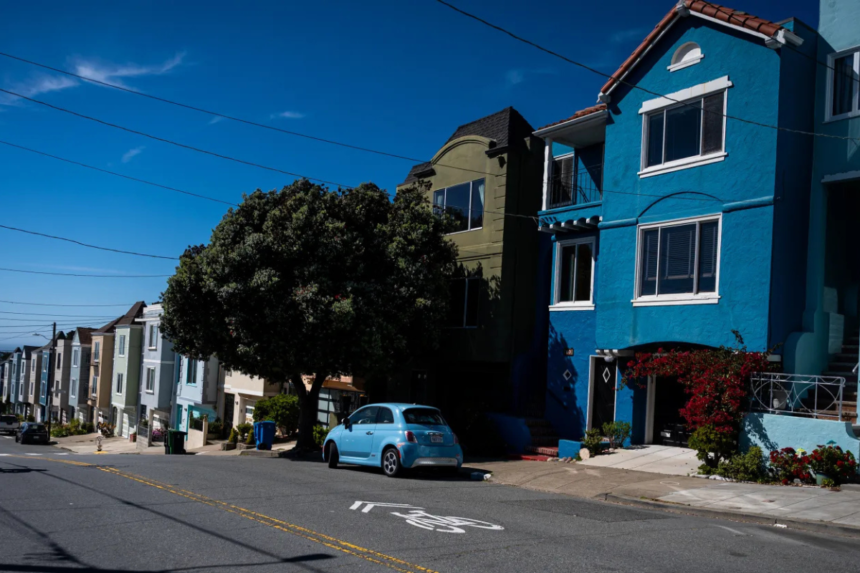
Homes in San Francisco, California, US, on Monday, March 23, 2026.
David Paul Morris | Bloomberg | Getty Images
Source: CNBC