



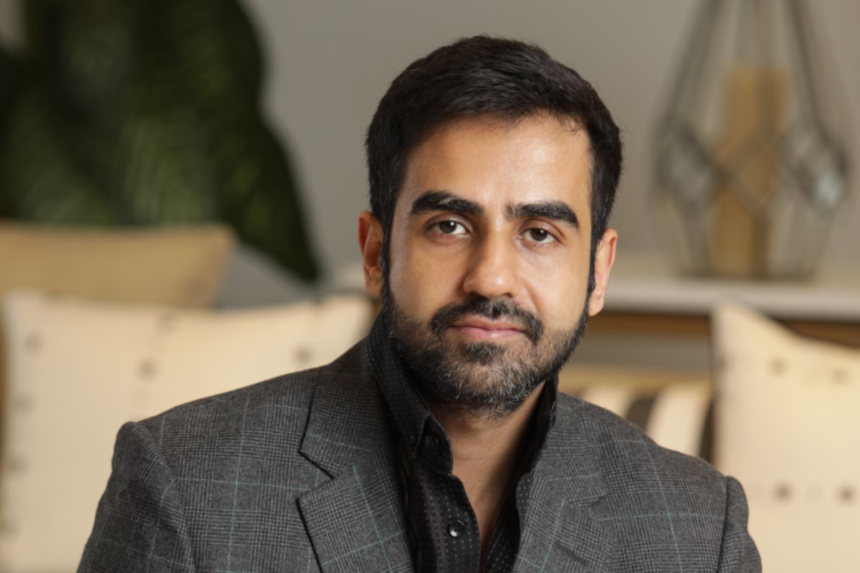
In India’s startup ecosystem, success is often associated with funding rounds, venture capital backing, and billion-dollar valuations.
Nithin Kamath built one of India’s most influential financial companies by taking the opposite route.
As the founder of Zerodha, Kamath created India’s largest retail brokerage without raising venture capital, relying instead on profitability, customer trust, and a disciplined long-term approach. While countless startups chased growth through external funding, Zerodha remained completely bootstrapped, proving that sustainable businesses can still be built without investor capital.
Today, Zerodha serves millions of investors and has fundamentally changed how Indians participate in financial markets. Its story is not just about technology or brokerage services. It is about conviction, patience, and the willingness to build differently.
A Trader Before Becoming a Founder
Long before Zerodha existed, Nithin Kamath was a trader.
His journey in the stock market began during his teenage years, and he spent nearly a decade actively trading before launching his company. During those years, he experienced the frustrations that many retail investors faced, including high brokerage fees, complex systems, and barriers that made investing expensive and intimidating.
These experiences shaped his understanding of the industry.
Instead of viewing brokerage as a business focused solely on transactions, Kamath saw an opportunity to remove friction from the investing process itself.
The idea would eventually become Zerodha.
The name combined “Zero” and the Sanskrit word “Rodha,” meaning barrier, reflecting the company’s mission of creating a more accessible investing experience.
Building Zerodha Without Investors
In 2010, Nithin Kamath and his brother Nikhil Kamath launched Zerodha.
The timing was far from ideal. The global financial crisis had shaken investor confidence, and traditional brokerages dominated the market. Most entrepreneurs entering financial services would have sought significant outside funding to compete.
The Kamath brothers chose a different path.
They bootstrapped the company from the beginning and focused on keeping costs low. Instead of spending heavily on marketing campaigns or large teams, they built a lean operation centered around product quality and customer experience.
This decision gave Zerodha something many startups never achieve: complete independence.
Without venture capital investors demanding rapid growth, the company could focus on long-term decisions rather than short-term metrics.
Years later, Kamath would often point to this freedom as one of Zerodha’s biggest competitive advantages.
Disrupting India’s Brokerage Industry
At the time Zerodha entered the market, brokerage fees were largely percentage-based, making investing costly for many retail participants.
Zerodha introduced a discount brokerage model that charged a flat fee per trade regardless of transaction size.
The model challenged industry norms and immediately differentiated the company from established players. It made trading significantly more affordable for retail investors and helped expand participation in India’s capital markets.
More importantly, Zerodha’s pricing strategy aligned with a broader mission.
The goal was not simply to attract customers through lower costs. It was to make investing accessible to a much larger segment of the population.
That philosophy would become a defining part of the brand.
Growth Through Trust, Not Advertising
One of the most unusual aspects of Zerodha’s growth story is its approach to customer acquisition.
Unlike many fintech companies, Zerodha did not rely heavily on advertising.
Instead, the company focused on building trust.
Kamath and his team actively engaged with traders on forums, answered questions publicly, created educational resources, and prioritized transparency. Customers who had positive experiences became advocates for the platform, creating a powerful word-of-mouth growth engine.
In financial services, trust is often the most valuable asset a company can possess.
Zerodha understood this early.
While competitors spent heavily on promotions and customer incentives, Zerodha invested in credibility and customer education.
That approach helped create a loyal user base that continued growing year after year.
Technology as a Competitive Advantage
Another major factor behind Zerodha’s rise was its focus on technology.
The company developed products such as Kite, its flagship trading platform, along with Coin, Console, and Varsity.
Each product was designed with simplicity and accessibility in mind. Rather than overwhelming users with complexity, Zerodha focused on creating intuitive tools that made investing easier for both beginners and experienced traders.
Varsity, the company’s educational platform, became particularly influential.
By providing free financial education, Zerodha helped build a more informed investor community while simultaneously strengthening its brand reputation.
It was a strategy that aligned business growth with customer empowerment.
Profitability Before Valuation
Perhaps the most important lesson from Nithin Kamath’s journey is his focus on profitability over valuation.
During a period when many startups prioritized fundraising and market share above all else, Zerodha remained focused on building a financially sustainable business.
The company avoided the pressure that often comes with external investors and public market expectations. This allowed it to make decisions based on customer interests and long-term business health rather than quarterly growth targets.
That discipline paid off.
Over the years, Zerodha grew into India’s largest retail brokerage while remaining profitable, a rare achievement in the startup world. The company eventually reached unicorn status without raising venture capital, making it one of India’s most successful bootstrapped businesses.
Beyond Zerodha
Nithin Kamath’s influence now extends beyond brokerage services.
Through Rainmatter, a fintech investment and incubation platform, he has supported numerous startups working across financial technology, sustainability, and innovation.
Rather than chasing rapid expansion into unrelated sectors, Kamath has consistently focused on building ecosystems that strengthen financial inclusion and innovation.
His broader vision reflects the same philosophy that helped build Zerodha: create value first, and growth will follow.
The Legacy of Patient Entrepreneurship
Nithin Kamath’s success story stands out because it challenges many assumptions about modern entrepreneurship.
He did not raise venture capital.
He did not rely on aggressive marketing.
He did not prioritize valuation over profitability.
Instead, he focused on solving a real problem, building trust, leveraging technology, and maintaining discipline over the long term.
Today, Zerodha is more than a brokerage platform. It is a case study in patient entrepreneurship and sustainable business building.
For founders navigating an era obsessed with funding rounds and hypergrowth, Nithin Kamath’s journey offers a different lesson: sometimes the strongest businesses are built not by moving the fastest, but by staying focused on fundamentals when everyone else is chasing something else.
Read more news, and follow us on Instagram
Photo: Money control