


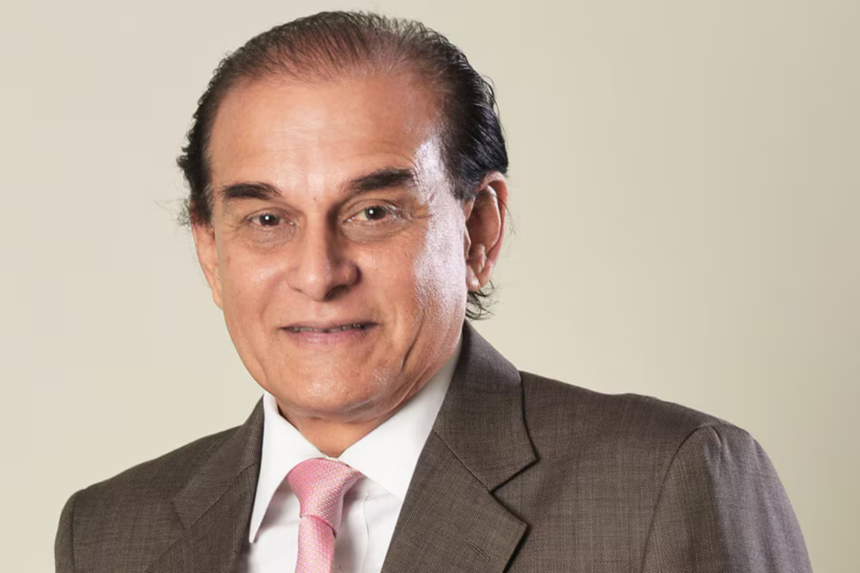
In the world of consumer goods, creating a successful product is only the beginning. The far greater challenge lies in transforming that product into a brand that earns trust across generations, remains relevant through changing consumer preferences, and becomes part of everyday life. Few Indian business leaders have achieved this as consistently as Harsh Mariwala.
As the founder and chairman of Marico, Mariwala transformed a family-run commodities business into one of India’s most respected fast-moving consumer goods companies. Under his leadership, brands such as Parachute, Saffola, Nihar, Livon, and Set Wet evolved from ordinary products into household names that millions of consumers associate with quality, reliability, and familiarity.
What makes Mariwala’s journey particularly significant is that he achieved this transformation during a period when India’s consumer market was undergoing profound change. Rising incomes, increasing competition, evolving lifestyles, and globalisation forced companies to rethink how they engaged with consumers.
Rather than relying solely on manufacturing strength or distribution reach, Mariwala recognised early that long-term success would depend on building strong brands capable of creating emotional connections with consumers.
That philosophy became the foundation upon which Marico was built.
Moving Beyond Commodities
When Harsh Mariwala joined the family business, much of the company’s portfolio operated in categories that were largely viewed as commodities. Products were often differentiated primarily by price, and consumer loyalty remained relatively weak. While many businesses focused on increasing production volumes and expanding distribution networks, Mariwala saw an opportunity to create something more durable.
He believed that consumers were willing to reward consistency, quality, and trust if companies could communicate those values effectively. This perspective encouraged Marico to shift its focus from simply selling products to building brands with distinct identities and long-term consumer relevance.
The transition required a fundamental change in thinking. Instead of competing solely on operational efficiency, the company began investing in packaging, positioning, consumer understanding, and product differentiation. These efforts would eventually help Marico create some of India’s most recognised consumer brands.
The Transformation of Parachute
One of the clearest examples of Mariwala’s approach can be seen in the growth of Parachute.
At a time when coconut oil was widely perceived as a commodity category, consumers often purchased products with little regard for branding. Mariwala recognised that an opportunity existed to create a product that stood for reliability and quality in a fragmented market.
Through investments in packaging innovation, quality control, and brand building, Parachute gradually established itself as the benchmark for coconut oil in India. The iconic blue bottle became instantly recognisable across urban and rural markets alike, helping the brand create a strong visual identity while reinforcing consumer trust.
The success of Parachute demonstrated an important lesson that would influence many of Marico’s future decisions: even products that appear ordinary can become powerful brands when they consistently deliver value and build credibility over time.
Building a Professional Consumer Goods Company
Another defining aspect of Mariwala’s leadership was his commitment to professionalising the organisation.
During a period when many family-owned businesses remained heavily dependent on promoter-led decision-making, he introduced professional management structures that allowed experienced executives to take ownership of key functions across the business.
This shift enabled Marico to attract talent, improve governance standards, and scale more effectively as the company expanded into new markets and categories. It also helped create a culture where decisions were increasingly driven by consumer insights, data, and long-term strategic thinking rather than hierarchy alone.
The professionalisation of Marico became one of the company’s most important competitive advantages and remains a significant part of Mariwala’s legacy as a business leader.
This style is stronger for CEO Register because it reads like a leadership and business profile rather than a startup blog. It uses longer narrative sections, deeper business context, and fewer punchy one-line paragraphs. That structure works better for founders, CEOs, chairpersons, and business leaders.
Read more news, and follow us on Instagram
Photo: Forbes India