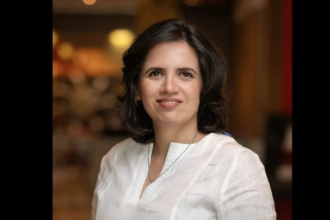




Dilip Shanghvi started Sun Pharma in 1983 with just ₹10,000, growing it from a small pharmaceutical venture into a global healthcare company.
Dilip Shanghvi started Sun Pharmaceutical Industries in 1983 with five products and a ₹10,000 loan from his father.
More than four decades later, Sun Pharma has grown into one of India’s largest pharmaceutical companies, with operations across more than 100 countries and a portfolio spanning generic medicines, specialty drugs and complex therapies.
Shanghvi ranks seventh on the M3M Hurun India Rich List 2026, with estimated wealth of ₹2.65 lakh crore. Unlike several other names in India’s top 10, Hurun lists Shanghvi individually rather than alongside his family.
His growth strategy combined a strong domestic pharmaceutical business with acquisitions that gave Sun access to new products, technologies and international markets.
A Focused Start in Kolkata
Shanghvi grew up around the pharmaceutical trade through his father’s wholesale medicine business in Kolkata.
Rather than remain in distribution, he moved into manufacturing and initially concentrated on psychiatric medicines, a specialised segment at the time.
Sun expanded its product portfolio and manufacturing network before going public in 1994. The company’s early focus on specific therapeutic areas later became an important part of its expansion strategy.
Acquisitions Took Sun Global
Sun’s first major international acquisition came in 1997, when it acquired a controlling stake in US-based Caraco Pharmaceutical Laboratories. The transaction gave the company a foothold in the American market and experience operating within a highly regulated pharmaceutical environment.
Further acquisitions included Taro Pharmaceuticals and, most significantly, Ranbaxy Laboratories.
The $4 billion Ranbaxy deal in 2014 transformed Sun into India’s largest pharmaceutical company by revenue and substantially increased its international presence.
The transaction also brought significant regulatory challenges. Ranbaxy had faced manufacturing and compliance issues in the US, making the integration a complex undertaking.
Moving Beyond Traditional Generics
Sun Pharma has increasingly expanded into specialty medicines as competition in conventional generics has intensified.
Its portfolio now covers areas including dermatology, ophthalmology, oncology, psychiatry and immunology. Products such as Ilumya, used to treat plaque psoriasis, and Leqselvi, for severe alopecia areata, reflect the company’s focus on differentiated therapies.
Sun Pharma reported revenue of approximately ₹56,300 crore for FY2025-26, with its business spread across India, emerging markets, generics and specialty medicines.
Organon Is the Next Big Bet
Sun Pharma’s largest expansion move yet came in 2026, when it agreed to acquire Organon & Co. for approximately $11.75 billion. The transaction ranks among the largest overseas acquisitions by an Indian pharmaceutical company.
Organon, which was spun out of Merck, has businesses spanning women’s health, biosimilars and established medicines across international markets.
For Sun Pharma, the acquisition would significantly expand its global commercial reach while adding new products and therapeutic categories.
It is also substantially larger than the Ranbaxy transaction. At approximately $11.75 billion, the Organon deal is almost three times the size of Sun’s 2014 acquisition of Ranbaxy.
The scale of the transaction makes integration particularly important. Sun will need to combine Organon’s international operations with its existing businesses while continuing to develop its specialty portfolio.
A New Generation Steps Forward
Shanghvi remains Executive Chairman of Sun Pharma, while Kirti Ganorkar serves as Managing Director.
His son, Aalok Shanghvi, has also taken on a larger leadership role. He became Chief Operating Officer in 2025 after spending more than two decades with the company, including significant experience in its international operations.
The leadership transition comes as Sun Pharma manages an increasingly international business and prepares to integrate one of its largest acquisitions.
Beyond Sun Pharma
Shanghvi’s interests extend beyond Sun Pharma.
He is associated with Sun Pharma Advanced Research Company (SPARC), which focuses on developing innovative medicines and drug-delivery technologies.
He has also served on several public and institutional bodies and received the Padma Shri in 2016 for his contribution to trade and industry.
His philanthropic work has included initiatives in healthcare and education.
The Next Test of Scale
Shanghvi’s career has been defined by disciplined expansion, targeted acquisitions and a gradual shift towards higher-value pharmaceutical products.
The Organon transaction represents a different scale of ambition.
Sun Pharma is no longer a company trying to establish itself in global markets. It is now attempting to integrate a major international pharmaceutical business while strengthening its position in specialty medicines.
That makes the next phase of Shanghvi’s career less about building Sun Pharma’s footprint and more about managing the complexity that comes with its global scale.
Photo: EY