


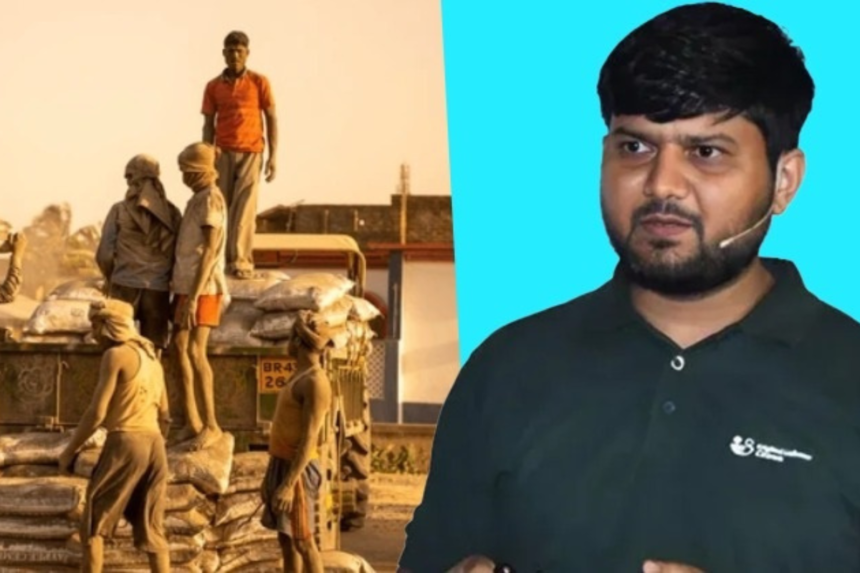
His journey from a small village in Bihar to building Digital Labour Chowk reflects his focus on improving access to jobs.
India’s blue-collar workforce supports some of the country’s most important sectors, including construction, manufacturing, logistics and infrastructure. Yet millions of workers still depend on contractors, informal networks and physical labour markets to find employment.
For Chandrashekhar Mandal, Founder of Digital Labour Chowk, this was not simply a market gap. It was a problem he had seen closely while growing up in Bihar, where migration to cities in search of work is common.
His journey eventually took him from a small village in Bihar to Delhi, where he pursued a Master of Commerce while preparing for a Chartered Accountancy qualification. In 2020, he joined an NBFC, and his interactions with job seekers gave him a closer look at the difficulties workers faced in finding reliable employment.
That experience led to a simple idea: what if India’s traditional labour market could be brought online?
Today, Digital Labour Chowk connects workers with employment opportunities across 31 states and union territories. Mandal says the platform facilitates access to opportunities for more than 3 lakh workers daily.
From Bihar to the labour market
Mandal’s understanding of India’s blue-collar workforce began long before he became an entrepreneur.
Growing up in a village in Bihar, he saw people regularly leave for cities in search of employment. After moving to Delhi for his education, his professional experience exposed him to the same problem from another perspective.
Many workers had limited access to reliable job information and depended on physical labour markets or personal contacts. Employers, meanwhile, often struggled to find suitable workers quickly and verify their backgrounds and skills.
Mandal began exploring how technology could connect the two sides.
Despite having no formal technology background, he started by building a website where workers and employers could register and connect.
Turning a physical market digital
The early challenge was not building the website. It was building trust.
Workers accustomed to traditional labour markets needed a reason to use a digital platform, while employers needed confidence that the workers listed online were genuine and suitable for their requirements.
The Covid-19 lockdown in 2020 made the need for remote employment solutions even clearer. Physical labour markets were disrupted, making digital connections between workers and employers more relevant.
In September 2020, Mandal left his job and returned to his village to work full-time on Digital Labour Chowk.
The venture received an early boost through a ₹10 lakh grant from an incubation centre in Pune. Further grants and investment helped Mandal return to Delhi and begin scaling the platform.
Creating a digital identity for workers
Mandal’s ambition extends beyond job listings.
He wants Digital Labour Chowk to create a digital professional identity for blue-collar workers, allowing their skills, experience and work history to become more visible to potential employers.
The idea addresses a major weakness in India’s informal labour market. Unlike many white-collar professionals who maintain structured résumés and professional profiles, blue-collar workers often have no verifiable digital record of their experience.
Digital Labour Chowk aims to change that by creating a structured profile around a worker’s skills and employment history.
A free platform for workers
Keeping the service accessible to workers while maintaining a sustainable business model has been another important consideration.
Workers can use the platform without paying fees, while contractors and corporate clients pay for access to its services. The company also focuses on verification across both sides of the marketplace.
This is important because trust is central to any employment platform. Employers need confidence in the workers they hire, while workers need assurance that the opportunities listed are legitimate.
Digital Labour Chowk therefore aims to bring greater structure and transparency to a market that has traditionally relied heavily on informal relationships.
Solving the supply-demand gap
A labour marketplace has another fundamental challenge: having workers available does not necessarily mean they are available where and when employers need them.
Mandal says the company initially focused heavily on onboarding workers before realising that demand from contractors and employers had to grow alongside the supply.
Digital Labour Chowk subsequently developed a broader ecosystem connecting workers, contractors and employers.
According to Mandal, the platform now operates across 31 states and union territories, with more than 3 lakh workers accessing job opportunities daily.
From early funding to national recognition
Mandal considers his first major grant a significant milestone because it provided more than capital. It gave the business external validation at a time when the idea was still being tested.
Another important turning point came through Bharat Ke Super Founders, which brought national attention to Digital Labour Chowk.
According to Mandal, the exposure helped the company build credibility with workers, investors and corporate customers. The startup subsequently received a ₹1 crore grant from Dr Vanlumani, along with investment from Samved Central Partner.
The visibility also opened conversations with large construction companies and potential investors.
For a startup operating in a trust-sensitive sector, that recognition helped reduce one of the biggest barriers facing early-stage businesses: convincing established organisations to take a chance on a young company.
The challenge of building for the long term
Mandal’s entrepreneurial journey has also involved financial uncertainty and difficult decisions. One of the hardest was committing resources to the business without knowing exactly how the venture would develop.
That experience shaped his approach to entrepreneurship. He believes building a sustainable company requires patience, particularly when the problem being addressed is deeply rooted in traditional systems.
For Digital Labour Chowk, changing how India’s blue-collar workforce finds employment cannot happen simply by putting existing processes on a website. It requires trust, verification, adoption and enough demand to make the platform useful to workers and employers alike.
An ambitious target for India’s workforce
Mandal now has a much larger goal. He wants Digital Labour Chowk to eventually reach 40–50% of India’s blue-collar construction workforce.
The ambition is significant given the estimated 8.5 crore workers in the segment.
The objective is not limited to helping workers find their next job. Mandal wants to create a system in which workers can carry a recognised digital professional identity throughout their careers.
Such a system could make it easier for employers to discover skilled workers while giving workers greater visibility and potentially more control over their employment opportunities.
Looking beyond India
Mandal also sees potential for the model outside India.
Several emerging markets face similar challenges around informal employment, worker migration and fragmented labour markets. Digital Labour Chowk is exploring opportunities in international markets while assessing the partnerships and resources required for expansion.
The larger ambition is to create a digital employment infrastructure for blue-collar workers that can work across borders.
The road ahead
Chandrashekhar Mandal’s journey from a small village in Bihar to building Digital Labour Chowk reflects a problem-driven approach to entrepreneurship. His idea emerged from observing how workers searched for employment and how much of that process remained dependent on informal systems.
The company’s challenge now is to scale without losing the trust and accessibility that are central to its model. Expanding across more regions, strengthening verification, building employer relationships and creating useful digital profiles for workers will determine how far the platform can go.
For Mandal, the larger purpose remains clear: a worker’s skills and experience should not remain invisible simply because they belong to India’s blue-collar workforce.
Digital Labour Chowk is attempting to give that workforce something it has historically lacked: a digital identity that can travel with them wherever the next job takes them.
Source: IST