



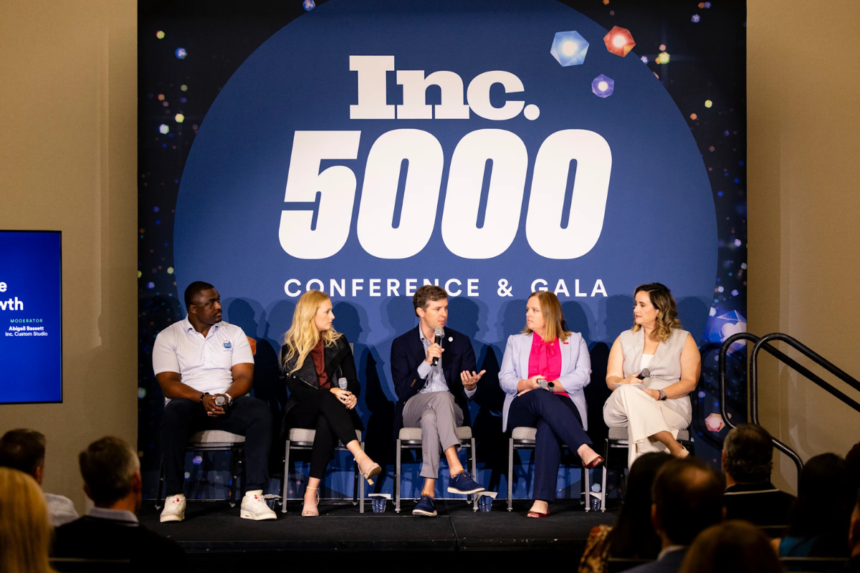
Public-private partnerships are helping founders build and scale businesses across the state.
Startup success stories often orbit around Silicon Valley or New York. Alabama rarely enters that conversation. That gap is starting to close.
At the recent Inc. 5000 conference, leaders outlined how Alabama has built a coordinated system that supports founders from idea to scale. The shift is not accidental. It reflects deliberate alignment between government, investors, and institutions.
As venture funding rises again, driven by AI and broader tech momentum, regional ecosystems now have a window to capture growth. Alabama has positioned itself early.
Founder-First Ecosystem Design
Alabama structured its startup ecosystem around founders instead of institutions. Programs align to reduce friction rather than add layers.
Initiatives like Alabama Launchpad have already deployed over $6 million into early-stage startups, creating companies now valued at around $1 billion.
The system extends into talent development. Programs such as Fuel Alabama and HBCU-focused internships connect students directly with startups, creating a continuous pipeline between education and enterprise.
This reduces one of the biggest early-stage risks. Talent mismatch.
Capital Access Without Fragmentation
Access to funding often defines whether a startup survives or stalls. Alabama addressed this through coordinated capital programs rather than isolated funding sources.
Innovate Alabama, backed by $98 million in federal SSBCI funding, runs structured programs that connect startups with capital and mentorship simultaneously.
The model avoids a common failure point. Founders receiving capital without guidance.
Instead, venture funds participating in these programs are required to invest locally while actively supporting founders through mentorship. This builds a compounding ecosystem rather than a transactional one.
Retaining Founders Instead of Losing Them
Many regional ecosystems struggle to retain startups once they begin to scale. Alabama is reversing that trend.
SmartWiz, a Birmingham-based startup, turned down a $3 million investment that required relocation to Los Angeles. The company chose to stay and instead secured funding through local programs.
The decision reflects a deeper shift. Founders no longer see relocation as mandatory for growth.
The combination of funding access, mentorship, and workforce support reduces the need to move to traditional tech hubs.
Workforce as a Strategic Lever
Scaling startups require more than capital. They require the right workforce at the right time.
Alabama integrates workforce development directly into its startup ecosystem through programs like AIDT. These initiatives help founders identify required skillsets, recruit talent, and train employees as companies grow.
This alignment between hiring and scaling removes a major bottleneck that often slows expansion.
Community Over Competition
The defining feature of Alabama’s ecosystem is not capital or infrastructure. It is culture.
Leaders describe the environment as collaborative rather than competitive. Founders who succeed often reinvest time and knowledge into the next generation.
This creates a feedback loop. Support leads to success. Success leads to mentorship. Mentorship strengthens the ecosystem further.
The result is a system where access matters less than participation.
A Model Other Regions Will Study
Alabama’s rise is not driven by hype. It is built on coordination, clarity, and long-term thinking.
The state demonstrates that startup ecosystems do not need to replicate Silicon Valley. They need to solve for founders more effectively.
As global investment spreads beyond traditional hubs, models like Alabama’s will shape the next phase of startup growth.
Four business leaders from Alabama’s startup ecosystem discuss the state’s strong focus on founders at the 2025 Inc. 5000 Conference & Gala in Phoenix.
Source: INC.