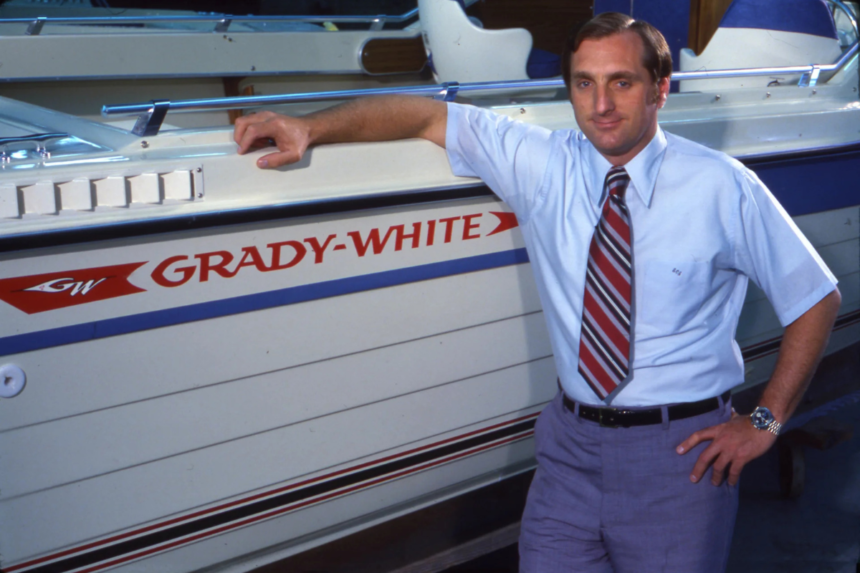
The founder shares why he chose to pass on the business and what his journey teaches about building a lasting legacy.
New York: Most entrepreneurs spend decades building a successful business with the hope of eventually selling it or passing it on to the next generation.
Eddie Smith Jr. chose a different path.
After spending nearly six decades transforming Grady-White Boats into a company valued at more than $400 million, the 80-year-old founder has decided to give away ownership of the business, ensuring it remains true to its values while using future profits to support charitable causes.
For Smith, preserving the company’s culture mattered more than securing the biggest payday.
A Business Built Over Nearly Six Decades
Smith’s journey began in 1968, when he borrowed money from his father to buy a struggling boat manufacturer based in Greenville, North Carolina.
At the time, Grady-White was a small company with an uncertain future.
Over the next 58 years, Smith transformed it into one of America’s most respected premium fishing boat manufacturers, earning a reputation for quality craftsmanship, customer loyalty, and a people-first culture.
Rather than focusing solely on growth, Smith built the business around long-term relationships with employees, dealers, and customers.
A Personal Tragedy Changed Everything
For years, Smith expected his son, Chris Smith, to eventually take over the family business.
But tragedy altered those plans.
His wife, Jo Allison Smith, died in 2020, and just a year later, Chris passed away at the age of 57 after battling amyotrophic lateral sclerosis (ALS), also known as Lou Gehrig’s disease.
Without a family successor, Smith began exploring the possibility of selling the company.
A $400 Million Offer He Walked Away From
Smith hired an investment bank to gauge buyer interest.
The response exceeded expectations.
Potential buyers valued Grady-White at more than $400 million, a figure that would have made for a highly lucrative exit.
Yet something didn’t feel right.
“I’ve had so many friends who sold companies,” Smith said.
“And none of them were happy after the sale with what happened to their companies. They just lost their way. They lost their culture.”
Rather than accepting one of the offers, Smith began searching for another solution.
Inspired by Patagonia’s Founder
The turning point came after Smith read about Yvon Chouinard, the founder of Patagonia, who transferred ownership of the outdoor clothing company to a trust and nonprofit structure to ensure its future profits would support environmental causes.
Inspired by that model, Smith decided to create a similar long-term ownership structure for Grady-White.
Instead of selling the business, he transferred its voting shares into a purpose trust, while a separate nonprofit organisation will receive future profits to fund causes he cares about, including education, healthcare, and conservation.
The arrangement ensures the company continues operating independently while remaining legally committed to its founding values.
Protecting Culture for Future Generations
Unlike a traditional sale, the trust structure places a legal responsibility on future leaders to uphold the company’s principles.
Consultant Natalie Reitman-White, who helped design the arrangement, said trustees are not simply encouraged to protect the company’s values.
“They’re duty-bound to ensure the company operates according to the values, principles and outcomes written into the trust agreement,” she explained.
For Smith, safeguarding the company’s identity was just as important as preserving its financial success.
A Different Kind of Legacy
The decision reflects a growing conversation among business founders about what legacy truly means.
Rather than maximising personal wealth through a sale, some entrepreneurs are choosing ownership models that prioritise employees, communities, and long-term mission over short-term returns.
Smith believes businesses can continue creating value for society long after their founders are gone.
“Grady-White has a soul,” he said.
“Not very many companies that I’m aware of have a soul, and we just want to make sure that it continues to be that way.”
More Than Giving Away a Company
Smith’s story echoes the philosophy of billionaire philanthropist Chuck Feeney, who spent decades donating nearly all of his fortune after co-founding the global Duty Free Shoppers empire.
Both men demonstrate that building wealth and giving it away are not opposing ideas, but connected parts of the same journey.
For Smith, however, the goal was never simply philanthropy.
It was ensuring that the company he spent 58 years building continues to create jobs, serve customers, and support causes he believes in for generations to come.
In an era where billion-dollar exits often define entrepreneurial success, Eddie Smith Jr.’s decision offers a different perspective: sometimes the greatest legacy is not selling what you built, but ensuring it outlives you without losing its purpose.
Undated photo of Eddie Smith Jr., CEO of Grady-White Boats.
Read more news and follow us on Instagram
Source: Inc