



Drone strikes on Amazon Web Services infrastructure in the UAE disrupted digital services across banking, payments, and consumer platforms, exposing the region’s deep dependence on cloud systems.
Amazon Web Services confirmed that two of its UAE data centers and a facility in Bahrain sustained damage from drone attacks, forcing operations offline. The company reported structural impact, power disruption, and fire-related damage that required suppression measures and led to additional water damage.
Apps and Banking Services Go Dark
As AWS infrastructure faltered, multiple consumer and financial platforms reported outages.
Careem, along with payments firms Alaan and Hubpay, experienced service interruptions. Several users reported login failures and transaction delays.
Banking institutions, including Abu Dhabi Commercial Bank and Emirates NBD also confirmed temporary disruptions to mobile and phone banking services.
Enterprise software provider Snowflake reported elevated connectivity issues within the region, citing infrastructure instability linked to the outages.
Although some platforms gradually restored functionality, AWS stated that service recovery efforts remain ongoing. The AWS Health Dashboard continued to flag disruptions while urging customers with Middle East workloads to migrate to alternate AWS regions.
Physical Damage at Data Centers
According to AWS, “objects” struck one of its facilities, causing sparks and fire. In Bahrain, a nearby drone strike produced physical impacts that disrupted infrastructure operations.
The attacks damaged power systems and forced emergency fire suppression responses. These measures, while necessary, added to operational strain and extended downtime across hosted services.
Regional Conflict Escalates
The strikes follow escalating military conflict in the region after joint US–Israeli operations targeted Iran. Since then, retaliatory actions have expanded across Gulf infrastructure, including military bases and strategic assets.
Critical digital infrastructure now appears among the impacted targets, underscoring how modern conflict increasingly intersects with cloud computing and financial systems.
Global Market Ripple Effects
Beyond app outages, financial markets reacted sharply. Oil prices climbed as tensions threatened supply routes near the Strait of Hormuz. US stocks opened lower, while European and Asian indices also declined amid mounting uncertainty.
The incident highlights a structural reality. As economies digitize, cloud infrastructure becomes systemic infrastructure. When data centers fail, payments stall, banking pauses, and supply chains strain.
Recovery efforts continue. However, the event has already intensified debate around redundancy, sovereign cloud capacity, and the resilience of digital financial ecosystems in geopolitically sensitive regions.
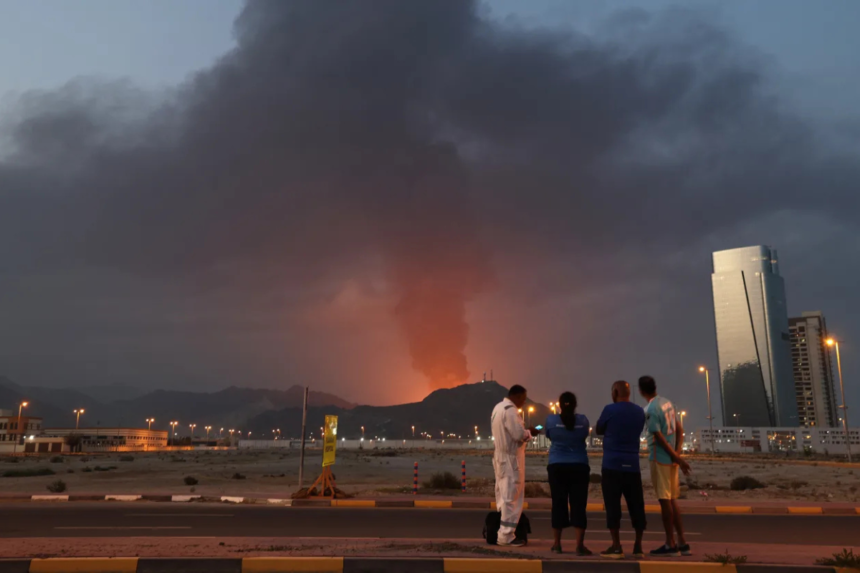
Foreign workers look at a tall plume of black smoke that ascends following an explosion in the Fujairah industrial zone on March 3, 2026.
Fadel Senna | Afp | Getty Images
Source: CNBC
Read more news, and follow us on Instagram