


The IT minister urged chipmakers and deeptech startups to prepare for cyberattacks, geopolitical risks and other disruptions as India expands its role in the global semiconductor supply chain.
India’s growing semiconductor industry must prepare for cyberattacks, geopolitical risks and other disruptions as the country takes a larger role in the global chip supply chain, Union IT Minister Ashwini Vaishnaw has warned.
Speaking to PTI, Vaishnaw said India’s emergence as a country capable of designing and manufacturing semiconductors could create new geopolitical risks as established players respond to the country’s growing position.
He said he had discussed the risks directly with semiconductor companies and deeptech startups and urged the industry to remain prepared for potential disruptions.
Vaishnaw Urges Chipmakers to Prepare for Cyber Threats
Vaishnaw said India cannot afford to become complacent as its semiconductor capabilities expand.
He warned that companies operating across chip design, manufacturing and related technologies should be prepared for cyberattacks and other forms of disruption that could emerge from geopolitical competition.
The minister said the industry is aware of these risks and is expected to take appropriate measures to strengthen its preparedness.
His comments come as India moves from its earlier focus on building semiconductor ambitions toward executing projects across the supply chain. Vaishnaw recently said the country has gained confidence from progress on projects already being developed on the ground.
India’s Semiconductor Push Is Expanding
India has been increasing government support for semiconductor manufacturing, chip design, packaging, testing and related technologies.
The latest phase of the programme has attracted significant interest from global and Indian companies. According to Bloomberg, India has received investment pledges of up to $12 billion from global and domestic investors since launching its new semiconductor policy.
The government is seeking to build a more complete semiconductor ecosystem rather than focusing only on chip fabrication.
That includes design, manufacturing, assembly and testing, semiconductor equipment, materials and the development of skilled talent.
The Ministry of Electronics and Information Technology has also highlighted the expansion of semiconductor design and manufacturing projects as part of India’s broader electronics ecosystem strategy.
Why Cybersecurity Is Becoming More Important
Semiconductor manufacturing involves highly sensitive intellectual property, complex industrial systems, and interconnected supply chains.
As more companies establish operations in India, the potential attack surface also expands. Disruptions could affect not only individual companies but also suppliers, production schedules, and downstream electronics manufacturers.
For deeptech startups, the risks can extend to proprietary chip designs, research data and other intellectual property.
Vaishnaw’s warning therefore comes as India’s semiconductor strategy moves beyond attracting investment toward building an integrated ecosystem capable of competing internationally.
Major Investments Are Building the Ecosystem
The scale of new investment was visible at SEMICON India 2026, where companies announced plans spanning semiconductor equipment, manufacturing infrastructure and materials.
The government has said investment interest under the new semiconductor policy has reached around $11 billion to $12 billion, with projects expected to materialise over the next two to three years.
These commitments include major plans from companies across different parts of the semiconductor value chain.
The growing investment is intended to strengthen India’s position in global electronics and chip supply chains while creating capabilities across design, manufacturing and supporting industries.
India Moves From Semiconductor Ambition to Execution
Vaishnaw has described India’s semiconductor journey as a shift from aspiration to execution.
The government says projects approved under earlier semiconductor programmes are now progressing, while the next phase is focused on expanding the ecosystem further. The government also expects the new policy to support the emergence of as many as 200 chip-design companies in India.
The expansion creates opportunities for manufacturers and startups, but it also increases the importance of protecting the infrastructure and intellectual property being developed.
For companies entering India’s semiconductor ecosystem, cybersecurity and operational resilience are therefore becoming part of the broader challenge of building a competitive chip industry.
As India attracts more semiconductor investment and strengthens its position in the global supply chain, Vaishnaw’s message to the industry is clear: growth must be accompanied by preparation for cyberattacks, geopolitical risks and potential disruptions.
Read more news and follow us on Instagram.
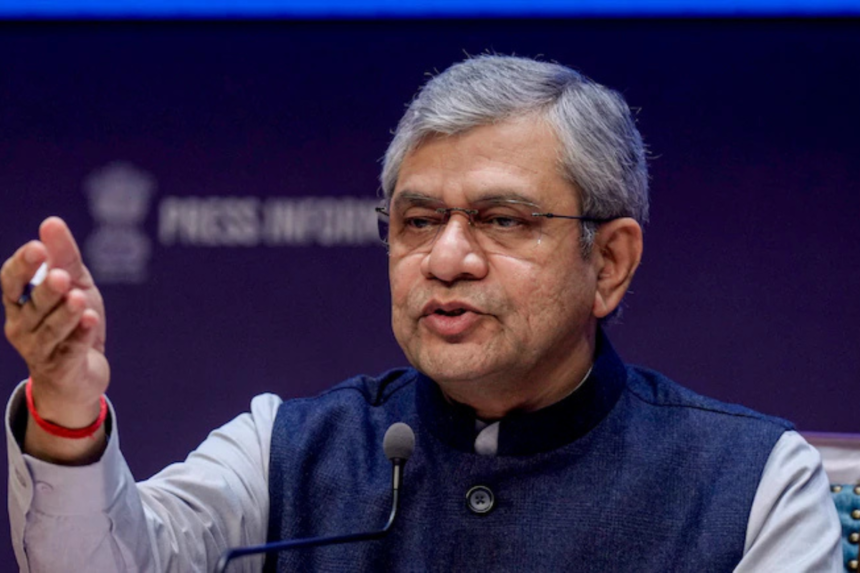
Vaishnaw cautions India’s semiconductor industry against cyberattacks and other geopolitical threats.
Photo source: PTI
NDTV Profit