



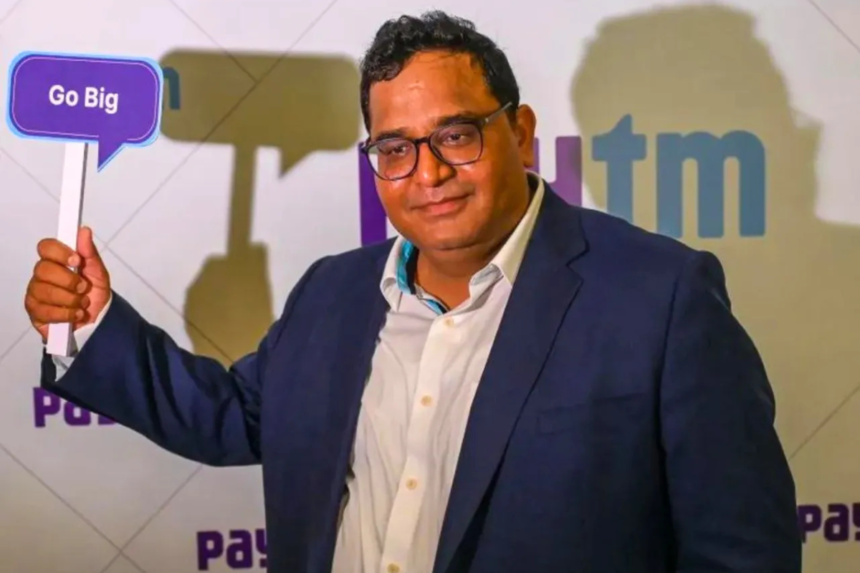
Paytm’s board has proposed adding performance-linked pay to Sharma’s compensation after the company reported Rs 220 crore profit in Q1 FY27.
Paytm’s board has proposed revising CEO and founder Vijay Shekhar Sharma’s compensation after an independent benchmarking exercise found that his current remuneration is below comparable founders and CEOs.
The proposal would introduce a performance-linked component to his pay, subject to shareholder approval, as Paytm enters a period of stronger financial performance.
Paytm proposes performance-linked compensation
Sharma received total remuneration of ₹4.33 crore in FY26, including perquisites, compared with ₹4.5 crore a year earlier.
His base salary has remained unchanged since August 2022, and he does not hold employee stock options in Paytm.
Under the proposed structure, a variable component would be determined by the Nomination and Remuneration Committee against predefined financial targets.
For FY27, the key measure would be profit after tax growth.
The proposal does not include fresh stock options, and shareholders will have to approve the revised compensation.
Sharma’s pay remains below some peers
The benchmarking exercise compared Sharma’s remuneration with founders and CEOs of new-age internet, financial services and technology companies.
For comparison, Falguni Nayar of Nykaa received around ₹11 crore in FY25, while Vidit Aatrey of Meesho received approximately ₹5.42 crore.
Sharma’s ₹4.33 crore remuneration therefore sits at the lower end of this peer group.
His compensation also remained largely unchanged despite Paytm’s financial performance improving.
In July 2025, the company’s board had recommended introducing a variable component to his salary. Sharma had voluntarily requested that his remuneration remain unchanged.
Why there are no new stock options
The proposed structure does not include fresh ESOPs partly because Sharma is currently prohibited from accepting new employee stock options from listed companies.
As part of a settlement with SEBI in May 2025, Sharma accepted a three-year restriction on receiving fresh ESOPs from listed companies and paid ₹1.11 crore. The restriction is expected to remain in place until around May 2028.
The new proposal therefore focuses on cash compensation linked to financial performance rather than equity incentives.
Paytm’s improving financial performance
The proposed change comes as Paytm moves into a stronger financial phase.
The company reported its first full-year profit in FY26. In the June 2026 quarter, it posted a net profit of ₹220 crore, representing a 79% year-on-year increase.
Quarterly EBITDA also reached a record ₹203 crore during the period.
Linking Sharma’s variable compensation to profit growth would therefore connect a portion of his remuneration directly to the company’s financial performance.
Shareholders will have the final say
The proposal will be placed before shareholders at Paytm’s 26th Annual General Meeting.
Sharma has previously received strong shareholder backing. In 2022, despite significant pressure on Paytm’s share price and opposition from institutional advisory firm IIAS, 99.67% of shareholders voted in favour of his reappointment as managing director and CEO.
The proposed remuneration structure now comes at a considerably different point in Paytm’s journey, with the company having moved from sustained losses to profitability and reporting stronger quarterly results.
Read more news and follow us on Instagarm
Photo: Paytm CEO Vijay Shekhar Sharma