



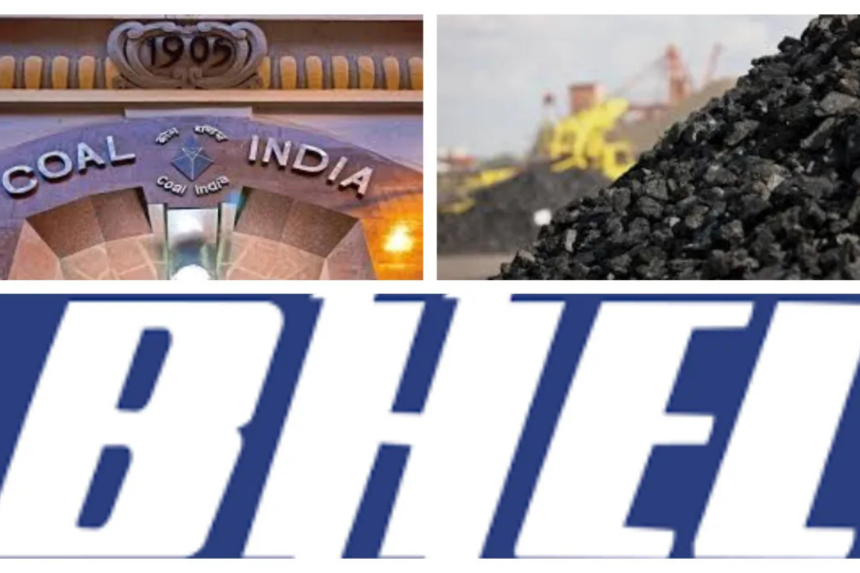
The Rs 25,000 crore project will convert coal into raw materials used in fertilizer production while creating thousands of jobs and boosting Odisha’s economy.
Odisha is set to become the center of India’s coal gasification ambitions as Bharat Heavy Electricals Limited (BHEL) and Coal India Limited (CIL) jointly invest more than Rs 25,000 crore in a large-scale coal gasification project aimed at transforming domestic coal into high-value industrial products.
Prime Minister Narendra Modi laid the foundation stone for the project in Jharsuguda, Odisha, marking what policymakers describe as a major shift in how India utilizes its vast coal reserves.
The project is expected to support fertilizer production, create employment opportunities, reduce import dependence, and strengthen India’s industrial self-reliance.
Moving Beyond Traditional Coal Usage
For decades, coal has primarily been used for electricity generation in India. The Odisha project signals a broader transformation, positioning coal as a strategic industrial feedstock rather than just a fuel source.
Union Coal and Mines Minister G. Kishan Reddy described the initiative as a historic milestone for Odisha and the country’s coal sector.
“Moving beyond the traditional use of coal, new avenues will now open up through coal gasification,” Reddy said while highlighting the joint investment by BHEL and Coal India.
The project aligns with the government’s long-term strategy of extracting greater economic value from India’s domestic resources while reducing dependence on imported raw materials.
What Is Coal Gasification?
Coal gasification is a process that converts coal into synthesis gas (syngas), a versatile feedstock used in producing:
- Fertilizers
- Chemicals
- Methanol
- Synthetic fuels
- Industrial feedstocks
Unlike conventional coal combustion, gasification creates higher-value products that can support multiple industries.
For India, which possesses the world’s fifth-largest coal reserves exceeding 400 billion tonnes, the technology offers a significant opportunity to diversify coal utilization and strengthen domestic manufacturing.
India’s First Commercial Coal-to-Ammonium Nitrate Facility
At the center of the Odisha initiative is the Lakhanpur Project, which will become India’s first commercial-scale coal-to-ammonium nitrate facility.
The project is being developed by Bharat Coal Gasification and Chemicals Limited (BCGCL), a joint venture between BHEL and Coal India Limited.
Key highlights include:
- Investment exceeding Rs 25,000 crore
- Production capacity of 2,000 tonnes per day of ammonium nitrate
- Based on indigenously developed coal gasification technology by BHEL
- Development on 350 acres of land leased from Mahanadi Coalfields Limited (MCL)
The facility has already secured all major approvals and clearances, paving the way for construction activities following the foundation ceremony.
Major Boost for Fertilizer Production
One of the most significant outcomes of the project will be its contribution to India’s fertilizer sector.
India remains heavily dependent on imported feedstocks such as natural gas, ammonia, and methanol for fertilizer production.
By producing ammonium nitrate and related industrial inputs domestically, the project is expected to:
- Reduce import dependence
- Improve fertilizer supply security
- Strengthen agricultural value chains
- Lower exposure to global commodity price fluctuations
According to government estimates, India currently imports chemical and industrial feedstocks worth approximately Rs 2.7 lakh crore annually.
Coal gasification projects aim to reduce this reliance substantially over the coming years.
Employment and Economic Impact for Odisha
Beyond industrial production, the project is expected to generate significant economic benefits for Odisha.
Minister Reddy emphasized that the initiative will create employment opportunities for local communities while supporting downstream industrial growth.
The project is likely to stimulate:
- Construction activity
- Engineering services
- Manufacturing supply chains
- Logistics and transportation
- Skilled technical employment
As fertilizer and chemical industries develop around the project, Odisha could emerge as a major industrial hub for coal-based manufacturing.
Part of a Rs 46,000 Crore National Strategy
The Odisha project forms part of a much larger national push toward coal gasification.
The Government of India has approved incentive schemes with a cumulative outlay of up to Rs 46,000 crore to accelerate coal and lignite gasification projects across the country.
The Ministry of Coal is providing direct support, including Rs 1,350 crore in assistance for the Lakhanpur project under its coal gasification incentive scheme.
According to government projections, the broader initiative aims to:
- Attract investments worth Rs 2.5 lakh crore to Rs 3 lakh crore
- Support approximately 25 coal gasification projects
- Generate around 50,000 direct and indirect jobs
- Reduce imports of chemicals and industrial feedstocks
- Improve foreign exchange savings
Transforming India’s Industrial Future
India is currently the world’s second-largest producer and consumer of coal, with Coal India Limited recognized as the world’s largest coal mining company.
Projects such as Lakhanpur represent a strategic effort to maximize value from these domestic resources while supporting the goals of Aatmanirbhar Bharat.
By converting coal into fertilizers, chemicals, and industrial feedstocks, India can build stronger domestic supply chains, reduce external dependencies, and create new manufacturing opportunities.
A Defining Project for Odisha
The Odisha coal gasification project represents more than a large industrial investment.
It signals a structural shift in India’s approach to coal utilization, moving beyond power generation toward high-value industrial applications.
With a Rs 25,000 crore investment, India’s first commercial coal-to-ammonium nitrate facility, and the backing of two major public-sector enterprises, the project is expected to become a benchmark for future coal gasification ventures across the country.
For Odisha, it offers the opportunity to strengthen its position as one of India’s most important industrial states. For India, it represents a major step toward energy security, industrial self-reliance, and long-term economic growth.
Source: Financial Express