



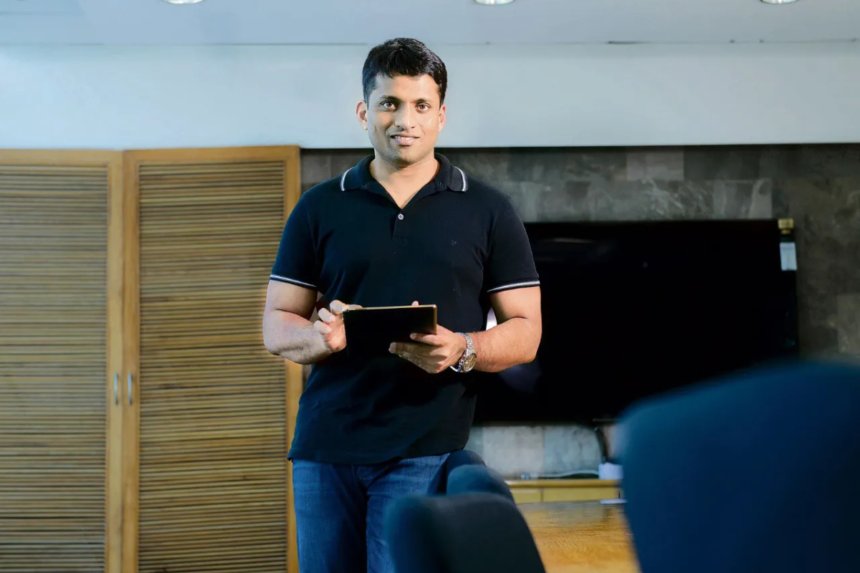
The High Court has paused the six-month contempt sentence, offering a reprieve in the ongoing case.
Byju Raveendran, founder of embattled edtech company Byju’s, has secured temporary legal relief after the Singapore High Court stayed key provisions of a civil contempt order that could have resulted in a six-month prison term.
The decision marks an important development in a legal dispute that has attracted significant attention amid the broader financial and legal challenges facing Byju’s. While the underlying proceedings remain ongoing, the court’s stay temporarily pauses enforcement of the earlier order and allows Raveendran to continue pursuing his appeal.
What the Singapore Court Decided
According to Raveendran’s legal representatives, the General Division of the High Court of the Republic of Singapore granted a stay on June 10 concerning the committal and surrender provisions of a civil contempt order issued on May 25.
The practical effect of the ruling is that:
- Raveendran is not required to surrender to authorities.
- No prison sentence will take effect while the stay remains active.
- Enforcement of the relevant provisions is paused pending further legal proceedings.
- An appeal against the contempt finding will continue through the Singapore courts.
The stay provides temporary protection while the court considers the appeal and related legal challenges.
Background to the Contempt Proceedings
The contempt finding stems from an ongoing dispute involving document disclosure obligations and related requirements connected to arbitration proceedings.
According to Raveendran’s legal advisers, the case involves contested disclosure obligations arising from arbitration orders and Singapore court decisions recognizing those orders.
His legal team argues that:
- The obligations remain disputed.
- Parallel proceedings are underway challenging the underlying orders.
- The contempt ruling does not address the merits of the broader commercial dispute.
The case is separate from any criminal prosecution and relates to compliance issues connected to court-directed disclosure requirements.
Legal Team Pushes Back Against Public Narrative
Raveendran’s advisers have strongly rejected suggestions that the proceedings involve allegations of fraud, personal misconduct, or criminal wrongdoing.
J. Michael McNutt, Senior Litigation Advisor to Raveendran and the founders at Lazareff Le Bars, stated that the matter has been widely misunderstood.
According to McNutt, the dispute originated from a loan guarantee connected to Think & Learn, Byju’s parent company, and has been incorrectly portrayed as a criminal matter.
He emphasized several points:
- No criminal charges have been filed against Raveendran in connection with the case.
- No court has found him guilty of fraud or dishonesty.
- No judicial finding has been made regarding diversion of funds or personal misconduct.
- The contempt order relates solely to procedural compliance issues.
McNutt described the High Court’s decision to grant a stay as an important step toward ensuring the dispute is examined within the proper legal framework.
Raveendran Responds
Following the court’s decision, Raveendran said he intends to continue challenging what he described as a misleading narrative surrounding the case.
He argued that neither he nor the company’s founders personally benefited from the disputed funds and pointed to the substantial personal financial support he claims his family provided to the company.
According to Raveendran, his family has invested more than ₹5,000 crore of personal wealth into Byju’s over the years.
He also noted that settlement discussions have been ongoing between parties involved in the dispute and expressed disappointment over what he believes is an inaccurate portrayal of events.
Part of a Larger Legal Battle
The Singapore proceedings are linked to a broader dispute involving a subsidiary of the Qatar Investment Authority, which previously invested in Byju’s during one of the company’s major funding rounds.
The legal challenges come during a difficult period for the company.
Once valued at approximately $22 billion, Byju’s has spent the past several years dealing with:
- Creditor disputes
- Insolvency proceedings
- Regulatory scrutiny
- Governance concerns
- Multiple legal cases across jurisdictions
These challenges have significantly altered the company’s trajectory from one of India’s most celebrated startup success stories to one of the country’s most closely watched corporate restructurings.
What Happens Next
The Singapore High Court’s decision does not resolve the underlying dispute. Instead, it temporarily pauses enforcement of the civil contempt order while appellate proceedings move forward.
Key developments to watch include:
- The outcome of Raveendran’s appeal against the contempt finding.
- Court decisions regarding the underlying arbitration-related obligations.
- Any potential settlement discussions between the parties.
- Ongoing legal and insolvency proceedings involving Byju’s across multiple jurisdictions.
For now, the stay provides Byju Raveendran with temporary relief and additional time to challenge the contempt ruling through Singapore’s legal process.
While the broader dispute remains unresolved, the court’s decision ensures that no imprisonment or surrender requirement will take effect until the appeal process has been considered.
Read more news, and follow us on Instagram